2026 Changan Qiyuan Q05 506 Max+ for Sale — 660 km, 51.9 kWh LFP, FOB Guangzhou
Basic Parameters
- Stock No. CA-Q05-2026-506MAX-001
- Year 2026
- Mileage (km) 660 km
- Transmission Automatic
- Fuel Type Electric
- Engine (L / kWh) Electric motor
- Power (HP) 163 HP
- Drivetrain FWD
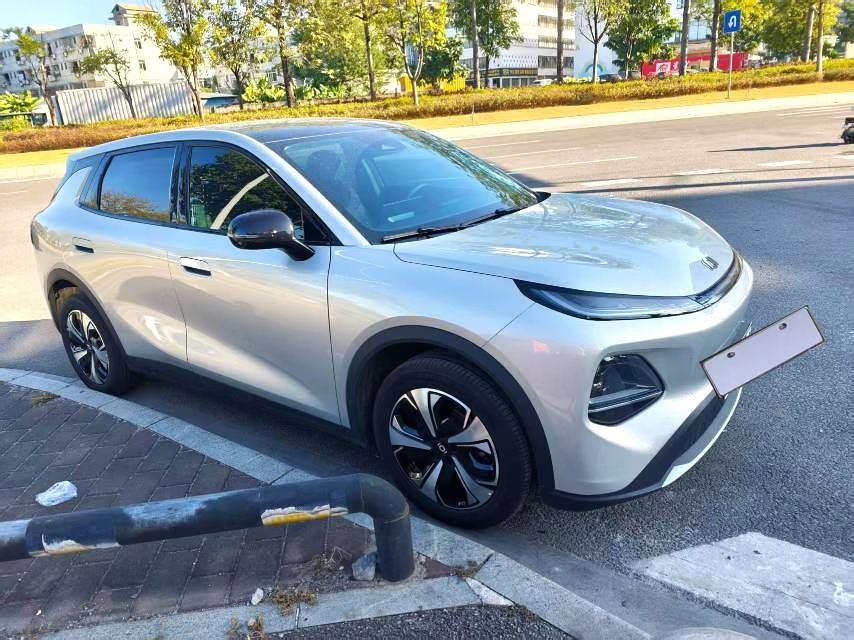
- Exterior Color Grey
- Interior Color Grey
- Seats 5
- Doors 5
- Origin (China port) Guangzhou, Guangdong
- Available Shipping To Guangzhou / Shenzhen
Description
The short answer
This 2026 Changan Qiyuan Q05 506 Max+ is listed at USD 14,500 FOB Guangzhou, with 660 km on the odometer and a 51.9 kWh LFP battery. It is a five-seat compact electric crossover with a 120 kW (163 HP) front motor, a CLTC rating of 506 km, grey paint over a grey interior, and a 2026 first registration. Effectively a new car that has been driven home from the dealer and parked.
If you are searching for a used Changan Qiyuan Q05 for sale, this is the trim that most export buyers end up choosing, and the reason is simple: it is the sensible middle of the range. Long enough range to be useful outside the city, quick enough to merge, and priced below the top Q05 versions that carry hardware you will never use.
What is the Changan Qiyuan Q05?
Qiyuan (启源) is Changan’s new-energy sub-brand, launched in 2023 to sit alongside Deepal and Avatr. The Q05 is its compact crossover: a five-door, five-seat car roughly 4.5 m long, built on Changan’s EPA1 electric platform, and sold in China as both a pure EV and a plug-in hybrid. This listing is the pure electric version, not the PHEV — the Q05 PHEV has a 1.5 L petrol engine under the bonnet and a much smaller battery.
The naming is worth decoding because it confuses a lot of overseas buyers. “506” is the CLTC range figure in kilometres, and CLTC is China’s own test cycle. It is optimistic. Expect roughly 400–430 km of real mixed driving in mild weather, 330–360 km in a cold winter with the heater running, and around 420 km on steady 90 km/h roads. That is normal for the cycle, not a fault of the car.
What does the Max+ trim give you?
Qiyuan runs the Q05 in several steps — a base model, a Pro, this Max+, and a Max+ with the larger battery or the assisted-driving pack. The 506 Max+ is the long-range battery paired with the well-equipped cabin. Practical kit on this car:
- 51.9 kWh lithium iron phosphate (LFP) pack, DC fast charging to 80% in roughly 30 minutes
- 120 kW front-mounted motor, 163 HP / 190 Nm, single-speed reduction gear
- 14.6-inch central touchscreen with Changan’s voice assistant and built-in navigation
- Reversing camera with rear parking sensors; 360-degree camera on this trim
- Automatic air conditioning with rear vents, keyless entry and push-button start
- LED headlamps, LED daytime running lights, alloy wheels
- Six airbags, ABS with EBD, stability control, tyre pressure monitoring
What it does not have, on the 506 Max+ as sold in China, is the high-level highway assist package fitted to the top variants. If your market requires specific ADAS certifications, check the equipment list in the photos against your homologation requirements before you commit.
How does it drive, honestly?
163 HP in a 1.7-tonne crossover is adequate, not exciting. Zero to 100 km/h lands around 8 seconds, and the instant torque makes it feel quicker than that below 60 km/h. Top speed is limited to about 160 km/h. The steering is light and the suspension is tuned for comfort, which suits Chinese road surfaces and city traffic; on a twisty European B-road it will lean and feel soft.
The thing that matters more is the battery chemistry. LFP, not nickel-based. LFP packs tolerate being charged to 100% every day, degrade more slowly in hot climates, and are cheaper to replace — all of which matters in the Gulf, Africa and Southeast Asia, where ambient temperatures punish nickel-cobalt cells. The trade-off is cold-weather performance: below 0 °C, expect noticeably slower DC charging until the pack warms up. For a buyer in a temperate or tropical market, LFP is the right choice.
Charging: what to plan for
The Q05 uses a Chinese GB/T connector for both AC and DC. On a GB/T DC fast charger it takes about 30 minutes to go from 30% to 80%; a full charge on a 7 kW AC wall box takes around 8 hours. There is also vehicle-to-load output on this trim, which is genuinely useful for job sites and for markets with unreliable grid supply.
As with every Chinese-built EV, the connector is the single biggest practical hurdle. In Europe you will need a Type 2 AC adapter for home charging, and a GB/T-to-CCS DC adapter if you want to use public fast chargers — buy a certified unit, not a cheap one. In the Gulf, Africa and much of Southeast Asia, GB/T chargers are increasingly available and adapters are straightforward. Price the adapter and any electrician work into your landed cost before you compare it against a local car.
Condition and what we can confirm
First registered in 2026, 660 km covered, one owner, currently in Guangzhou. That is delivery mileage in all but name. The car is grey with a grey interior, which is the most resale-friendly combination in most export markets — silver and grey hold value better than white in the Gulf and better than black in hot climates.
We can arrange the full battery state-of-health report, a walk-around video and the original purchase invoice on request. On a car with 660 km the SOH should read 99–100%; if a seller cannot produce that report, that is your signal to walk. Do not accept a Q05 with this mileage without the BMS reading — battery health is the whole value of the car.
What does it cost to land?
The domestic price in China is CNY 90,000, roughly USD 12,400 at 7.25. The USD 14,500 FOB Guangzhou figure covers export documentation, inland movement to the port, and our margin. Shipping a 51.9 kWh crossover in a 20-foot container is straightforward — the pack is well under the dangerous-goods handling limits that apply to 90 kWh and larger batteries — and typical rates run USD 900–1,600 to Asian and African ports, USD 1,500–2,800 to Europe or Latin America.
Duty and VAT in your market sit on top. In the EU, a Chinese-built EV attracts both, which can add 25–30% to the landed figure. In African and Southeast Asian markets the maths is usually kinder. Ask us for a landed-cost estimate with your port and we will give you a number rather than a range.
Who should buy it, and who should not
It suits dealers who want a near-new, long-range EV with an LFP pack for a hot-climate market, fleet buyers adding a reliable compact crossover, and private buyers in a market where GB/T charging already exists. The 506 km rating and the 660 km odometer make it an easy sell on a forecourt.
It does not suit buyers in cold-climate markets without garage charging, or anyone who needs a strong local parts network — Qiyuan is a young sub-brand and its overseas parts channel is still thin. Order a service kit, a set of filters and a spare charging adapter with the car. Buyers who need a nameplate that local insurers recognise should look at our used Changan and Qiyuan listings first.
What else is in stock at this money
If you are comparing compact electric crossovers, the 2025 Changan Qiyuan Q07 Laser Flagship PLUS is one class up — a plug-in hybrid with 215 km of electric range and LiDAR — but it needs petrol. For pure electric alternatives at similar money, browse used electric SUVs or the full vehicle index.
Key Takeaways
- Price: USD 14,500 FOB Guangzhou, against a CNY 90,000 domestic price.
- Spec: 2026 Qiyuan Q05 506 Max+, 51.9 kWh LFP, 120 kW / 163 HP, 506 km CLTC, five seats, five doors.
- Usage: 660 km from new, first registered 2026, one owner, Guangzhou.
- Real range: roughly 400–430 km mixed, 330–360 km in a cold winter with heating.
- Watch out for: GB/T connectors, thin overseas parts supply, no ADAS pack on this trim.
Want the BMS report, the walk-around video or a landed-cost number for your port? Send us your destination and we will come back with a figure.
Contact Us About This Vehicle
Reach out via your preferred channel — we reply within 24 hours.

Scan to add us on WeChat
WeChat ID: le-tian-chou
You May Also Like
Related News

Cheapest Used Electric Cars for Sale: Where the Price Floor Sits
Used Tesla for Sale in New Jersey: What $25,000 Buys in 2026