









Used Electric Cars for Sale in 2026: 10 Models, Real Prices
Ten used electric cars are listed out of China right now between $6,500 and $25,900 FOB. The spread is enormous: from a two-seat city pod to a 700 km 800V sedan and a range-extender family SUV.
Below is the actual inventory and the actual numbers. No “starting from” games, no prices that quietly exclude the car.
What are the ten models and what do they cost?
Four of them carry enough range to leave a city. Six are city or commuter cars.
| Model | Year | Mileage | Battery | Rated range | FOB |
|---|---|---|---|---|---|
| Changan Qiyuan Q05 506 Max+ | 2026 | 660 km | 51.9 kWh LFP | 506 km | $14,500 |
| Geely Galaxy E5 530 | 2026 | 15,000 km | ~60 kWh LFP | 530 km | ~$16,900 |
| BYD Yuan UP (Atto 2) 401 | 2024 | 22,000 km | 45.12 kWh | 401 km | ~$12,400 |
| BYD Atto 3 510 Flagship | 2022 | 56,000 km | 60.48 kWh | 510 km | ~$16,800 |
And the cheaper end of the same market:
- BYD Seagull, 2025, 12,000 km, 30.08 kWh, 305 km — about $8,500
- Chery eQ1 Little Ant, 2024, 13,000 km, 29.23 kWh, 321 km — about $9,000
- Geely Xingyuan, 2025, 310 km, ~30 kWh — about $9,800
- Baojun E200, 2020, 305 km, two seats — about $6,500
- BYD Atto 3 430 Champion, 2023, 49.92 kWh, 430 km — about $15,200
- BYD Seal DM-i, 2024, 49,000 km, PHEV, 121 km EV range — about $14,800
Which one is the best value on the list?
The Changan Qiyuan Q05. It is a 2026 car with 660 km on the odometer — effectively new — with a 51.9 kWh LFP pack, 506 km CLTC range and a 120 kW motor, at $14,500 FOB.
You are paying used money for a car that has been driven home from the dealer and parked. The trim is the sensible middle of the Q05 range: enough range to leave the city, quick enough to merge, and none of the top-trim hardware you will never use.
The catch is that “660 km” cars are barely used cars. They are new cars with a discount, and the discount exists because they were registered to hit a sales target. Check the first registration date carefully.
What is the best pick for a family?
Geely Galaxy E5 or BYD Atto 3. Both are five-seat SUVs with real boot space and LFP packs.
The E5 is newer and bigger, rated at 530 km with 218 hp and a 12.1 kWh/100 km consumption figure — genuinely efficient for a car this size. The Atto 3 is older, and no longer much cheaper, but has the deepest parts network of any Chinese EV.
For a buyer who will keep the car eight years, the E5’s efficiency matters more. For a buyer in a market where service is thin, the Atto 3’s parts access matters more. Neither answer is wrong.
Is the $25,900 Li Auto L7 worth it?
Only if you understand what it is. The L7 Pro is a range-extender: a 42.8 kWh battery giving 170 km of electric range, plus a 1.5T generator and 330 kW through two motors.
It is the most car on this list — five seats, big cabin, quick. It is also the most complex, with two powertrains to maintain. For a market with weak EV charging and decent workshop coverage, an EREV is genuinely the right answer. For a market with good charging, it is a lot of machinery for nothing.
What should you check on any of these before paying?
- Battery state of health from the BMS scan, not the dashboard estimate. Anything under 90% on a 2022 car needs a discount.
- Whether the price is FOB or ex-works. The gap is $600-$1,200 depending on port.
- First registration date against model year. A “2026 car” registered in late 2025 is a stock car, which is fine — just price it that way.
- Parts availability for the exact model in your own market. This matters more than any spec on the table.
Key Takeaways
- Ten used EVs are listed from China in 2026 between $6,500 and $25,900 FOB.
- Best value per dollar: 2026 Changan Qiyuan Q05 at $14,500 with 660 km on the clock.
- Best family pick: Geely Galaxy E5 (530 km, 218 hp) or BYD Atto 3 for parts access.
- Most car for the money if you need one vehicle for everything: Li Auto L7 Pro at $25,900.
Related Vehicles
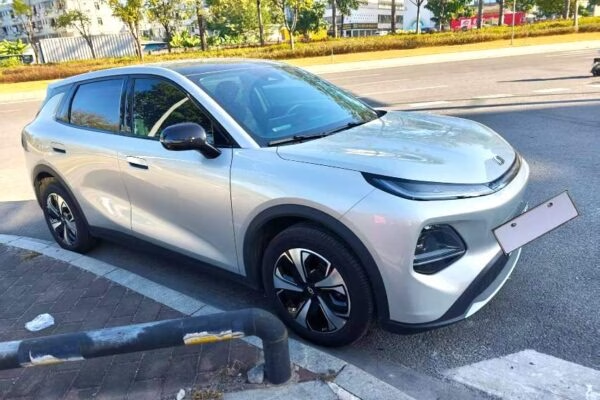
2026 Changan Qiyuan Q05 506 Max+ for Sale — 660 km, 51.9 kWh LFP, FOB Guangzhou
- 2026
- 660 km
- Automatic
- Electric

2026 Geely Galaxy E5 530km Exploration Edition (218HP FWD / EX5 / Aegis Blade Battery) Electric SUV
- 2025
- 15,000 km
- Automatic
- Electric
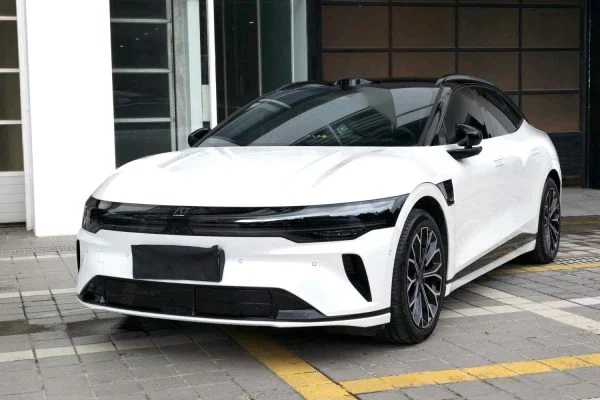
2025 Zeekr 007 GT RWD Smart Drive (422HP / 75kWh / 800V) Electric Sedan
- 2025
- 22,000 km
- Automatic
- Electric

2022 BYD Yuan PLUS (Atto 3) 510km Flagship (204HP FWD) Electric Compact SUV
- 2022
- 56,000 km
- Automatic
- Electric