









Is There Still a $7,500 Tax Credit for EVs in 2026?

No. The US $7,500 clean vehicle credit for new EVs ended on September 30, 2025, and the $4,000 used clean vehicle credit is scheduled to expire after December 31, 2026. Buyers outside the US were never eligible, and China-built cars were excluded even before the credits closed.
That answer matters more than it used to, because so many buyers now compare a Chinese used EV against a local one and mentally subtract $7,500. That discount does not exist in 2026, and building a budget around it is the fastest way to end up overcommitted.
What exactly ended, and when?
The Inflation Reduction Act credits were repealed for vehicles acquired after September 30, 2025. The used credit — $4,000 or 30% of the sale price, whichever is less — survived but has a hard end date of December 31, 2026.
- New EV credit ($7,500): ended September 30, 2025.
- Used EV credit ($4,000): available through December 31, 2026, with income caps and a $25,000 price ceiling.
- China-built vehicles: were never eligible under the battery and assembly rules.
- Commercial fleet credit: also repealed for vehicles placed in service after September 30, 2025.
Does the used credit apply to a Chinese EV?
Not practically. To claim it, the vehicle must be assembled in North America, and the battery components must meet sourcing thresholds. No BYD, Geely, Leapmotor or XPeng model qualifies. The credit was designed to exclude exactly the cars this site sells.
So for a 2023 BYD Yuan PLUS (Atto 3) Champion Edition at $13,200 or a 2023 BYD Song PLUS EV Champion Edition 520km at $15,000, the effective price is the price. Nothing comes off.
How does that change the maths for buyers?
It makes landed cost the only number that matters. A $15,000 Chinese EV that costs $3,500 to ship, clear and register is a $18,500 car. A local used EV at $22,000 with no shipping is cheaper. Run both through full landed cost before committing.
The flip side: in markets without EV subsidies — most of Africa, the Middle East, Southeast Asia and Latin America — Chinese used EVs compete against local petrol cars with no incentive either way. There, a 2024 BYD Yuan UP (Atto 2) 401km Huoli Edition at $12,800 beats a comparable imported petrol crossover on total cost within three years.
What about other countries’ incentives?
Some exist and some are shrinking. The EU has no consumer purchase subsidy at the bloc level, though individual countries still run programs. Mexico, Chile and several Gulf states offer limited EV import duty relief rather than cash. Thailand’s subsidy scheme requires local assembly, which excludes imported used cars.
Check your own country’s rules before assuming anything. The trend across 2025-2026 has been toward ending purchase subsidies and shifting support toward charging infrastructure.
Should you rush to buy a used EV before the credit ends?
No, because the credit does not apply to these cars. If you are buying a North American-assembled used EV under $25,000, then yes — the deadline is December 31, 2026 and it is real.
For a Chinese used EV, the deadline that matters is your own budget and the exchange rate. Nothing in the tax code will change the price of a 2023 XPENG G6 755 Long Range Pro by a single dollar.
How should you price an EV without any credit?
Start from landed cost and work backwards. A used EV is worth it when total cost per year beats a petrol alternative over four years, with no subsidy support. On a $15,000 Chinese EV landing at $18,500, that works out to about $3,300 a year against $4,500 for a comparable petrol crossover — a real gap, but a smaller one than the old credit made it look.
What does losing the credit mean for used EV values?
It removed a floor under US used EV prices. When buyers could knock $4,000 off, dealers priced cars knowing that money existed. Without it, 2022-2023 US used EVs have already softened by 8-12%, and the pressure continues into 2027.
Chinese EVs are barely affected, because they never qualified. If anything, the gap between an ineligible BYD at $13,200 and a domestic EV that lost its credit narrows — which makes the China route relatively more attractive for buyers in third markets.
Key Takeaways
- The $7,500 new EV tax credit ended in the US on September 30, 2025.
- The $4,000 used EV credit remains through December 31, 2026, capped at a $25,000 sale price.
- China-assembled EVs never qualified and still do not — no credit applies to them.
- Judge a Chinese used EV on landed cost only: price, shipping, duties and registration.
- Most markets outside the US and EU offer no purchase subsidy, so the car’s own price decides the deal.
Related Vehicles

2024 BYD Yuan UP (Atto 2) 401km Huoli Edition (95HP FWD / 22k km) Compact EV SUV
- 2024
- 22,000 km
- Automatic
- Electric

2023 BYD Yuan PLUS (Atto 3) Champion Edition 430KM Beyond (204HP / Blade Battery) EV SUV
- 2023
- 21,000 km
- Automatic
- Electric
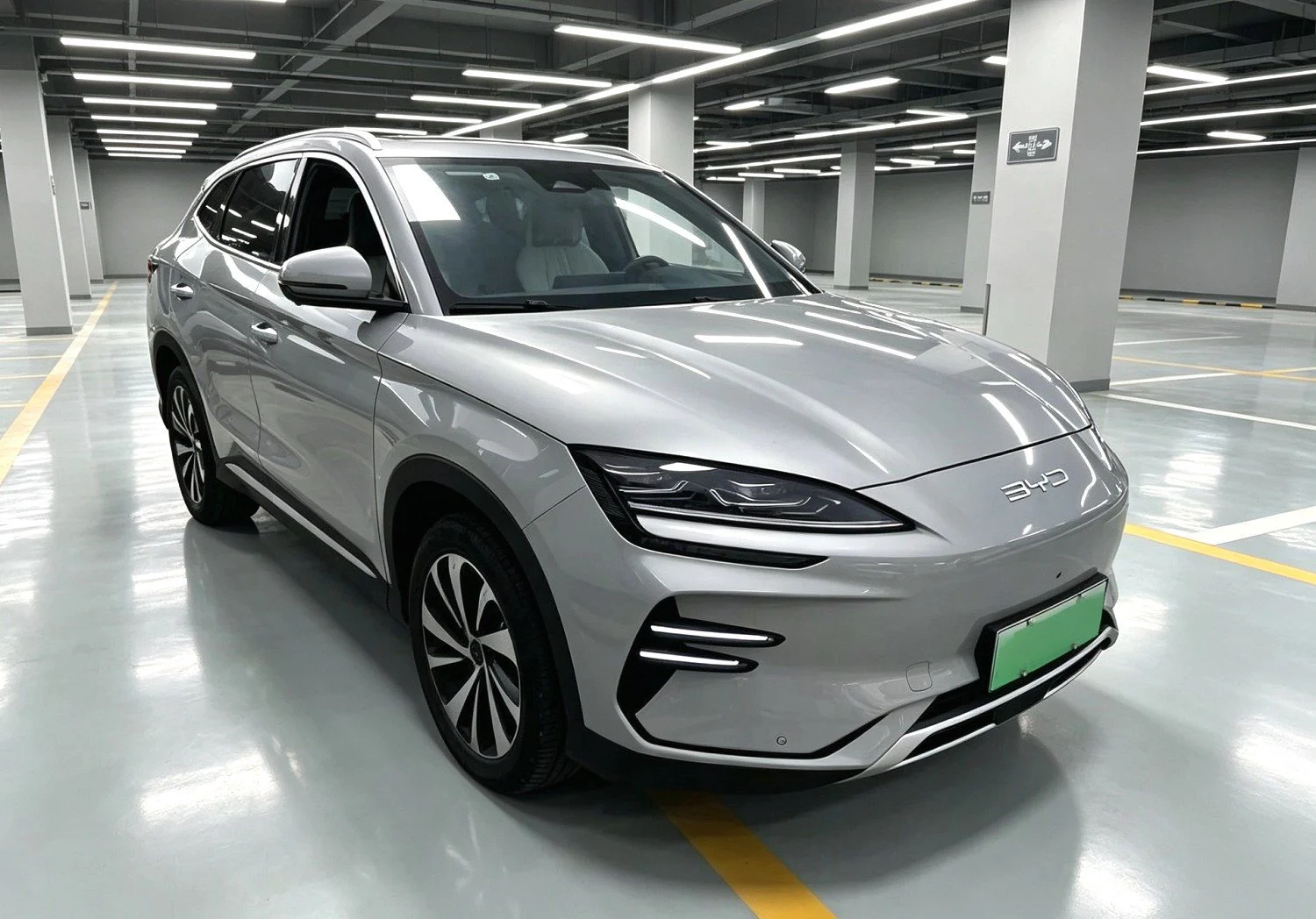
2023 BYD Song PLUS EV Champion Edition 520km Flagship (204HP FWD / Seal U) Electric SUV
- 2024
- 4,000 km
- Automatic
- Electric

2023 XPENG G6 755 Long Range Pro (218kW / 296HP / 800V SiC) Electric Coupe SUV
- 2024
- 59,000 km
- Automatic
- Electric