









Is There Still a $7,500 Tax Credit for Electric Cars?

Nope. Ask around in 2026 and you will still hear that the $7,500 tax credit for electric cars is alive. It is not. The US federal credit for new EVs expired on 30 September 2025, and the separate $4,000 used-EV credit ended on the same date. As of 2026 there is no federal EV purchase credit in the US. Some states still run their own programmes, but they are smaller and narrower.
This matters well beyond America. The US credit shaped used EV pricing globally for four years, because it set the floor under new EV prices and therefore under residuals. When the floor moved, used prices moved with it.
What happened to used EV prices after the credit ended?
The first obvious effect was a rush. Dealers moved inventory into September 2025 to capture the credit, then volumes dropped hard in October. By early 2026, average used EV prices in the US had fallen roughly 8–12% year on year while used petrol cars were flat.
The second effect is quieter and more useful: the gap between Chinese domestic used prices and Western retail prices widened. A 2023 BYD Atto 3 is worth about $14,500 FOB in China and sells for the equivalent of $24,000 in markets that tax imports heavily. That spread is the whole business case for export buyers.
Do electric cars hold their value without subsidies?
Worse than petrol cars, and mostly for reasons that predate the credit. EVs depreciate 45–55% over three years versus 35–40% for comparable petrol models. The causes: rapid model-year updates, battery anxiety in the resale market, and heavy fleet supply. Removing the credit did not create that problem, but it did remove a cushion.
| Model type | 3-year retained value | Comment |
|---|---|---|
| BYD Seagull / Atto 3 | 58–68% | Strongest in the Chinese used market |
| Leapmotor / Neta | 45–52% | Brand risk drags resale |
| Microcars (Wuling, Geely Panda) | 42–48% | Cheap new, cheap used |
| Luxury EVs (NIO, Zeekr, HiPhi) | 38–45% | Steep, driven by tech refresh cycles |
Should you wait for a new incentive before buying?
Probably not. Waiting for policy is usually a bad trade for a depreciating asset. If a credit returns, new prices rise to absorb part of it and used prices rise a little — you gain maybe 3–5% on the used side and lose six months of use. Buy the car you need at the price that works now.
The exception is if your destination market has its own live incentive with an expiry date. Some EU countries, Gulf states and Southeast Asian markets still run EV import exemptions or registration rebates. Check those instead of wishing for the US credit back.
What does the end of the credit mean for Chinese imports specifically?
Less than people assume. Chinese EVs were never eligible for the US credit — the rules required North American assembly and excluded Chinese battery content from 2024 onward. So a buyer importing a BYD Atto 3 or a Leapmotor C11 was never collecting $7,500 anyway.
What did change is the resale comparison. Without a subsidised new-car alternative, buyers evaluate a used import on running cost alone. That actually favours Chinese EVs: a 60 kWh Atto 3 costs roughly $0.03–$0.05 per km to run versus $0.08–$0.12 for an equivalent petrol crossover.
How do you value a used EV without the credit as a reference point?
Work backwards from battery replacement cost. A new LFP pack for a compact Chinese EV runs $5,500–$8,000 installed. If the pack is at 92% SOH and has 5–6 years of useful life left, that pack is worth roughly $4,000 of remaining value. Compare that against the asking price and the rest of the car.
- Ignore any sticker that still references a “$7,500 discount” — that pricing logic is dead.
- Price the pack separately from the body; they age on different curves.
- Ask for a written SOH figure and make the sale conditional on it.
- Factor your local electricity tariff, not the country average.
Key Takeaways
- No, the $7,500 US new-EV credit and $4,000 used credit both ended 30 September 2025.
- US used EV prices fell 8–12% year on year by early 2026.
- Chinese EVs were never eligible for the US credit, so imports are unaffected directly.
- Three-year retention for Chinese EVs ranges 38–68% depending on brand.
- Value a used EV from battery replacement cost, not from subsidy-adjusted pricing.
Related Vehicles

2022 BYD Yuan PLUS (Atto 3) 510km Flagship (204HP FWD) Electric Compact SUV
- 2022
- 56,000 km
- Automatic
- Electric
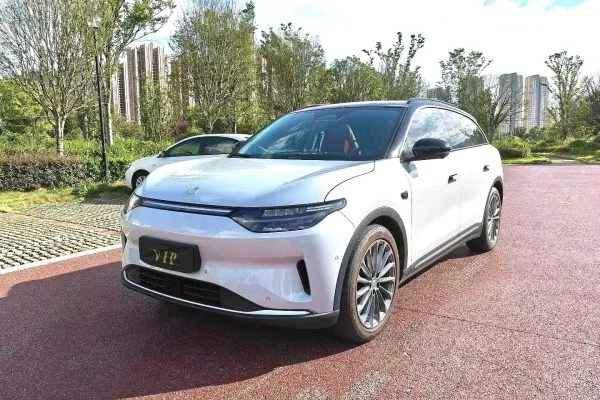
2024 Leapmotor C11 580 Premium Edition for Sale – 272 hp EV, 580 km Range, Export Ready
- 2024
- 21,000 km
- Automatic
- Electric
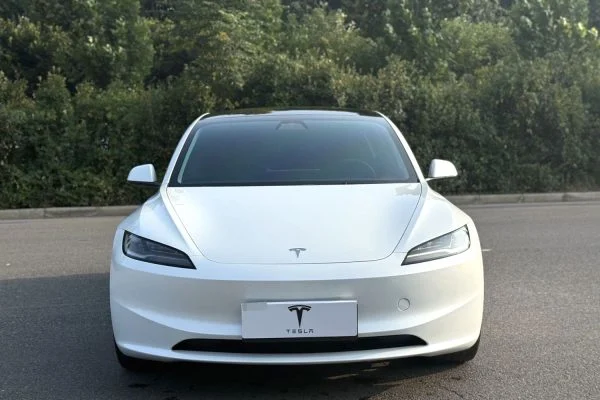
2023 Tesla Model 3 Highland RWD for Sale – 264 hp EV, 606 km Range, Export Ready
- 2024
- 60,000 km
- Automatic
- Electric
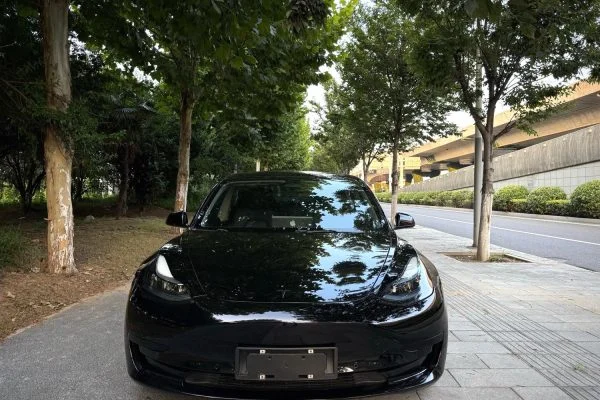
2022 Tesla Model 3 RWD for Sale – 67,000 km, Electric Sedan, Export Ready
- 2023
- 67,000 km
- Automatic
- Electric