









Used Electric Car for Sale in Karachi: China Sourcing in 2026

A used electric car for sale in Karachi sourced from China lands at roughly $11,000-$19,000 depending on model, against $14,000-$22,000 for a comparable used Japanese hybrid. The Chinese EV wins on running cost; the hybrid wins on resale.
That is the honest trade. Karachi’s heat, dust and drive-cycle are specific, and they shift which cars make sense versus what a European buyer should choose.
Why does Karachi change which EV you should buy?
Three reasons: heat, distance and charging.
Summer temperatures sit above 40°C for weeks. That is hard on battery cooling, and it makes an air-cooled pack a liability. Second, most Karachi driving is short trips inside the city — 20 to 40 km a day, rarely above 60 km/h. Third, home charging via a standard 220V socket is realistic for most households, but public DC charging is sparse.
Put together, that profile rewards a car with a liquid-cooled LFP pack, modest power, and the ability to charge overnight on AC. It punishes 800V fast-charging hardware you will rarely use, and it punishes a small pack pushed hard in 45°C heat.
Which Chinese used EVs suit Karachi driving?
- Geely Galaxy E5, 530 km — 160 kW, LFP Aegis pack, 15,000 km. Around $16,900 FOB. The best all-rounder here: real cooling, real space, and Geely exports to 30+ markets.
- Geely Xingyuan, 310 km — RWD, five doors, around $9,800 FOB. Cheap to run, easy to park, good for a two-car household.
- Geely Xingyuan 2026 Chengfeng — the newer trim of the same car, slightly better equipment.
- BYD Atto 3, 510 km — 60.48 kWh Blade pack, 204 hp, around $16,800 FOB. Proven in hot markets across Southeast Asia.
Is a Chinese EV cheaper to run than a Japanese hybrid in Karachi?
Yes, clearly. A 1,500cc hybrid does about 18-20 km per litre. At local fuel prices that is roughly $0.06-$0.07 per km. An EV drawing 13 kWh per 100 km on home tariff lands near $0.02-$0.03 per km.
Over 15,000 km a year, that is a $450-$600 saving. Over five years, $2,250-$3,000 — which roughly equals the price gap between the two options.
Here is where it gets uncomfortable for the EV: resale. A used Japanese hybrid has a deep local buyer pool and known residuals. A Chinese EV does not, yet. If you sell after three years, expect a sharper drop than the hybrid takes.
What should you check on a Chinese EV in a hot climate?
- Battery cooling type. Liquid-cooled packs hold up far better in sustained 40°C-plus heat. Confirm from the spec sheet, not the seller.
- SOH after a summer. A car that lived through two Karachi summers is a different proposition from one that spent its life in Hefei. Ask for a recent BMS scan.
- A/C performance under load. Test it parked, in the afternoon, with the battery above 50%.
- Ground clearance and dust sealing. A sedan with 120 mm of clearance is a bad idea on Karachi roads after rain.
One more: parts. Before you buy any model, confirm a local parts channel exists for brake pads, filters and the A/C compressor. The traction battery almost never fails; the small stuff does, and waiting six weeks for a $40 part is what actually ruins ownership.
Used EV or used hybrid for a Karachi buyer in 2026?
Buy the EV if you have off-street parking, charge at home, and drive under 60 km a day. You will save real money and the car will suit the duty cycle.
Buy the hybrid if you have no fixed parking, drive long intercity routes, or plan to sell within three years. Boring answer, correct answer.
Key Takeaways
- Chinese used EVs land in Karachi at roughly $11,000-$19,000, versus $14,000-$22,000 for used Japanese hybrids.
- Running cost is $0.02-$0.03/km on home charging, versus $0.06-$0.07/km for a hybrid.
- Liquid-cooled LFP packs are the right choice for 40°C-plus summers; air-cooled packs degrade faster.
- Resale is the EV’s weak point here — plan to hold four years or more.
Related Vehicles

2026 Geely Galaxy E5 530km Exploration Edition (218HP FWD / EX5 / Aegis Blade Battery) Electric SUV
- 2025
- 15,000 km
- Automatic
- Electric

2025 Geely Geome Xingyuan 310km Youth Edition (58kW RWD / Flyme Auto) Compact EV
- 2025
- 18,000 km
- Automatic
- Electric
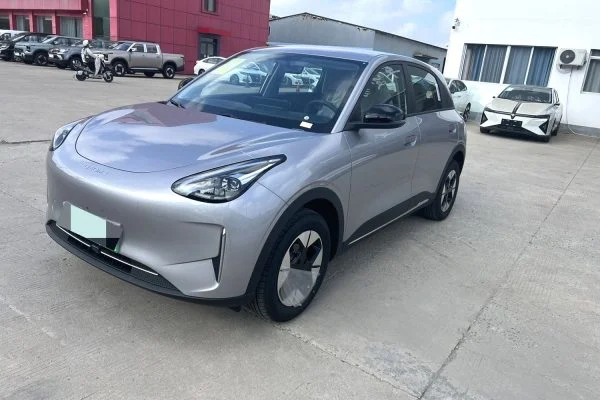
2026 Geely Xingyuan 310km Chengfeng Edition for Sale – 79 hp EV, 310 km Range, Export Ready
- 2026
- 900 km
- Automatic
- Electric

2022 BYD Yuan PLUS (Atto 3) 510km Flagship (204HP FWD) Electric Compact SUV
- 2022
- 56,000 km
- Automatic
- Electric