









Cheap Second Hand Electric Cars for Sale: 4 Picks Under $10k
Cheap second hand electric cars for sale out of China start at about $8,500 FOB. The four that are worth looking at in 2026 are the BYD Seagull, Chery eQ1 Little Ant, Changan Lumin and Baojun E200 — all 30 kWh class, all 300 km rated.
All four are Chinese domestic-market city cars. None of them is fast. All of them will still be running in five years with almost no maintenance, which is the whole point.
Which four second hand electric cars are actually cheap?
Skip the marketing. Here is the list with the numbers that decide a purchase.
- BYD Seagull, 2025, 12,000 km — 30.08 kWh Blade, 305 km CLTC, 75 hp, about $8,500 FOB Shanghai. Five doors.
- Chery eQ1 Little Ant, 2024, 13,000 km — 29.23 kWh, 321 km CLTC, 48 hp, about $9,000 FOB Ningbo. Three doors.
- Changan Lumin, 2022, 25,000 km — 301 km class, four seats, roughly $7,800 FOB. The cheapest of the four.
- Baojun E200, 2020, 305 km — two seats, 39 hp, roughly $6,500 FOB. Oldest and most compromised.
Is the cheapest one actually the worst one?
Usually, yes. The Baojun E200 is a two-seater. Not a four-seat city car with a small back bench — literally two seats, with a cargo shelf behind. Its original Chinese list price was RMB 54,800, which tells you what segment it was built for.
At $6,500 it looks like a bargain and behaves like a delivery pod. Buy it for inner-city courier work or a resort shuttle. Do not buy it as a family’s only car.
The Changan Lumin sits in a better spot. Four seats, 301 km class range, and it is a 2022 car with 25,000 km — newer than the E200 by two years for about $1,300 more. That is the better trade in this bracket.
What does a real ownership year cost on one of these?
Running costs are the reason people put up with 48 hp.
- Electricity: 30 kWh pack, roughly 12 kWh per 100 km. At $0.10/kWh that is $1.20 per 100 km. A 15,000 km year costs about $180.
- Servicing: brake fluid every two years, cabin filter annually, tyre rotation. Under $120 a year.
- Tyres: one set every 35,000-40,000 km on these light cars, $200-$350.
- Battery: nothing, if state of health was above 92% at purchase.
Total annual running cost lands near $450. A comparable petrol hatchback in most markets runs $1,800-$2,400 once fuel and oil changes are counted.
What breaks first on a cheap Chinese EV?
Not the motor. Not the battery. In practice the failures are air-conditioning compressors, window regulators, charge-port flaps and 12V aux batteries.
The 12V battery is the one that strands people. It is a small lead-acid unit worth $60, and when it dies the car will not start even with a full traction pack. Carry a jump pack, or replace it every four years as routine maintenance.
The A/C compressor matters more. It runs the battery cooling loop on some of these cars, so a failed compressor can force the BMS to limit fast charging. If you are buying a 2020-2022 unit, test the A/C on a hot day and watch the charge rate afterward.
Second hand vs new: is the discount worth it?
A new Seagull costs about RMB 69,800 in China, around $9,700. A 2025 one-owner car with 12,000 km at $8,500 FOB is roughly 12% cheaper for 12,000 km of use.
That is a fair deal but not a spectacular one. The bigger discounts sit on 2020-2022 cars, where depreciation has already taken 35-40% and the battery is still within 5% of new. That is where the value is.
Key Takeaways
- Cheap second hand EVs from China span $6,500 (Baojun E200) to $9,000 (Chery eQ1) FOB in 2026.
- Only the Seagull and eQ1 have five-door or full four-seat practicality with decent parts support.
- Running costs about $450 a year for 15,000 km — the strongest argument for buying one.
- A/C compressors and 12V batteries are the realistic failure points, not the traction battery.
Related Vehicles
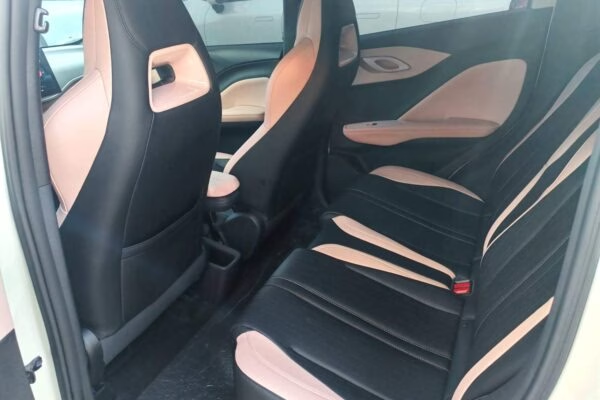
2025 BYD Seagull Vitality Edition 305km EV (75 HP) – 12,000 km, Beige over Blue
- 2025
- 12,000 km
- Automatic
- Electric
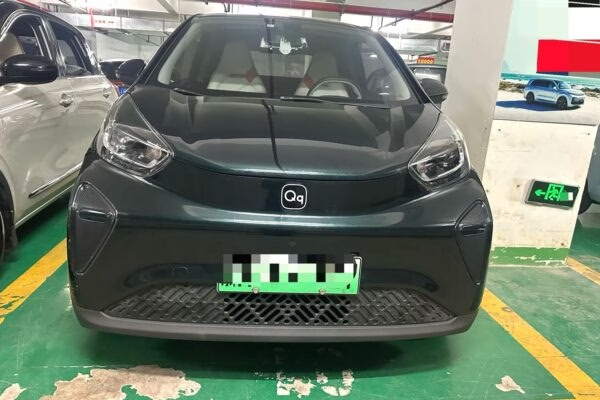
2024 Chery eQ1 (Little Ant) 321 km Zhong’ai Edition – 13,000 km, Jinhua, FOB Ningbo
- 2024
- 13,000 km
- Automatic
- Electric
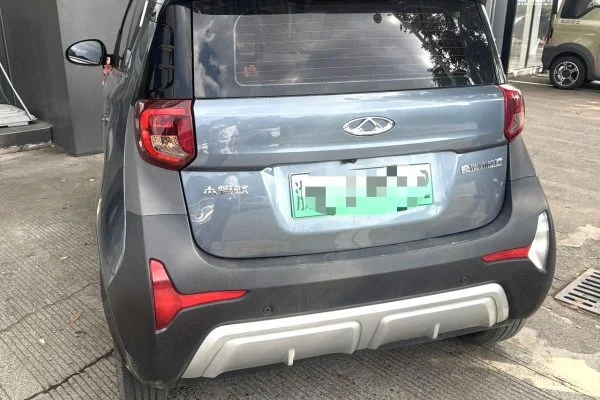
2022 Chery eQ1 Little Ant Tianfen Full Sugar Edition for Sale — 25,000 km, 30.6 kWh, 301 km, Hangzhou Stock
- 2022
- 25,000 km
- Automatic
- Electric
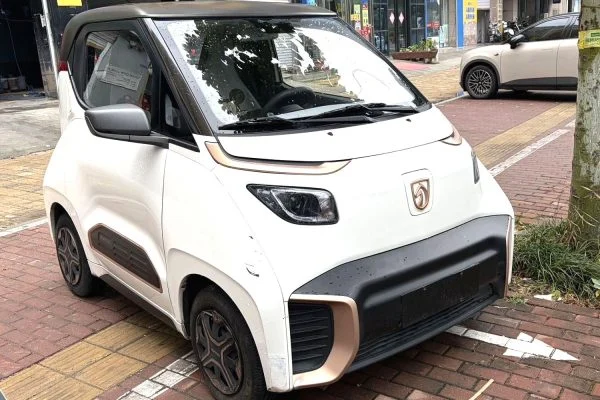
2020 Baojun E200 305km Zhixing Edition for Sale – 39 hp EV, 305 km Range, Export Ready
- 2021
- 25,000 km
- Automatic
- Electric