









Used Electric Cars Under $10,000 in 2026: What You Really Get
Three used EVs are genuinely available under $10,000 FOB from China in 2026: the BYD Seagull at about $8,500, the Chery eQ1 at $9,000 and the Geely Xingyuan at $9,800. All three are city cars with 200-240 km of real-world range.
That is the honest answer. Anything promising a 400 km family SUV for nine grand is either a conversion, a salvage car, or a listing that will not survive an inspection.
What does $8,500 actually buy in the Seagull?
A 2025 Vitality Edition with 12,000 km on the clock, a 30.08 kWh Blade battery and 305 km of CLTC range. Beige over a blue cabin, listed out of Hefei, loading at Shanghai.
The domestic reference price is RMB 50,000. Add land freight, export documents and port handling and you land near $8,500 FOB. What you get for that is a five-door hatchback with a reversing camera, air conditioning, a factory touchscreen and a drivetrain from the company that sells more EVs than anyone else.
What you give up: power. 75 hp. Zero-to-100 takes somewhere north of 12 seconds. Interior plastics are hard and the rear seats are for children or short trips.
Is the Chery eQ1 worth $500 more than the Seagull?
Only if you need the smallest possible footprint. The 2024 eQ1 Zhong’ai is 3.2 metres long with a 29.23 kWh pack, 321 km rated and a 36 kW motor. It is a three-door, four-seat city car that fits in gaps nothing else does.
The Seagull is the better car for almost everyone else — more doors, more power, better parts network. The eQ1’s advantage is parking, and that is a real advantage in dense cities and island markets where space is the binding constraint.
Why does the Geely Xingyuan cost $9,800 and still feel like the value pick?
Rear-wheel drive, multilink rear suspension, five doors, and a 70-litre front boot on a car under ten grand. Those are not features you expect at this price.
Geely sold over 700,000 Xingyuans in 2025 and exports it to more than 30 countries, which matters for parts. The 58 kW motor is modest — 78 hp — but the rear-drive layout makes it feel quicker than the number suggests in the 0-50 km/h range where city cars spend their life.
What are the hidden costs under ten grand?
- Tyres: $200-$350 for a set on these cars, and most used units arrive on the originals.
- Charging cable: many Chinese domestic cars ship without a portable AC cable. Budget $150.
- Doc and compliance: your market’s registration and inspection fees, usually $300-$900 depending on country.
- Freight: a 3.2 m car still occupies most of a container slot. Expect $1,100-$1,900 depending on route.
Add it up and a $9,000 car is a $11,500 car landed. Anyone quoting you a landed price below that is cutting something.
Should you buy one at all, or save for $15k?
Buy under $10k if the car’s job is a 40 km daily round trip with home charging. It does that job for years at almost no running cost — roughly $0.03 per km on cheap night tariffs.
Save for the $15k bracket if you need motorway speed, four adults, or more than 300 km of range in one go. The Baojun E200 at 305 km and the Seagull both hit a wall above 90 km/h, and no amount of discount fixes that.
Key Takeaways
- Under $10,000 FOB in 2026 is real, but only for three-door-to-five-door city cars with 30 kWh packs.
- BYD Seagull ~$8,500 is the default choice; Chery eQ1 ~$9,000 wins only on size; Geely Xingyuan ~$9,800 wins on equipment.
- Expect $2,000-$2,500 of extras before the car is on the road in your market.
- Realistic range is 200-240 km, not the 305-321 km on the badge.
Related Vehicles
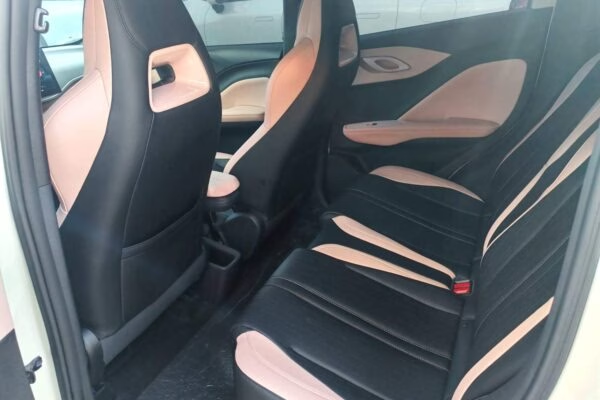
2025 BYD Seagull Vitality Edition 305km EV (75 HP) – 12,000 km, Beige over Blue
- 2025
- 12,000 km
- Automatic
- Electric
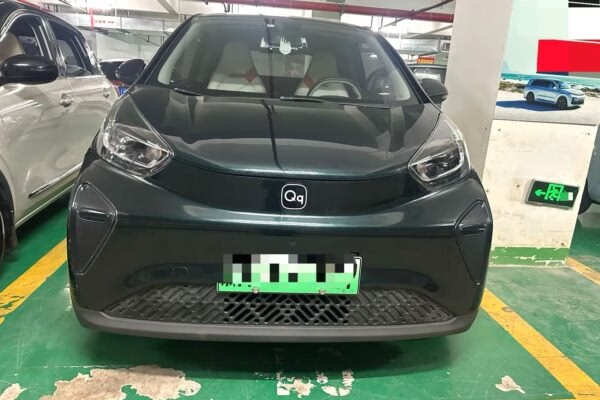
2024 Chery eQ1 (Little Ant) 321 km Zhong’ai Edition – 13,000 km, Jinhua, FOB Ningbo
- 2024
- 13,000 km
- Automatic
- Electric

2025 Geely Geome Xingyuan 310km Youth Edition (58kW RWD / Flyme Auto) Compact EV
- 2025
- 18,000 km
- Automatic
- Electric
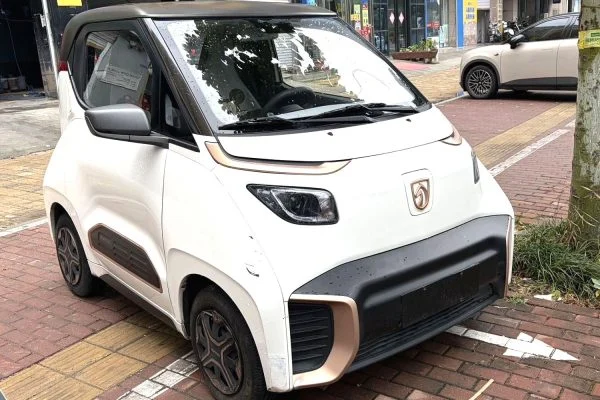
2020 Baojun E200 305km Zhixing Edition for Sale – 39 hp EV, 305 km Range, Export Ready
- 2021
- 25,000 km
- Automatic
- Electric