









Used Tesla for Sale: Why Chinese Used EVs Beat It on Price

A used Tesla for sale at $22,000-$28,000 buys a 2021-2022 Model 3 with 60-90,000 km. The same money buys a 2022 Zeekr 001, a 2023 XPENG G6 755 Pro, or a near-new 2025 Zeekr 007 GT from China — with 200-300 km more range and newer hardware.
That comparison is uncomfortable for Tesla owners and useful for buyers. Neither side wins outright.
What does a used Tesla cost versus a Chinese used EV in 2026?
- Tesla Model 3, 2021-2022, ~60,000 km: $21,000-$27,000 depending on market and trim
- Zeekr 001 Long Range, 2022, 536 km: $20,000-$23,000 FOB China
- XPENG G6 755 Pro, 2023, 755 km CLTC: $19,500-$22,500 FOB
- Zeekr 007 GT, 2025, 422 hp, 800V: $24,000-$27,000 FOB, near-new
The 2022 Zeekr 001 Long Range Dual-Motor is the closest thing to a like-for-like rival: similar size, similar power (544 hp against roughly 350 hp), similar price used. The 2023 XPENG G6 755 Pro goes after a different buyer entirely — 800V charging and a coupe-SUV body.
Where does Tesla still win?
Three places, and they are real advantages.
- Charging network. No Chinese brand has anything comparable to the Supercharger footprint in Europe or North America. If you road-trip weekly, this decides your purchase.
- OTA longevity. Tesla still updates 2019 cars. Chinese brands often stop at year four for discontinued models.
- Resale and insurance. Local insurers price Tesla repairs on known data. A Zeekr or XPENG often gets quoted at a penalty or refused.
One more: diagnostic tools. Every independent workshop can read a Tesla. That is not true for Chinese brands, and it is why a $300 fault can become a $900 one.
Where do Chinese used EVs win?
Range per dollar, and hardware density. The 2025 Zeekr 007 GT is 800V, 422 hp, 75 kWh, with a 0-100 km/h time under four seconds — for less than a used Model 3 Long Range. Tesla simply does not build that at that price.
Battery transparency also favours some Chinese cars. Blade and LFP packs hold capacity well and degrade predictably, and BYD’s service network in Southeast Asia and Latin America is broader than Tesla’s outside major cities. For a buyer in Nigeria, Pakistan, Sri Lanka or Brazil, that asymmetry can matter more than badge value.
Which is cheaper to keep for five years?
Roughly similar on energy and tyres, meaningfully different on repairability. Tesla’s advantage is known costs; the Chinese car’s advantage is cheaper parts from the source market, if you can get them.
The risk to price in: if a Chinese used EV needs a body panel in a market without a dealer, the car can sit for weeks. A Tesla part ships overnight at a premium. Factor two to four weeks of downtime into your total cost if you depend on the vehicle.
What about a used Tesla imported from China?
Possible, and often poor value. Chinese-market Model 3 and Model Y units use different charging connectors (GB/T), local navigation data, and occasionally different battery suppliers. You save maybe 8-12% on the purchase price and spend far more on conversion and lost warranty. Buy Tesla locally.
So which should you buy?
If you drive long distances in a market with Superchargers and need one car to do everything: used Model 3. If you want maximum range, charging speed and equipment per dollar and can manage parts locally: a Chinese used EV is the better financial decision, particularly a Leapmotor C11 580 Premium for buyers whose priority is family space over performance.
Key Takeaways
- Used Model 3 at $21,000-$27,000 competes with newer Chinese EVs at $19,500-$27,000.
- Tesla wins on charging network, OTA longevity, insurance data and diagnostics.
- Chinese used EVs win on range per dollar and hardware density.
- Factor 2-4 weeks of parts downtime into Chinese EV ownership outside dealer markets.
- Importing a used Tesla from China is usually a false economy — buy it locally.
Related Vehicles
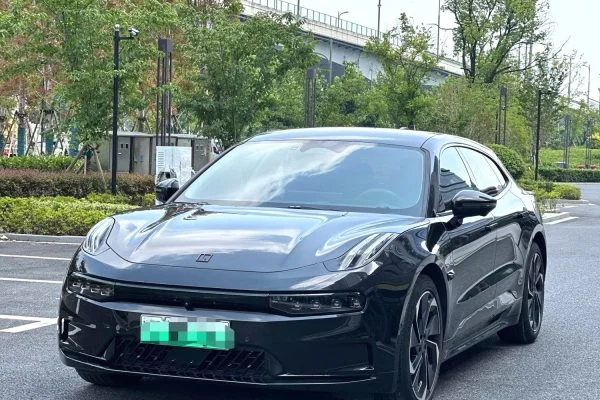
2022 Zeekr 001 Long Range Dual-Motor WE Edition for Sale – 544 hp, 536 km Range, Export Ready
- 2022
- 37,000 km
- Automatic
- Electric

2023 XPENG G6 755 Long Range Pro (218kW / 296HP / 800V SiC) Electric Coupe SUV
- 2024
- 59,000 km
- Automatic
- Electric
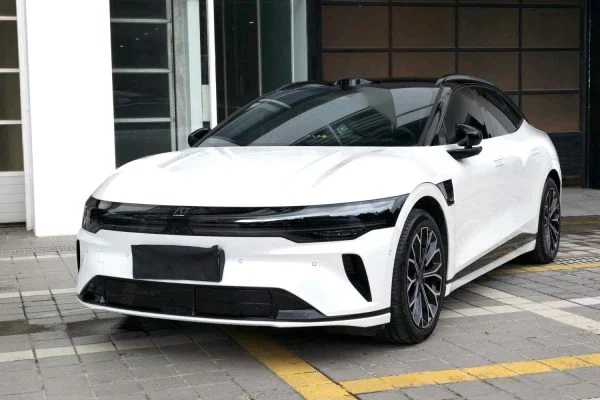
2025 Zeekr 007 GT RWD Smart Drive (422HP / 75kWh / 800V) Electric Sedan
- 2025
- 22,000 km
- Automatic
- Electric
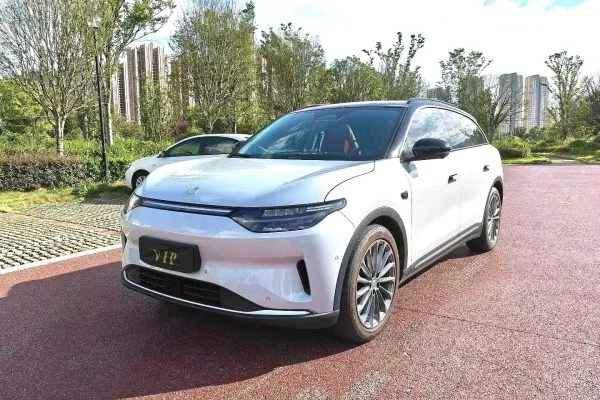
2024 Leapmotor C11 580 Premium Edition for Sale – 272 hp EV, 580 km Range, Export Ready
- 2024
- 21,000 km
- Automatic
- Electric