









Used Hybrid Cars for Sale With Low Mileage: What to Know
Used hybrid cars for sale with low mileage are the value pocket of the Chinese export market in 2026. A 2024 BYD Seal DM-i with 49,000 km asks around $13,000 FOB. A 2025 Deepal SL03 range-extender with 18,000 km sits in the same territory. Neither requires charging infrastructure to work.
But low mileage on a plug-in hybrid is not automatically good news. A PHEV that sat for a year on 15 percent charge has a pack that has aged differently from one that was driven daily.
Why is low mileage risky on a plug-in hybrid?
Plug-in hybrids carry small packs — 18 to 43 kWh on the cars here — and small packs cycle hard. Being held at very low charge for months causes lithium plating on the anode, which shows up later as lost capacity and, in bad cases, as an internal short. A 2023 car with 8,000 km that spent 14 months parked in a Dezhou lot is not necessarily healthier than a 40,000 km daily driver.
The check is the same as for a full EV: ask for a BMS readout of per-cell voltages and a state-of-health figure. On a hybrid, also ask how many months the car sat and at what charge level. Straight answers exist. Hesitation is data.
Which low-mileage hybrids are worth considering?
| Model | System | EV range | Mileage | Approx FOB |
|---|---|---|---|---|
| 2024 BYD Seal DM-i 1.5L 121km | PHEV, 197 hp | 121 km CLTC | 49,000 km | ~$13,000 |
| 2025 Deepal SL03 REEV Elite | EREV, 218 hp | 140 km CLTC | 18,000 km | ~$14,000 |
| 2022 BYD Han DM-i 121km | PHEV, 197 hp | 121 km CLTC | 50,800 km | ~$12,000 |
| 2023 Li Auto L7 Pro | EREV AWD, 330 kW | 170 km CLTC | 38,000 km | from $25,900 |
PHEV or range-extender — which is better used?
A range-extender (EREV) like the 2025 Deepal SL03 REEV drives on its electric motor all the time; the engine only generates power. That means fewer mechanical failure points than a parallel hybrid, and the driving feel stays EV-like. The trade-off is worse efficiency at sustained highway speed, where the engine does more work.
A parallel PHEV like the 2024 BYD Seal DM-i is more efficient on long runs and its 1.5L engine is a known quantity. At 49,000 km the drivetrain is barely broken in. This is the safer used purchase of the two.
Does a low-mileage hybrid still need a service history?
More than a full EV does. Hybrids have an engine, a gearbox in some cases, coolant loops and an exhaust. Oil that has sat for 14 months should be changed before the car does 500 km, whatever the odometer says. Ask for the last service date rather than the mileage.
Which hybrids should you skip?
- Cars built before 2019 with unknown battery history — early NMC PHEVs degraded fast in heat
- Anything where the seller calls the engine “for charging only” but the model is a parallel hybrid
- Cars stored at 0-5 percent charge with no pack voltage record
- Cheap 7-seat PHEV SUVs with 30,000 km of family duty and no inspection photos
Also worth a look if you want space: the 2021 BYD Tang DM-i 7-seater at 38,000 km, and the 2022 BYD Han DM-i if you want a sedan with a real boot.
What is the short version?
If you only have two minutes: the cars worth your time are LFP-battery models under four years old with local parts support, and the single number that decides a good deal from a bad one is battery state of health. Anything above 90 percent is a normal used car. Anything below 85 percent needs a discount large enough to pay for a replacement pack, and those are rare. Everything else is trim, mileage and paint.
Key Takeaways
- Low mileage on a PHEV is only an advantage if the car was stored at 40-60 percent charge.
- Parallel PHEVs like the Seal DM-i and Han DM-i are the lower-risk used buys.
- Change the engine oil before driving any stored hybrid more than 500 km.
- Insist on a per-cell BMS report and the pack production date on every hybrid.
Related Vehicles
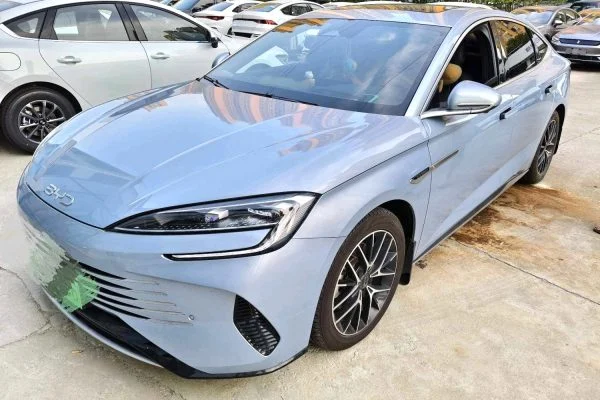
2024 BYD Seal DM-i 1.5L 121km Luxury Edition (49,000 km / 197 HP) – Mid-Size PHEV Sedan
- 2024
- 49,000 km
- Automatic
- Hybrid
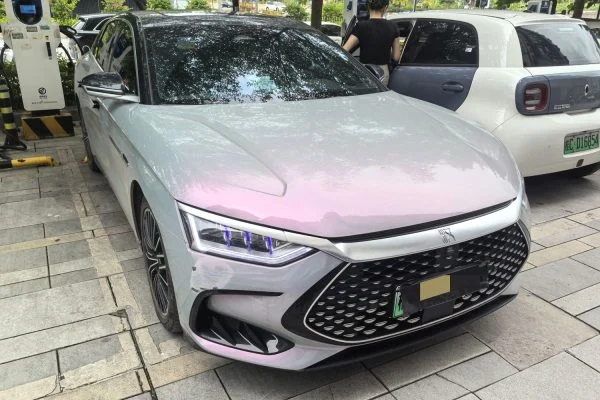
2022 BYD Han DM-i 121KM Premium Edition for Sale – 197 hp PHEV, 121 km EV Range, Export Ready
- 2022
- 50,800 km
- Automatic
- Plug-in Hybrid
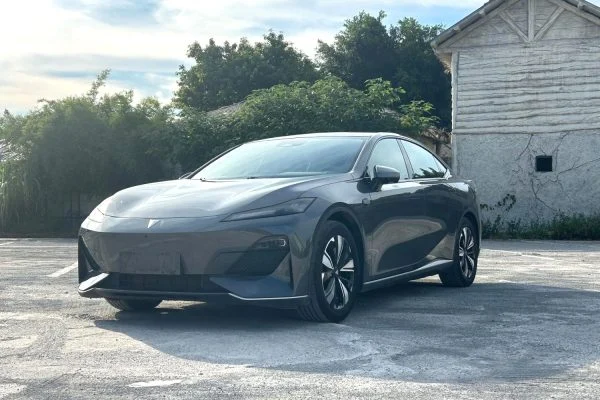
2025 Changan Deepal SL03 Range-Extended Elite Edition for Sale – 218 hp EREV Sedan, 140 km EV Range, Export Ready
- 2025
- 18,000 km
- Automatic
- Plug-in Hybrid
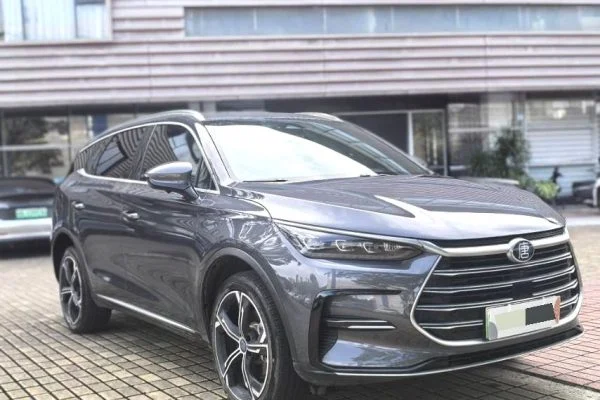
2021 BYD Tang DM-i 112KM Premium Edition for Sale – 218 hp PHEV SUV, 7-Seater, Export Ready
- 2022
- 38,000 km
- Automatic
- Plug-in Hybrid