









Used Hybrid Cars for Sale Low Mileage: 2026 PHEV Prices in China

Low mileage used hybrid cars for sale from China in 2026 run $12,000-$24,000 FOB. Plug-in hybrids need a different check from pure EVs: you want engine hours, the electric-versus-petrol distance split, and a battery capacity test at full charge.
PHEVs are the fastest-growing part of the Chinese used car market. They also produce the most confusing listings, because a “low mileage” figure can mean two very different things depending on how the owner used the car.
What does a low-mileage used PHEV actually cost?
Two examples anchor the range. The 2024 BYD Seal DM-i 121 km with 49,000 km, a 17.6 kWh Blade pack and 121 km of electric range sits in the mid-teens. The 2024 Li Auto L7 Ultra, a 2024 extended-range SUV with a 330 kW drivetrain, runs well above $24,000.
Between them sit the compact PHEV sedans and SUVs that make up most of the volume. Expect $14,000-$19,000 for a 2023-2024 car with under 40,000 km.
Why is “low mileage” ambiguous on a hybrid?
Because the odometer counts total distance, not engine or battery effort. A PHEV driven 30,000 km mostly on electric has cycled its battery far more than one driven 30,000 km mostly on petrol.
Both show the same number. They are not the same car.
Ask the seller for the trip computer’s EV-distance share. Values above 70% mean heavy battery cycling; values below 30% mean the pack is barely broken in but the engine has done the work.
Which is healthier, a battery-heavy or petrol-heavy PHEV?
There is no single answer, and that is what makes it interesting. A battery-heavy car with 60,000 electric km is effectively an EV with 250-350 full cycles — usually fine, often 90-94% state of health.
A petrol-heavy car has an engine with real wear and a pack that sat mostly at partial charge. That pack is often at 95% or better. The risk moves from the battery to the engine and gearbox.
My preference for export buyers is a middle case: 40-60% electric share, under 40,000 km, with full service records. Neither system is stressed.
How do you test a used PHEV battery in 2026?
Charge to 100%, then drive in EV mode until the engine starts. Note the distance and the kWh used. Compare with the rated figure — a car rated at 121 km electric that delivers 85 km has lost meaningful capacity.
Then check the 12V system and the inverter coolant level. Both are commonly neglected on low-mileage PHEVs because owners assume low mileage means low maintenance.
A battery capacity test at a dealer takes about an hour and costs $60-$130. On a $16,000 car it is worth every cent.
Which PHEVs hold value best from China?
The ones with the largest electric range and the simplest powertrain. A 17.6 kWh Blade pack in a 2024 BYD Seal DM-i 121 km is easy to service and well documented. Complex multi-motor extended-range systems are harder to support outside China, and that shows up at resale.
Conventional mild hybrids — the 2021 Haval M6 Plus 1.5T with its 1.5T and automatic — are the safest export choice of all. No plug, no large battery, no charger compatibility question, and a much wider service network.
Should you buy a low-mileage hybrid or a new one?
Used, if you are buying from China. The first-year depreciation on Chinese PHEVs runs 25-35%, and the 2023-2024 cars now on the used market were built after the powertrain issues of the 2021 generation were resolved.
New only makes sense if you need a specific configuration that is not yet appearing in used stock, which in 2026 is a small category.
What does a PHEV cost to run compared with a pure EV?
On electricity alone, a 2024 BYD Seal DM-i 121 km uses around 13 kWh per 100 km and $180 a year at 12,000 km. The moment the battery empties, consumption climbs to 5.5-6.5 L per 100 km on petrol.
That dual nature is why the electric-versus-petrol split matters so much. A buyer who charges nightly gets EV running costs. A buyer with no charger gets worse fuel economy than a plain hybrid, because they are carrying a heavy pack for nothing.
If you cannot charge at home or work, skip PHEVs entirely and buy a conventional hybrid or a small pure EV.
Which low-mileage hybrids are easiest to service outside China?
Those with the widest parts network. The 2021 Haval M6 Plus 1.5T 1.5T is straightforward and shares components with a large global fleet. BYD’s DM-i systems are well documented but need brand-specific diagnostic tools for hybrid faults.
Extended-range cars like the 2024 Li Auto L7 Ultra are the hardest case. They are excellent vehicles, and they depend on a service ecosystem that may not exist in your market.
Key Takeaways
- Low mileage used hybrids from China run $12,000-$24,000 FOB in 2026.
- On a PHEV, odometer does not tell you battery or engine effort.
- Ask for EV-distance share, engine hours and a capacity test.
- 40-60% electric share is the healthiest profile for export buyers.
- Mild hybrids like the Haval M6 Plus are the lowest-risk hybrid to import.
Related Vehicles
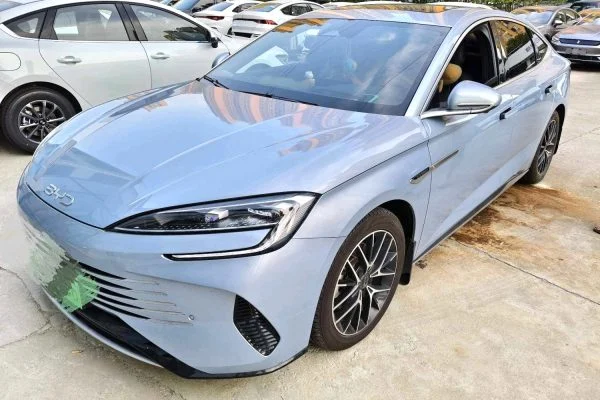
2024 BYD Seal DM-i 1.5L 121km Luxury Edition (49,000 km / 197 HP) – Mid-Size PHEV Sedan
- 2024
- 49,000 km
- Automatic
- Hybrid
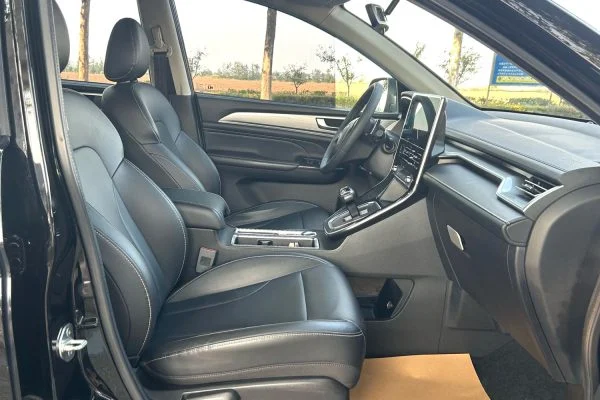
2021 Haval M6 PLUS 1.5T Luxury Smart Edition Automatic for Sale – Black, 53,000 km, Export Ready
- 2021
- 53,000 km
- Automatic
- Petrol
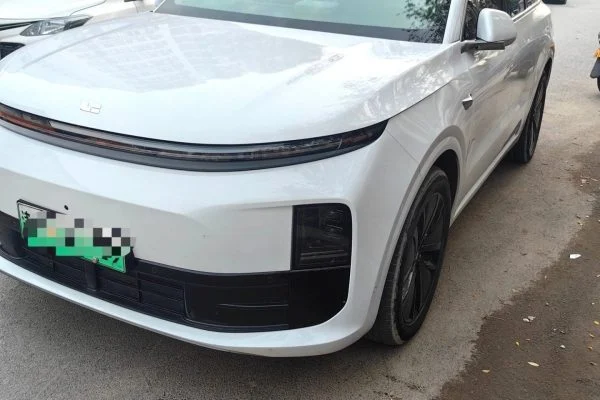
2024 Li Auto L6 Pro for Sale – 408 hp AWD EREV SUV, 36.8 kWh, Export Ready
- 2024
- 16,300 km
- Automatic
- extended-range

2022 BYD Yuan PLUS (Atto 3) 510km Flagship (204HP FWD) Electric Compact SUV
- 2022
- 56,000 km
- Automatic
- Electric