









Used Hybrid Cars for Sale by Owner: What Private Sellers Really Offer
Used hybrid cars for sale by owner in China trade roughly 10-15% below dealer stock — about $1,500-$3,000 on a $20,000 PHEV — but private sellers almost never provide the engine-hour and pack-health data a hybrid needs. That omission is the whole risk.
A hybrid has two powertrains and two service histories. On a private sale you get one of them, at best.
How much do private hybrid sales actually save?
Less than pure EVs do. Dealer margins on hybrids are tighter because the cars are newer and more expensive, so the private discount compresses. On a 2026 Chery iCAR V27 200KM AWD listed at 15,000 km, private sellers ask $29,000-$32,000 against $31,500-$34,500 from dealers. A $2,500 gap, on a car where a failed battery module costs more than that.
What goes wrong on privately sold hybrids?
- Unknown engine usage: an EREV driven 15,000 km entirely on battery has an engine that has never warmed up properly.
- No BMS report: private sellers rarely have the OEM app export, and hybrid pack health is harder to read than a pure EV’s.
- Warranty transfer: Chinese manufacturer warranties on the high-voltage system are often first-owner only. Confirm in writing.
- Software subscription: some ADAS and connectivity features are tied to the original account and cannot transfer.
That last one catches people out. A used EREV can lose lane-keeping and cloud navigation when the original owner unlinks their account. Dealers handle the transfer; private sellers frequently do not know it exists.
Is a private hybrid ever the better deal?
Yes, in one specific case: a one-owner car with full dealer service records, sold because the owner is upgrading, in a city where you have someone who can inspect it. Those exist. They are maybe one in ten private listings.
For a $30,000 EREV, the dealer premium of $2,500 buys you a documented pack, a transferred warranty and a known software state. That is cheap insurance. For a $9,000 BYD Yuan UP, a pure EV with one powertrain, the private route is far less risky.
What documents should a private hybrid sale include?
| Document | Why it matters | Red flag if missing |
|---|---|---|
| BMS health screenshot | Confirms pack SOH | Refuses or sends a photo of the dashboard |
| Service booklet | Shows oil and coolant history | Claims “no service needed” |
| Warranty terms | Confirms transferability | Verbal assurance only |
| Vehicle registration | Seller is the legal owner | Third-party name on the title |
| Software account status | ADAS features will work | “You can set it up yourself” |
Does mileage mean less on a hybrid?
It means something different. On a PHEV, 40,000 km might be 60% electric and 40% petrol — so the engine has done 16,000 km and the pack has done 24,000. Both are low. On an EREV used as an EV, 40,000 km could mean the engine has done 2,000 km and never been serviced.
Ask for the split. Any Chinese EREV with a connected app can show electric versus fuel kilometres. A seller who cannot produce that number is asking you to buy blind.
Key Takeaways
- Private hybrid sales in China save 10-15% versus dealers — less than the 15-20% typical on pure EVs.
- Warranty transferability on high-voltage systems is often first-owner only; get it in writing.
- ADAS and cloud features can break when the original owner unlinks their account.
- Ask for the electric-versus-petrol kilometre split; it is the real condition report on an EREV.
- A one-owner car with full dealer service records is the only private hybrid worth the risk.
Related Vehicles
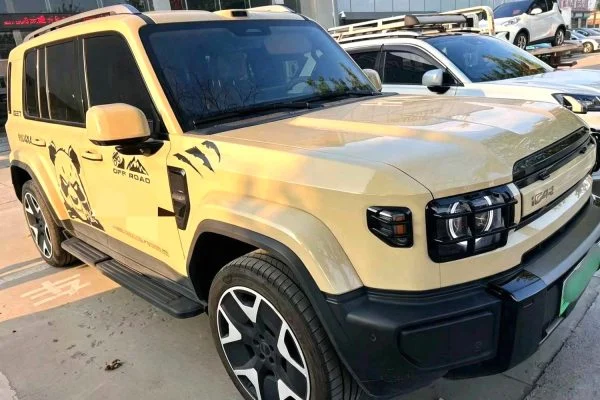
2026 Chery iCAR V27 200KM AWD Falcon 700 (15,000 km / 455 HP / LiDAR) – Off-Road EREV SUV
- 2026
- 15,000 km
- Automatic
- Plug-in Hybrid
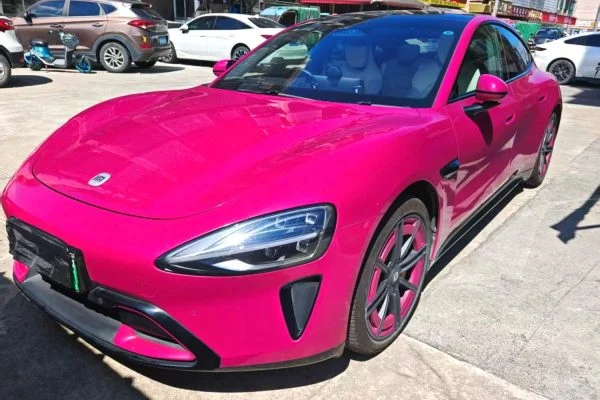
2024 Xiaomi SU7 Founder Edition RWD (299HP / 700km Range) Electric Sedan
- 2025
- 50,000 km
- Automatic
- Electric

2022 BYD Yuan PLUS (Atto 3) 510km Flagship (204HP FWD) Electric Compact SUV
- 2022
- 56,000 km
- Automatic
- Electric

2024 BYD Yuan UP (Atto 2) 401km Huoli Edition (95HP FWD / 22k km) Compact EV SUV
- 2024
- 22,000 km
- Automatic
- Electric