









Used EV Battery Health: 6 Checks Before You Buy in 2026
Used EV battery health is the single number that decides whether a $12,000 car is a bargain or a $6,000 mistake. Anything above 90% state of health (SOH) is good; below 85% on a car under four years old means the pack had a hard life.
Chinese LFP packs are forgiving, which makes this easier than buying a used Nissan Leaf. It does not make it optional.
What is state of health and why does it matter?
SOH is remaining usable capacity as a percentage of the original. A 60 kWh pack at 90% SOH holds 54 kWh of usable energy. You lose range linearly, so a 510 km car becomes a 460 km car – tolerable. At 80% SOH it becomes a 408 km car and the owner starts noticing charging stops.
For LFP cells, degradation follows a slow curve: most of the loss happens in the first 30,000 km, then it flattens. That means a 2022 car with 80,000 km is often in better shape per kilometre than one with 15,000 km that was fast-charged daily.
How do you get a real SOH number?
- Manufacturer app screenshot – BYD, Leapmotor and GAC apps report capacity. Ask the seller to log in on video call, not send a photo.
- Dealer diagnostic printout – a 4S dealer will run the BMS scan for around 200 RMB and hand you a report.
- Full-charge range test – charge to 100%, note the estimated range, then compare to the original rated range.
- DC charging curve – a healthy pack accepts its rated peak. One that stalls at half the peak is derating.
Of those four, the dealer printout is the only one you should trust for a decision. App screenshots are easy to fake and range estimates are software guesses.
What are normal SOH numbers by age?
- 1 year, 15,000 km: 97-99%
- 2 years, 35,000 km: 94-97%
- 3 years, 60,000 km: 90-94%
- 4 years, 90,000 km: 86-91%
- 5 years, 130,000 km: 82-88%
A 2022 BYD at 84% SOH is below the curve and you should assume it was fast-charged hard or sat at 100% in the heat. A 2021 car at 92% is above the curve and worth a premium.
Which cars age best on the used market?
LFP chemistry wins. Every BYD Song Plus EV and Atto 3 uses Blade LFP cells that tolerate 3,000-plus full cycles. Smaller cars like the Leapmotor T03 also run LFP.
NMC packs – common in older premium EVs and some early Zeekr models – degrade faster and dislike being held at high charge. If you are buying NMC, subtract 4-5 percentage points from the expected SOH table above.
Is a low-SOH car ever worth buying?
Only with a discount that reflects the risk. A replacement LFP pack for a Chinese compact EV costs $3,500-$6,000 installed, depending on model and where you are. If a seller drops the price by $2,500 on an 80% SOH car, you are absorbing the risk, not being compensated for it.
There is one exception: a car at 80% SOH with 200,000 km that you plan to use locally for short trips. At the right price – 55% of a good example – it still makes sense.
Key Takeaways
- Above 90% SOH is good; below 85% on a car under four years old is a red flag.
- Get a dealer BMS printout, not a seller’s app screenshot.
- Expect 90-94% SOH at three years and 60,000 km for LFP packs.
- LFP Blade packs age better than NMC – factor 4-5 points for NMC cars.
- A replacement pack costs $3,500-$6,000, so discount low-SOH cars accordingly.
Related Vehicles

2021 BYD Song PLUS EV Luxury Edition (505km Range / Blade Battery) – Electric SUV
- 2023
- 50,000 km
- Automatic
- Electric

2022 BYD Yuan PLUS (Atto 3) 510km Flagship (204HP FWD) Electric Compact SUV
- 2022
- 56,000 km
- Automatic
- Electric
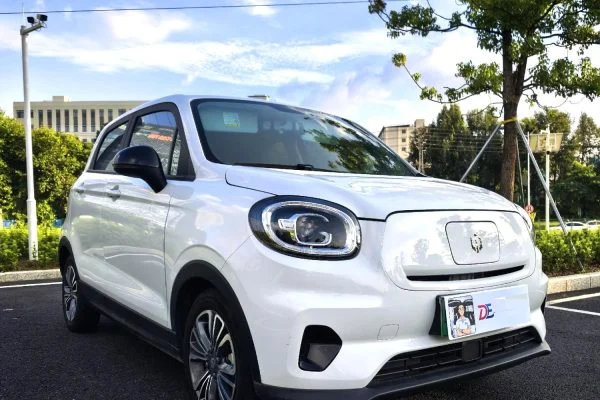
2024 Leapmotor T03 403 Comfort Edition for Sale – 109 hp EV, 403 km Range, Export Ready
- 2024
- 11,000 km
- Automatic
- Electric