









Used Electric Car Under $10K: Six China Options
You can buy a used electric car for under $10,000 from China in 2026 with 300-400 km of range, under 40,000 km on the clock and an LFP battery that will outlive the loan. The trick is picking the right body type, not the cheapest listing.
Under $10,000 is the hardest band to buy in. Below it, you are looking at quadricycles and golf-cart-grade drivetrains. Above it, you can buy an ex-lease SUV. Right at $8,000-$9,500, there are real cars with real doors, real aircon and parts somebody still makes.
What does $10,000 actually buy from China?
Around $8,000 buys a 2025 compact hatchback with 310 km CLTC. Around $9,500 buys a 2023 five-door with 333 km and a bigger cabin. You will not get a long-range highway car in this band — accept that and the rest is straightforward.
| Car | Range | Body | FOB price |
|---|---|---|---|
| BYD Seagull 305 | 305 km CLTC | 5-door hatch | $8,100-$8,900 |
| Leapmotor T03 403 | 403 km CLTC | 5-door hatch | $7,200-$8,100 |
| Geely Xingyuan 310 | 310 km CLTC | 5-door hatch | $7,800-$8,700 |
| Wuling Binguo 333 | 333 km CLTC | 5-door hatch | $7,400-$8,300 |
| GAC Aion Y 500 | 500 km CLTC | compact SUV | $8,700-$10,500 |
| Changan Lumin 301 | 301 km CLTC | 3-door city | $5,900-$6,800 |
Which one should you pick?
For most people, the GAC Aion Y. It is the only car in the band that seats five adults with legroom to spare, has a 500 km CLTC rating and still lists under $10,000. The catch is fleet history — most Aion Y cars on the market were ride-hailing vehicles in Guangzhou or Shenzhen.
For the lowest risk, the BYD Seagull 305. The 2025 Seagull Freedom Edition sells as the Dolphin Mini in several export markets, so body panels and lights are findable. It charges at 40 kW DC and drives like a proper small car.
For the newest car, the Geely Xingyuan. A 2025 Xingyuan 310 km Youth Edition with 8,000 km is basically new. Geely’s dealer network in Latin America and the Middle East is the widest of any Chinese brand.
Is a sub-$10,000 EV cheap to run?
Yes, and that is the whole point. Electricity at $0.10/kWh works out to about $1.60 per 100 km. A petrol hatchback doing 6 L/100 km costs roughly $9 at $1.50/L.
Maintenance is also genuinely lower. No oil, no spark plugs, no timing belt. Brake pads last 100,000 km because regen does most of the stopping. Tyres wear faster though — these cars are heavier than their size suggests.
Which cheap EVs look good but are not?
- Two-seat mini EVs. Cheapest to buy, hardest to insure, often not road-legal in Europe or North America.
- Early 2019-2020 models with NMC packs. Battery degradation accelerates after 100,000 km and replacements cost more than the car.
- Any model with no DC charging. It removes 80% of the car’s usefulness, no matter how cheap it is.
What about the Wuling Binguo?
The 2023 Binguo 333 km Express is the most car-like of the small hatchbacks: bigger boot than the Seagull, better rear seat, 68 hp. It is also the least known outside China, so resale is weaker.
Buy it to keep. Do not buy it to flip.
What should you verify before wiring money?
- Battery state of health above 92% on cars under 50,000 km.
- Charge port condition — scorched pins mean repeated fast charging.
- Registration type: private, fleet or ride-hailing. The last one changes everything.
- Whether the model has an export certificate and a homologation path in your country.
Key Takeaways
- $10,000 buys a 2023-2025 Chinese EV with 300-400 km CLTC range and LFP battery.
- The GAC Aion Y is the best space-and-range value but mostly ex-fleet.
- The BYD Seagull has the best parts support outside China.
- Avoid cars without DC fast charging and early NMC models above 100,000 km.
- Running costs land near $1.60 per 100 km in electricity.
Related Vehicles
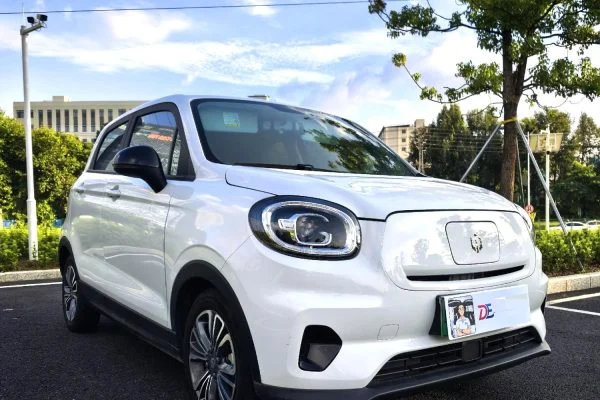
2024 Leapmotor T03 403 Comfort Edition for Sale – 109 hp EV, 403 km Range, Export Ready
- 2024
- 11,000 km
- Automatic
- Electric
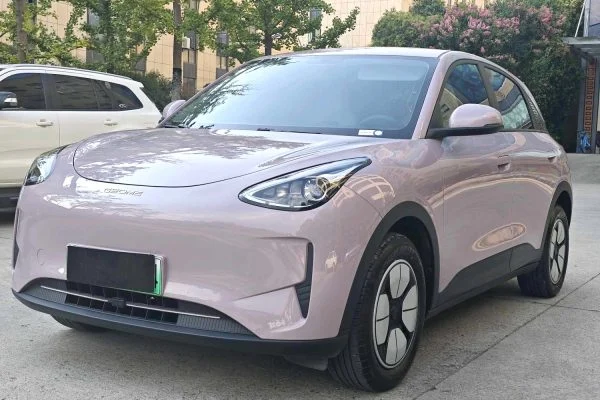
2025 Geely Xingyuan 310km Youth Edition for Sale – 79 hp EV, 310 km Range, Export Ready
- 2025
- 8,000 km
- Automatic
- Electric
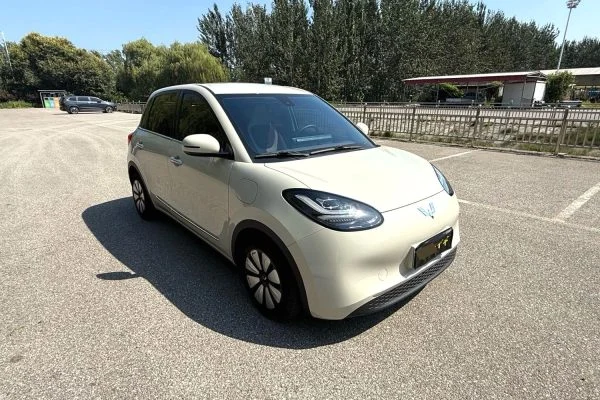
2023 Wuling Binguo 333km Express Edition for Sale – 68 hp EV, 333 km Range, Export Ready
- 2024
- 6,000 km
- Automatic
- Electric