









Used Electric Car for Sale Under 10k: What $9,000 Buys in 2026

A used electric car for sale under 10k in China buys 200-400 km of CLTC range in 2026, and the best value is a Wuling Binguo at roughly $9,800. Anything claiming 500 km under $10,000 is either a mislabelled price or a worn battery.
This price band is the busiest part of the Chinese used EV market. It is also the part where buyers get hurt most often, because the gap between a good $9,000 car and a bad one looks small in photos and enormous on the road.
What can you actually buy for under $10,000?
Five models turn up repeatedly in export inventory at this price, and they are genuinely different cars.
- 2021 Wuling Hongguang MINI EV — 120 km, 9.3 kWh LFP, 27 hp. Around $6,500. City only.
- 2019 BYD e2 High-Range — 405 km NEDC, 70 kW. Around $8,200. Best range per dollar here.
- 2024 Wuling Bingo 333 km — 203 km with DC fast charging. Around $8,500.
- 2023 Wuling Binguo 333 km — 333 km, 31.9 kWh LFP, 68 hp. Around $9,800. The pick.
- Baojun E200-class microcars — 305 km, 39 hp, around $7,000.
Notice the spread. A $6,500 Hongguang and a $9,800 Binguo differ by $3,300 but deliver 120 km versus 333 km of range and completely different road manners.
Is the cheapest one the best deal?
No. The 2021 Wuling Hongguang MINI EV is a brilliant second car for a Chinese city and a frustrating primary car anywhere else. With air conditioning running in 35°C heat, real range drops to 85-90 km. There is no DC fast charging.
The 2019 BYD e2 High-Range is the quiet winner on paper — 405 km NEDC for $8,200. In practice, 2019 cars are now seven years old, and most have 60,000-90,000 km. Battery health varies from 84% to 93% across identical listings. Get the scan.
How much range do you really lose at this budget?
Expect 75-80% of the CLTC number in mixed driving, and 60-65% on a cold motorway run. A 333 km Binguo is a genuine 250 km car in good weather and a 190 km car in a cold snap.
That is fine for a daily 60-80 km commute. It is not fine for a 300 km weekly trip. Buyers who ignore this arithmetic end up reselling within a year at a loss.
What should you check before paying $9,000?
Four checks, in this order. Battery state of health from the BMS. Cell voltage spread — anything over 100 mV on an LFP pack deserves a second look. DC fast-charge test, minimum 20 kW sustained. And the registration certificate, to confirm the car is privately owned and not a converted taxi.
Converted ride-hailing cars are the single biggest trap in this price band. They look clean, they are cheap, and their packs have seen 300+ fast-charge cycles a year.
What do these cars cost to run?
Energy is the easy part. Around 12-14 kWh per 100 km for the small cars, so roughly $200 a year at 12,000 km and $0.14/kWh.
Maintenance is lower than petrol equivalents because there is no oil, no exhaust and no gearbox. Budget $180-$260 a year including tyres amortised over four years. The risk item is the traction battery: replacement on a 31.9 kWh LFP pack runs $2,400-$3,200, which is a third of the car’s value.
Should you buy at $9,000 or save up for $14,000?
If you can wait, wait. The jump from $9,000 to $13,500 buys a 2022 Neta U-Ⅱ 400 with 401 km of range and 163 hp — a car that works as a primary vehicle rather than a compromise.
The under-10k band is genuinely good value when the car is a second vehicle, a delivery runabout, or a short-commute car in a warm climate. It is a poor fit for anyone who needs one car to do everything.
What does the paperwork cost on a $9,000 car?
More than most buyers plan for, proportionally. Export documentation, a transfer certificate and an inspection run $600-$1,200. Inland transport from a provincial city to a port adds $120-$350. Sea freight to a nearby market is $1,100-$1,800.
Total add-on is $1,800-$3,300, which is 20-35% of the car price. On a $16,000 car the same services cost 11-20%. Cheap cars carry expensive logistics.
There is one way to blunt it: buy two or three units in one shipment and split the container cost. Buyers moving a single $8,500 hatchback usually pay the worst per-unit freight rate in the transaction.
What does a year of ownership cost on a $9,000 EV?
Energy runs about $200 at 12,000 km. Servicing lands at $180-$260. Insurance varies wildly by market but plan on 8-12% of the car’s value annually.
Add one unexpected item. On cars in this band, the most common is a 12V battery failure at $60-$120, or an onboard charger fault at $350-$600. Neither is catastrophic, but together they can equal a year’s energy saving.
Key Takeaways
- Under $10,000 you get 200-400 km of CLTC range from China in 2026, not 500 km.
- The Wuling Binguo 333 km at about $9,800 is the best all-round pick.
- Real-world range runs 75-80% of CLTC; about 60-65% in cold highway use.
- Converted ride-hailing cars are the main hidden risk in this band.
- If you can stretch to $13,500, the Neta U-Ⅱ makes a far better only car.
Related Vehicles
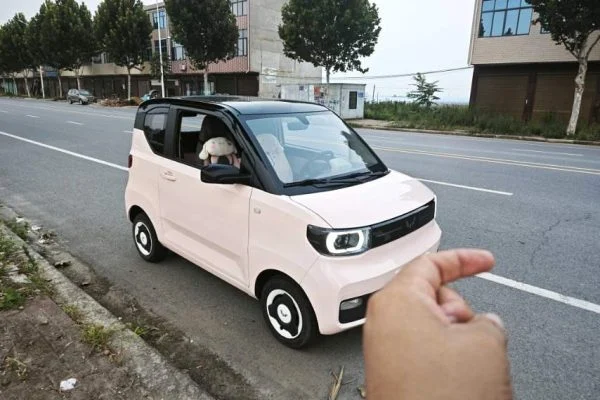
2021 Wuling Hongguang MINI EV Macaron Sandwich 120km (27 HP / RWD) – Compact City EV
- 2022
- 23,000 km
- Automatic
- Electric

2024 Wuling Bingo (Binguo) 333km Enjoy Edition (50kW / 68HP) Electric Hatchback
- 2024
- 60,000 km
- Automatic
- Electric
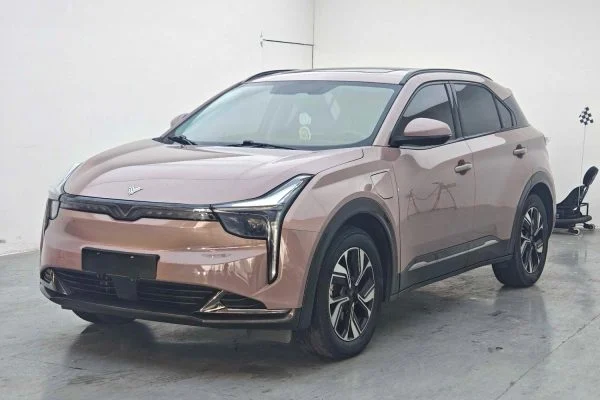
2022 Neta U-Ⅱ 400 LFP Electric SUV for Sale – 163 hp EV, 401 km Range, Export Ready
- 2022
- 24,000 km
- Automatic
- Electric

2019 BYD e2 High-Range Luxury Edition (70kW / 95HP / 405km NEDC) EV Hatchback
- 2020
- 96,000 km
- Automatic
- Electric