









Used Electric Car for Sale by Owner: What $12k Buys from China
A used electric car for sale by owner in China costs $7,200 to $18,500 for 2021-2024 models under 50,000 km, and that price already includes a battery health report if you ask for one. That is roughly 45-60% below what the same car fetches from a private seller in Europe.
Private sales are where the bargains sit, and also where most buyers lose money. The difference is rarely the car. It is the paperwork and the battery.
What does $10,000-$15,000 actually buy?
Three cars come up again and again in this bracket, because Chinese owners sell them in volume after two or three years of lease use.
- 2022 BYD Yuan PLUS – 60.5 kWh Blade battery, 510 km CLTC, 204 hp. Real-world range lands near 400 km on a mixed cycle. Typical private ask: $13,500-$15,200.
- 2021 BYD Dolphin 405km Fashion Edition – 44.9 kWh, 405 km CLTC. Smaller, cheaper, and the most forgiving city car in the list. Typical ask: $9,800-$11,400.
- 2024 Wuling Bingo EV 203km Light Edition – 30 kW motor, 203 km, DC fast charging. Strictly an urban runabout. Typical ask: $7,200-$8,600.
Note the pattern: range per dollar drops fast below $10k. A 203 km car is fine in Lagos or Jakarta traffic. It is miserable if you commute 90 km a day.
Is buying from an owner cheaper than from a dealer?
Yes, by $1,200-$2,500 on the same car, but the gap is smaller than it looks once you add the inspection. Dealers in Shenzhen and Guangzhou bundle a BMS scan (battery management system readout) into the price. Private owners usually do not.
A BMS scan costs $60-$120 at an independent shop and tells you state of health, cell imbalance, and how many DC fast-charge cycles the pack has absorbed. On a 2021 Dolphin, anything under 88% SOH deserves a discount of $900 or more. Under 82%, walk away.
What documents should come with a private-sale used EV?
Five items, no exceptions. Sellers who cannot produce them are usually selling something they do not own outright.
- Green vehicle registration certificate (机动车登记证书) showing no lien.
- Original purchase invoice, which is what customs and registration authorities abroad ask for first.
- BMS or 4S-dealer battery report dated within 30 days.
- Service history export – Chinese dealers keep this digitally and will print it on request.
- Seller ID matching the registered owner exactly.
Missing the invoice is the single most common problem in private deals. Without it, some destination markets treat the car as salvage and refuse registration.
Which private-sale used EVs age best?
LFP-battery cars. The Dolphin, Seagull and Bingo all use lithium iron phosphate packs, which tolerate full charging and lose capacity more slowly than the NCM cells in older premium models. A three-year-old LFP car that lived in southern China often reads 92-95% SOH.
The flip side: LFP is heavier and weaker in cold weather. Below -5°C, expect 25-30% range loss on these small packs. Buyers in Canada or northern Europe should factor in a heated garage, or skip this bracket and look at NCM cars with thermal management.
Is a private used EV worth the risk in 2026?
For buyers who can pay for an inspection before transfer, yes. The savings over dealer stock are real, and Chinese private listings are unusually transparent about mileage because the odometer is tied to the national inspection system.
For first-time importers, no. Use a dealer with an export track record for your first car, learn the document set, then buy privately on the second. The shipping and clearance step adds $1,500-$3,000 either way, and that overhead eats the private-sale discount if the deal goes sideways.
Key Takeaways
- Private-sale Chinese used EVs run $7,200-$18,500 for 2021-2024 cars under 50k km.
- A BMS scan costs $60-$120 and is the only reliable check on battery health.
- LFP cars (Dolphin, Seagull, Bingo) hold capacity better; expect 25-30% cold-weather loss.
- No original invoice means no deal – registration abroad can fail without it.
Related Vehicles

2022 BYD Yuan PLUS (Atto 3) 510km Flagship (204HP FWD) Electric Compact SUV
- 2022
- 56,000 km
- Automatic
- Electric

2021 BYD Dolphin 405km Fashion Edition (95HP FWD / 44.9kWh Blade Battery) Electric Hatchback
- 2023
- 70,000 km
- Automatic
- Electric
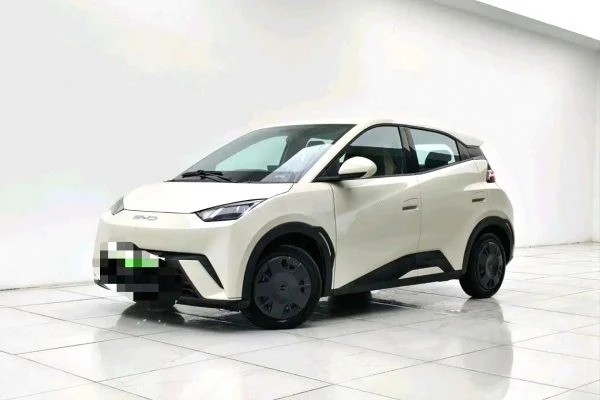
2023 BYD Seagull Vitality Edition 305km EV (75 HP / FWD) – 13,000 km Like-New
- 2024
- 13,000 km
- Automatic
- Electric

2024 Wuling Bingo EV 203km Light Edition (30kW FWD / DC Fast Charging) City Hatchback
- 2025
- 4,000 km
- Automatic
- Electric