









Used BYD Seagull in 2026: Price, 305 vs 405 km, Worth It?
A used BYD Seagull costs $6,500 to $9,500 FOB China in 2026, making it the cheapest EV from a manufacturer with a global parts network. It is 3,780 mm long, front-wheel drive, 55 kW (75 hp), and built on a 30.08 or 38.88 kWh Blade LFP pack depending on trim. For city driving it is close to ideal. For anything else, read on before you wire money.
What is the price gap between the 305 km and 405 km Seagull?
About $1,800-2,500 FOB, and it buys 8.8 kWh of battery. The Flying Edition carries 38.88 kWh and 405 km CLTC; the Honor and Free Editions carry 30.08 kWh and 305 km. Both use the same 55 kW motor and the same 130 km/h top speed.
In pure range terms the upgrade is worth it if you regularly drive 150-200 km days. On a 40 km commute, the extra pack is weight you carry and never use. Most buyers of this class do 30-60 km a day, and the 305 km car covers that with charging twice a week.
How far does a used Seagull really go on a charge?
Roughly 70-75% of the CLTC claim in real mixed driving with air-conditioning. So a 305 km car gives you about 215-230 km, and a 405 km car about 285-300 km. Below 5°C, halve those numbers. The car has no heat pump on most trims, which is the single biggest reason winter range drops so hard.
Charging is the other limit. DC fast charging on the 30.08 kWh pack takes about 30 minutes for 30-80%. AC charging is limited to 6.6 kW on better trims and 3.3 kW on some early cars — check which one you are buying, because 3.3 kW means a 9-hour overnight charge from empty.
Which Seagull versions are available right now?
Three are listed. The 2023 Seagull Flying Edition is the long-range flagship at 405 km with 42,000 km on the clock. The 2024 Seagull Honor Edition 305 km Freedom is the better-equipped mid-tier car at 18,000 km. The the 2023 Seagull Free Edition is the cheapest entry, same pack, fewer toys. If you want a slightly bigger cabin for similar money, look at the 2024 Wuling Bingo 333 km.
Is the Seagull safe and practical enough for daily use?
Practical: yes, within limits. Four doors, a real 232-litre boot, and space for two adults in the back. It fits traffic and parking in a way a 4.5 m SUV never will.
Safe: the car was designed for Chinese urban speeds. It has dual front airbags and stability control on most trims, but its mass is 1,200 kg and its structure is sized for 60 km/h impacts, not 120 km/h motorway collisions. If your daily route includes fast dual carriageways, this is the wrong car. Buy a compact SUV instead, even if it costs twice as much.
What fails on a used Seagull?
- Infotainment freezes. A known annoyance on early 2023 builds; a software update usually fixes it.
- Door seals and wind noise. Cheap to replace, and easy to spot on a test drive at 90 km/h.
- Battery SoH after fast-charge-heavy use. Healthy 2023 cars read 95-98%. Under 92% at 40,000 km is a warning.
- Tyre wear on the front axle. 75 hp through the front wheels and a light body means tyres go fast if the car was driven hard.
Seagull or Leapmotor T03: which should you buy?
The T03 gives you more range for the same money — 403 km CLTC versus 305 km — and 109 hp instead of 75 hp. The Seagull gives you a stronger brand, better parts supply and a slightly better chassis. In markets with a BYD presence, buy the Seagull. Where you will rely on independent mechanics and generic LFP servicing, the T03’s extra range is the more useful advantage.
Key Takeaways
- The used BYD Seagull price runs $6,500-$9,500 FOB China in 2026.
- The 305 km versions use a 30.08 kWh Blade pack; the 405 km Flying Edition uses 38.88 kWh.
- Real-world range is about 215-230 km for the 305 km car and 285-300 km for the 405 km car; roughly half that in cold weather.
- Check AC charging power — 3.3 kW means a 9-hour full charge.
- Great city car, wrong choice for regular high-speed motorway driving.
Related Vehicles
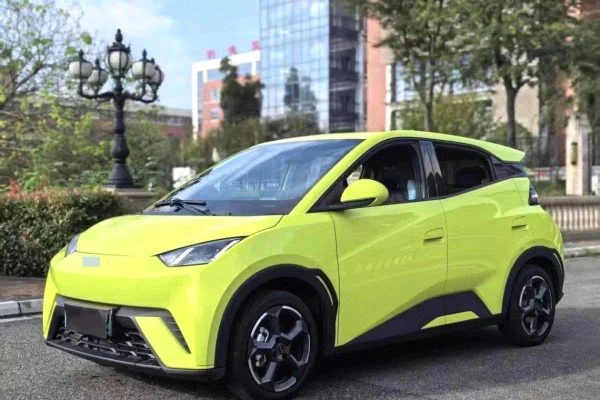
2023 BYD Seagull Flying Edition for Sale – 75 hp EV, 405 km Range, Export Ready
- 2024
- 42,000 km
- Automatic
- Electric
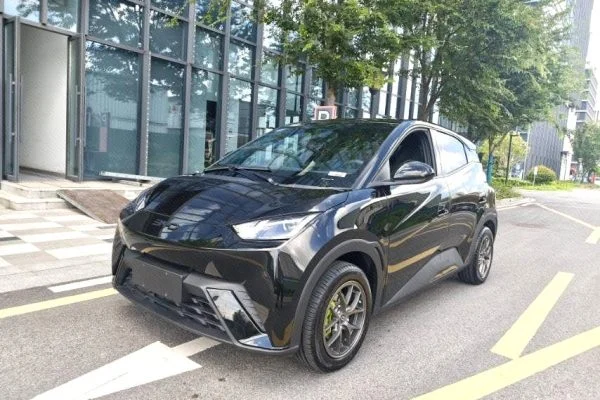
2024 BYD Seagull Honor Edition 305km Freedom for Sale – 75 hp EV, 305 km Range, Export Ready
- 2024
- 18,000 km
- Automatic
- Electric

2023 BYD Seagull Free Edition 305km (55kW / 75HP / Blade Battery) Electric Hatchback
- 2023
- 57,000 km
- Automatic
- Electric
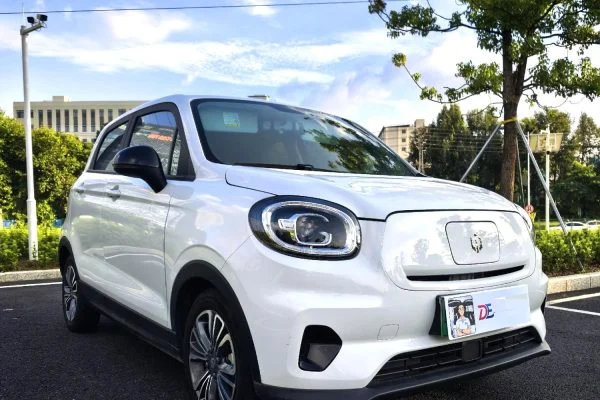
2024 Leapmotor T03 403 Comfort Edition for Sale – 109 hp EV, 403 km Range, Export Ready
- 2024
- 11,000 km
- Automatic
- Electric