









Cheapest Used Electric Cars for Sale in 2026: The Real Floor
The cheapest used electric cars for sale from China in 2026 start at $3,800 FOB — a 2018 Baojun E100 two-seater with about 80,000 km. A 2021 Wuling Hongguang MINI EV costs $4,500-$6,500. Neither is a car most overseas buyers should buy.
That is the honest version. But the floor is interesting, because it tells you what has happened to Chinese used EV prices, and it shows exactly where the value line sits.
What is the actual cheapest used EV in China?
At the bottom: micro-cars from 2017-2019. A 2018 Baojun E100 Zhixiang Edition — 29 kW, 155 km NEDC range, two seats — trades at 25,000-32,000 RMB, or $3,800-$4,900. Wuling Hongguang MINI EVs from 2021 sit one step up at $4,500-$6,500.
These cars exist in enormous numbers because China sold over 1.2 million A00-class mini EVs between 2020 and 2023. Many were second cars in tier-3 cities, driven 5,000-8,000 km a year. So the supply is deep and the demand inside China has moved on to bigger cars.
Why are they so cheap?
Three forces, working together. New mini EVs are cheap — a new Geely Panda Mini lists at 39,900 RMB, about $5,500 — so a five-year-old one cannot hold value. Battery technology moved on: an LFP pack from 2018 has maybe 75-80% of its original capacity now. And the regulatory ceiling: A00 cars were never designed for highway duty.
There is a fourth reason nobody puts on a spec sheet. These cars depreciate like phones because their owners were never enthusiasts. Nobody polishes a Hongguang MINI EV. Condition varies wildly between two cars of the same year and price.
What do you actually get at the floor?
- Range: 120-210 km CLTC, which is 90-160 km in real city driving and 70-110 km in winter.
- Charging: AC only on many early cars; 6-8 hours from a household socket.
- Top speed: 100 km/h on most, 80 km/h on some. Not highway cars.
- Safety: no airbags on base trims of some 2018-2020 models. Check before buying.
- Parts: Body panels for Wuling and Geely micro-cars are widely available across Asia, Africa and Latin America — better than for premium Chinese EVs.
That last point is the strongest argument for the cheap end. A $5,000 Hongguang MINI EV can be repaired almost anywhere Wuling sells vehicles, because the parts are generic and the electronics are simple. A $25,000 Zeekr cannot.
Where does the value line actually sit?
Around $9,000-$10,000. At that price a used BYD Dolphin 405 km gives you five seats, airbags, 60 kW fast charging, and a battery that will still hold 90% of its capacity. Below $7,000 you are buying a vehicle with hard limits that will frustrate you within a month if it is your main car.
The gap between a $5,000 Wuling Bingo 203 km and a $9,800 Dolphin is $4,800. Over five years, the Dolphin is the cheaper car per kilometre driven, because it does more of the jobs you actually need done.
What should you check on a sub-$6,000 EV?
- Battery capacity test: charge to 100%, drive a measured 50 km, recharge and measure kWh. Compare against the rated pack size.
- Charger cable and onboard charger: onboard charger failures are the single most common expensive repair on micro-EVs, $300-$700.
- Airbags and seat belts: some base trims genuinely shipped without airbags. Look, do not assume.
- Rust: coastal-sold micro-cars rust at the sills and rear arches within five years.
- Registration status: many were registered as commercial vehicles for delivery work.
Who is the cheap end actually for?
Fleet buyers and resellers in markets where a 100 km city car is genuinely useful: island economies, dense African and Southeast Asian cities, golf resorts, factory campuses. A $4,500 two-seater that costs $0.40 per 100 km to run pays for itself in eight months against a petrol kei car.
For a private family buyer, I would skip the floor entirely. Save three more months and buy the Wuling Bingo EV 203 km at $5,800-$7,200, which at least has four seats, a real boot and DC charging on the Light trim.
Key Takeaways
- The cheapest used EV from China is about $3,800 FOB for a 2018 two-seater.
- Hongguang MINI EVs run $4,500-$6,500; both are city-only vehicles.
- The real value line sits near $9,000-$10,000 for a 400 km five-door.
- Parts availability for micro-cars is better than for premium Chinese EVs.
- Check airbags, onboard charger and registration type before committing.
Related Vehicles
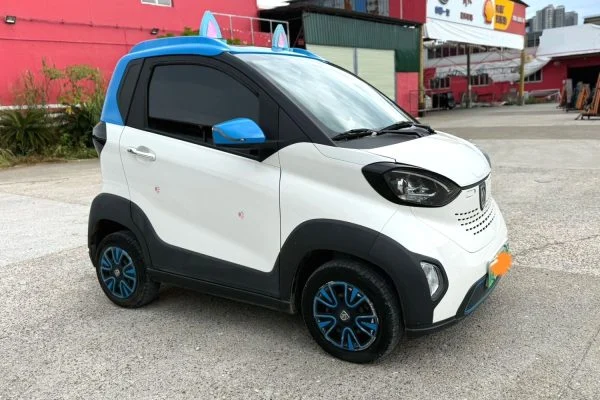
2018 Baojun E100 Zhixiang Edition (29kW / 39HP) 2-Seater Mini Electric Car
- 2018
- 34,000 km
- Automatic
- Electric
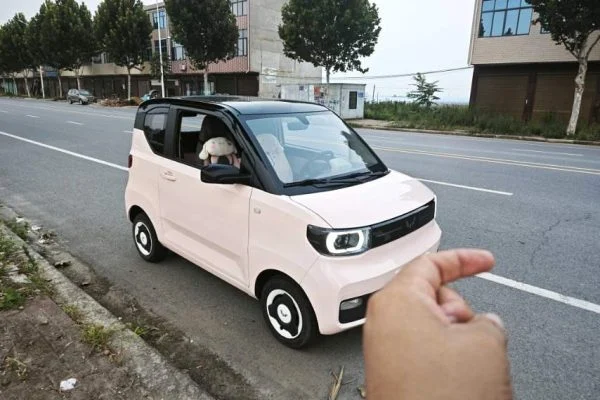
2021 Wuling Hongguang MINI EV Macaron Sandwich 120km (27 HP / RWD) – Compact City EV
- 2022
- 23,000 km
- Automatic
- Electric
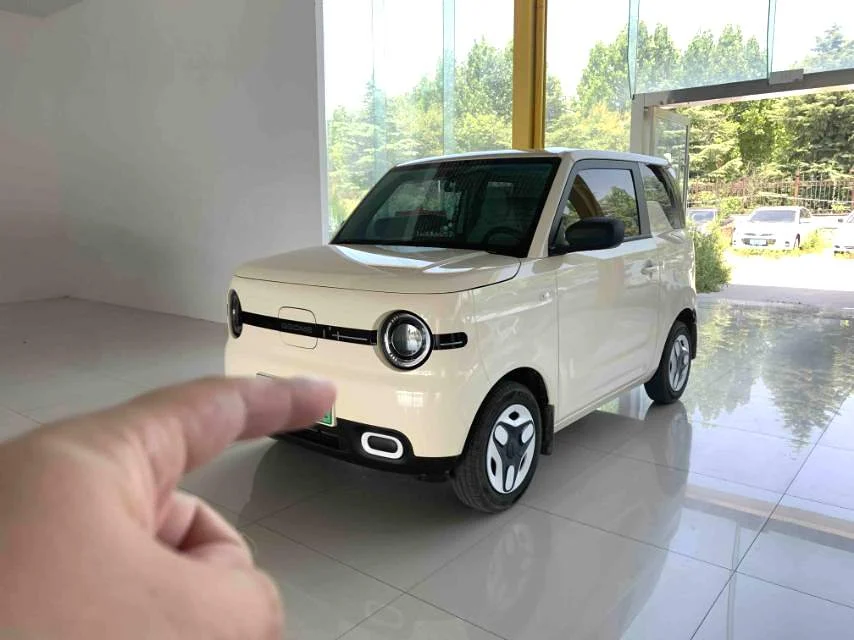
2025 Geely Panda Mini EV (210km Range / 22kW Fast Charge) Electric City Car
- 2025
- 9,000 km
- Automatic
- Electric

2024 Wuling Bingo EV 203km Light Edition (30kW FWD / DC Fast Charging) City Hatchback
- 2025
- 4,000 km
- Automatic
- Electric