


Cheapest Used Electric Cars in 2026: Where the Price Floor Is
The cheapest used electric cars in China start at $3,800 in 2026, and that is close to a hard floor. A 2023 Geely Panda Mini with 200 km of range and 20,000 km sells there. Nothing usable sits far below it.
Price floors in the used EV market are set by two things: what a battery pack is worth and what a car is worth as scrap. Once the asking price approaches the value of the usable pack plus the body, the market stops falling.
Where exactly is the price floor?
Between $3,500 and $4,000 for a working car. Below that, listings are usually parts donors or cars with a known battery fault.
- 2023 Geely Panda Mini 200km, 20,000 km: $3,800. 41 hp, 4 seats, city only.
- 2021 Wuling Hongguang MINI EV, 23,000 km: $4,100. 27 hp, 120 km rated range.
- 2024 Wuling Bingo 333km, 60,000 km: $5,800. The first car here that works outside a city.
The Panda Mini is the better of the two micro cars. Geely has a wider parts network than Wuling in most export markets, and the 200 km rating is more honest than the Hongguang’s 120 km, which turns into 85 km in real use.
Why can’t prices fall below $3,800?
Because the pack is worth money. A 17 kWh LFP pack in a Panda Mini has residual value as a stationary storage unit, and Chinese recyclers pay for it. Take a $4,000 car with a healthy pack, remove the pack, and you still have $1,200 of scrap steel, aluminium and electronics.
That residual value is a floor. It is also why cheap EVs rarely get scrapped while the battery still works: someone will always buy it for a bit more than the pack is worth.
The floor moves slowly. It fell about 30% between 2023 and 2025 as the first wave of micro EVs came off lease. In 2026 it is roughly stable, because battery costs stopped dropping as fast.
Which cheap models age well?
LFP batteries age better than NMC in heat, and most sub-$10,000 Chinese EVs use LFP. That is good news for long-term ownership. A three-year-old Bingo or Panda Mini typically shows 94% state of health at 30,000 km.
The weak point on cheap cars is not the battery. It is the 12V system, the charge port and the infotainment. Cheap EVs use small 12V batteries that fail after three years, and a dead 12V battery leaves the car completely immobile even with a full traction pack.
Budget $80 for a 12V battery on any used EV over three years old. It is the cheapest preventive maintenance in the category and the most common cause of a stranded car.
Is buying at the floor a good idea?
For the right buyer, yes. A $3,800 Panda Mini that does 50 km a day for three years costs about $0.02 per kilometre in electricity. There is no petrol car near that price with lower running costs.
For the wrong buyer, it is a trap. If you need motorway capability, five seats, air conditioning that works at 40°C, or a car that will pass a strict import inspection, a micro EV fails on all four. The floor price buys a city scooter with doors.
The smart move for most overseas buyers is to skip the absolute floor and start at $5,800 with a Wuling Bingo 333 km. You get 5 doors, DC fast charging, real boot space and a brand that ships parts. The extra $2,000 buys a car you can actually live with.
Key Takeaways
- The used EV price floor in China is about $3,800 in 2026, set by residual battery and scrap value.
- Cheapest usable models: Geely Panda Mini 200km at $3,800 and Wuling Hongguang MINI EV at $4,100.
- Most cheap Chinese EVs use LFP packs, which hold 94% health at 30,000 km.
- The 12V battery, not the traction pack, is the most common failure on cheap EVs.
- Start at $5,800 with a Bingo 333km if you need a car, not just a city runabout.
Related Vehicles
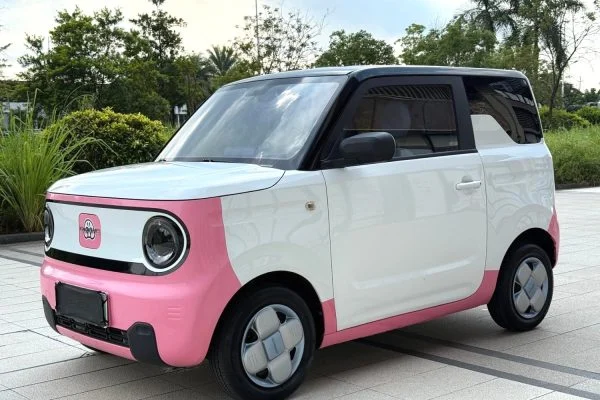
2023 Geely Panda Mini 200km Endurance Bear for Sale – 41 hp EV, 200 km Range, Export Ready
- 2023
- 20,000 km
- Automatic
- Electric
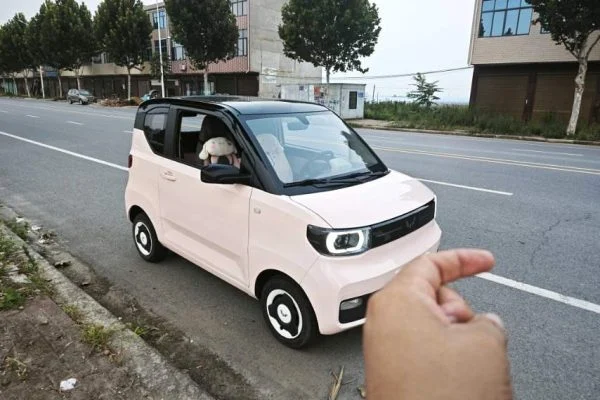
2021 Wuling Hongguang MINI EV Macaron Sandwich 120km (27 HP / RWD) – Compact City EV
- 2022
- 23,000 km
- Automatic
- Electric

2024 Wuling Bingo (Binguo) 333km Enjoy Edition (50kW / 68HP) Electric Hatchback
- 2024
- 60,000 km
- Automatic
- Electric

2023 BYD Seagull Free Edition 305km (55kW / 75HP / Blade Battery) Electric Hatchback
- 2023
- 57,000 km
- Automatic
- Electric