









Cheap Second Hand Electric Cars: What Buyers Get Wrong in 2026

Most buyers who regret a cheap second hand electric car regret one of four things: the real range, the charging speed, the parts delay, or the warranty that did not transfer. Price is rarely the problem. A $7,000 car that meets your actual driving pattern is one of the cheapest ways to own a vehicle in 2026.
This is written for the buyer with $6,000-$11,000 and a genuine plan to buy. It is short on inspiration and long on what goes wrong.
Why does real range disappoint buyers most?
Because Chinese cars are rated on CLTC, which is a gentle urban-lab cycle. A 305 km CLTC car returns roughly 235 km in mixed driving, 175 km at motorway speed and as little as 140 km in cold weather with the heater on.
The mistake is comparing the Chinese CLTC number to a WLTP or EPA figure. CLTC is typically 10-15% more optimistic than WLTP and 20-25% more than EPA. A 203 km CLTC Wuling Bingo is closer to 150 km usable, and closer to 110 km on a winter motorway run.
Practical rule: divide CLTC by 1.3 for mixed driving, by 1.75 for steady highway, and by 1.9 for cold weather highway. If the result is under your daily distance plus 40%, the car is wrong for you regardless of price.
Does DC fast charging actually matter on a cheap car?
More than range, usually. Cheap EVs live in cities where home charging may not exist. A car that adds 100 km in 25 minutes at a public charger is usable; a car with AC-only charging at 3.3 kW needs six hours for the same energy.
Check the peak DC power, then check the taper. The Seagull peaks around 40 kW and holds it to about 65%. The Wuling Bingo Light peaks around 30 kW. Both are fine. Neither is fast, and you should not plan a 600 km trip in either without accepting three stops.
What about parts when the car is not sold locally?
This is where cheap gets expensive. A Seagull brake pad set is available across Asia, Africa and Latin America because BYD has distribution almost everywhere. A Changan Lumin part in a market with no Changan importer can take four to ten weeks, and a windscreen can mean a month without the car.
Before buying, search your own market for the model name plus “parts” or “service”. If the search returns nothing, budget for a spares kit: filters, brake pads, wiper blades, a charger cable and one headlight. Buyers who do this spend $400 up front and skip four weeks of downtime later.
Why do battery warranties often not transfer?
BYD and most Chinese makers offer 8 years or 150,000-160,000 km on the traction battery, with a capacity floor around 70%. Two conditions typically void it: export from China without manufacturer approval, and damage from an unauthorised repair.
Read the warranty document, not the marketing page. Some Chinese brands honour the pack warranty internationally through their local distributor; many do not. If the car arrives without cover, the practical replacement cost on a 30 kWh LFP pack is $3,500-$5,500 in China plus shipping, which on a $7,000 car is a write-off risk worth knowing about.
Which cheap cars pass the four tests?
- BYD Seagull 305 km, $7,900-$10,500: best all-round. 40 kW DC, strong parts base, resells well.
- Wuling Bingo 203 km, $6,400-$7,800: cheapest four-door. Accept a 150 km real range and it is honest value.
- Changan Lumin 301 km, $6,900-$8,200: good range per dollar, weak parts support abroad.
- Baojun KiWi EV and Wuling Mini EV: only if you drive under 50 km a day and can charge at home.
What should you ask the seller in writing?
Five things: an SOH report with per-cell voltages, a full charging history, the original invoice, confirmation of accident history by VIN, and a written statement of what warranty, if any, survives the sale. Sellers with nothing to hide produce these within a day. Sellers who stall are telling you something.
None of that is exotic. It is the difference between a $7,000 car that runs for five years and a $7,000 car that costs $4,000 in month three.
Key Takeaways
- CLTC range is 10-25% more optimistic than WLTP or EPA figures.
- DC fast charging capability matters more than an extra 40 km of range.
- Parts availability by market should be checked before purchase, not after.
- Battery warranty transfer is not automatic on exported Chinese EVs.
Related Vehicles

2024 Wuling Bingo EV 203km Light Edition (30kW FWD / DC Fast Charging) City Hatchback
- 2025
- 4,000 km
- Automatic
- Electric
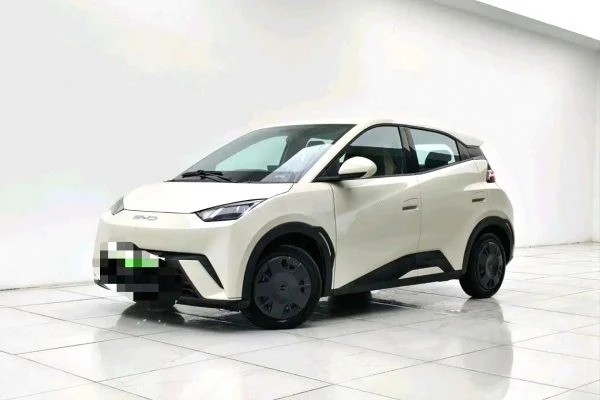
2023 BYD Seagull Vitality Edition 305km EV (75 HP / FWD) – 13,000 km Like-New
- 2024
- 13,000 km
- Automatic
- Electric
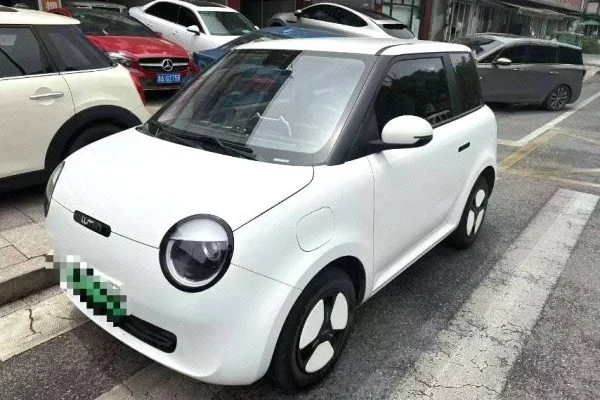
2022 Changan Lumin 301km Mitian Edition (35kW / 48HP) Mini Electric City Car
- 2022
- 18,000 km
- Automatic
- Electric