









Cheap Second Hand Electric Cars for Sale Under $9,000
Cheap second hand electric cars for sale in China start at about $4,800 in 2026 for a five-year-old mini EV, and $8,000-$9,000 buys a 2023-2024 city hatchback with 300-400 km of range and under 30,000 km on the clock.
The sub-$9,000 band is where the Chinese used market is genuinely different from Europe or North America. You are not buying a ten-year-old Leaf with a degraded pack. You are buying a 2023 car that has done 20,000 km and still holds 96% of its battery health.
Here are the cars that actually exist in that band, and what you give up at each price.
What can you get for under $9,000?
Six models dominate the segment. All have LFP batteries, all are 4 or 5-door, and none need a home charger to be usable.
| Model | Year | Range (CLTC) | Typical FOB | Best for |
|---|---|---|---|---|
| Wuling Hongguang MINI EV | 2021-2022 | 120 km | $3,900-$5,200 | Second car, island routes |
| Baojun E200 | 2020 | 305 km | $5,400-$6,300 | City delivery |
| Changan Lumin 301 | 2022 | 301 km | $5,900-$6,800 | Compact parking |
| Leapmotor T03 403 | 2024 | 403 km | $7,200-$8,100 | Longest range per dollar |
| Geely Xingyuan 310 | 2025-2026 | 310 km | $7,800-$8,700 | Newest car in budget |
| BYD Seagull 305 | 2025 | 305 km | $8,100-$8,900 | Parts and resale |
The 2024 Leapmotor T03 403 Comfort is the range champion of the segment — 403 km CLTC from a 41.3 kWh pack, 109 hp, and a real boot. Real-world mixed use gives you about 270 km.
Is a $5,000 mini EV actually usable?
Only if you drive under 60 km a day and can charge at home. Those are real conditions for a lot of island and small-city buyers, and hopeless for anyone else.
The Hongguang MINI EV charges from a normal wall socket at 2.2 kW. That is 9-10 hours from empty. There is no DC fast charging on the base car. Zero star NCAP ratings on early units are also a genuine issue — some markets refuse to register them.
If you need DC charging, the floor is roughly $6,000, and the Baojun E200 305 km is the cheapest car that gives it to you.
Which cheap EV has the best resale value?
BYD. Boring answer, correct answer. The 2025 BYD Seagull 305 km and its Dolphin Mini variants hold value better than any mini EV because the badge travels.
A Leapmotor is cheaper to buy new. A BYD is easier to sell used in Jakarta, Lagos or Santiago, because the local workshop has seen one.
What do you lose at this price point?
- Crash safety. Most sub-$9,000 Chinese EVs score poorly in Latin NCAP or have no rating at all. Check the specific model against your market’s rules before buying.
- Highway comfort. At 100 km/h these cars are loud and the range drops 40%. They are city tools.
- Fast charging speed. 30-40 kW peak is normal. A 30-80% stop takes 30-45 minutes.
- Seating. Four adults maximum, and the rear bench is short.
None of that matters for a municipal fleet, a resort shuttle or a family’s second car. All of it matters if this is your only vehicle.
Should you buy the newest cheap car or the best-equipped older one?
Newest. In this segment, battery chemistry and BMS software improved more between 2022 and 2024 than trim levels ever did. A 2024 T03 with cloth seats beats a 2021 car with a sunroof and a tired pack.
One caution: cheap Chinese EVs are often ex-rental or ex-delivery. Ask for the registration history. A 2024 car with 60,000 km in 14 months was almost certainly a courier vehicle, and the suspension will be gone.
Key Takeaways
- Useful second hand EVs start around $4,800 in China; $8,000 buys a 2024 car with 300-400 km of CLTC range.
- The Leapmotor T03 403 offers the most range per dollar at roughly $7,600 FOB.
- Sub-$6,000 cars usually lack DC fast charging and score badly on crash tests.
- BYD models hold resale value best because parts and service reach more markets.
- Check for ex-fleet use — urban delivery cars wear out suspension fast.
Related Vehicles
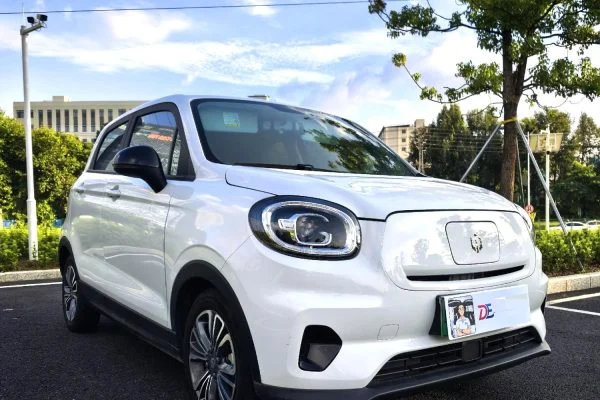
2024 Leapmotor T03 403 Comfort Edition for Sale – 109 hp EV, 403 km Range, Export Ready
- 2024
- 11,000 km
- Automatic
- Electric
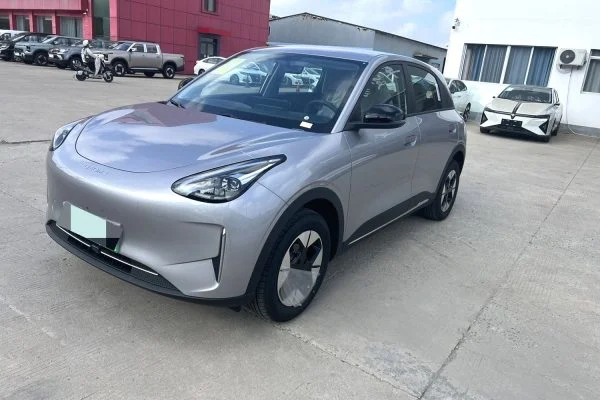
2026 Geely Xingyuan 310km Chengfeng Edition for Sale – 79 hp EV, 310 km Range, Export Ready
- 2026
- 900 km
- Automatic
- Electric

2025 Geely Panda MINI 210km Panda Kart Edition for Sale – 41 hp EV, 210 km Range, Export Ready
- 2026
- 4,000 km
- Automatic
- Electric