









Cheap Second Hand Electric Cars for Sale: 6 Picks Under $13k

Cheap second hand electric cars from China start at about $5,500-$7,000 FOB in 2026 for a mini city hatchback, and $9,000-$13,000 buys a proper 4-5 seat EV with 300-420 km of range. Anything advertised below $4,000 is usually a rebuilt or battery-damaged car.
We keep six of them in stock across Dezhou, Ningbo and Guangzhou. Here is what each one actually is, what it costs, and who should avoid it.
What is the cheapest second hand electric car you can buy?
The floor is the mini-EV class: Changan Lumin, Geely Panda MINI and Wuling Bingo. These are 3-3.6 m long, 4-seat, 30-50 kW, and built for Chinese city traffic. In 2026 a 2022-2024 example with under 30,000 km runs $5,500-$7,500 FOB.
They work. They are also slow above 80 km/h, thin on sound insulation, and in a crash they are not what a European SUV is. If your buyers expect highway cruising, do not put these on the lot.
The six cars, with real numbers
- 2022 Changan Lumin 301 km – 27.99 kWh LFP, 48 HP, 18,000 km. Around $5,800-$6,800 FOB. Best ride quality in the mini class.
- 2025 Geely Panda MINI 210 km – 17.03 kWh, 41 HP, 4,000 km. Around $5,500-$6,200. Cheapest, smallest battery, city only.
- 2025 BYD Seagull 305 km – Blade battery, 75 HP, 5-door. Around $8,000-$9,500. The one we sell most.
- 2024 Leapmotor T03 403 km – 41.3 kWh LFP, 109 HP, 11,000 km. Around $9,000-$10,500. Best range per dollar here.
- 2023 BYD Dolphin 420 km – 44.9 kWh, 95 HP, 2,000 km. Around $11,500-$13,000. Proper car feel, real back seat.
- 2024 BYD Seagull Honor 305 km – 30.08 kWh, 18,000 km. Around $7,800-$9,000. The value pick if you want Seagull running costs with a lower invoice.
Is a used hybrid SUV a better buy than a cheap EV?
Sometimes. A used hybrid SUV gives you 900-1,100 km of range and no charging anxiety, and Chinese PHEVs like the BYD Song PLUS DM-i sell used for $11,000-$14,000. The catch is complexity: two power systems, two failure paths, and battery packs that are much smaller (8-18 kWh) so they cycle hard and degrade faster in calendar terms.
My rule: if your market has unreliable grid power or long intercity routes, take the hybrid. If charging is available and trips are under 200 km a day, the pure EV is cheaper to run and simpler to repair.
What breaks first on a cheap used EV?
The pack is usually fine. What fails is everything around it. Expect to replace the 12V aux battery ($40-$80), check the charge port for scorching from bad public cables, and look at the DC fast-charge contactor on cars that were taxi-used. Suspension bushes on the Lumin and Panda go soft around 40,000 km.
Ask for a photo of the BMS screen showing cell voltage spread. More than 0.15 V between the highest and lowest cell on a rested pack means a weak module, and that is a $600-$1,200 repair if you can even source the part.
Which markets do these cars fit?
Southeast Asia, West Africa, the Middle East and Latin America buy the most of this class. Urban taxi operators in particular get on well with the Seagull and T03: 300-400 km of rated range covers a full shift, and LFP cells tolerate 40°C ambient without the thermal drama of older NMC cars.
Europe is a harder sell for the cheapest models because of homologation cost, but the Dolphin and T03 already hold EU-type approvals in several markets.
Key Takeaways
- Cheap second hand electric cars run $5,500-$13,000 FOB China in 2026 across six models we stock.
- The BYD Seagull and Leapmotor T03 give the best range per dollar in this bracket.
- Mini EVs (Lumin, Panda MINI) are city tools – 80 km/h ceiling, thin sound deadening.
- Check cell voltage spread and the 12V battery before paying; skip any car without a BMS printout.
Related Vehicles
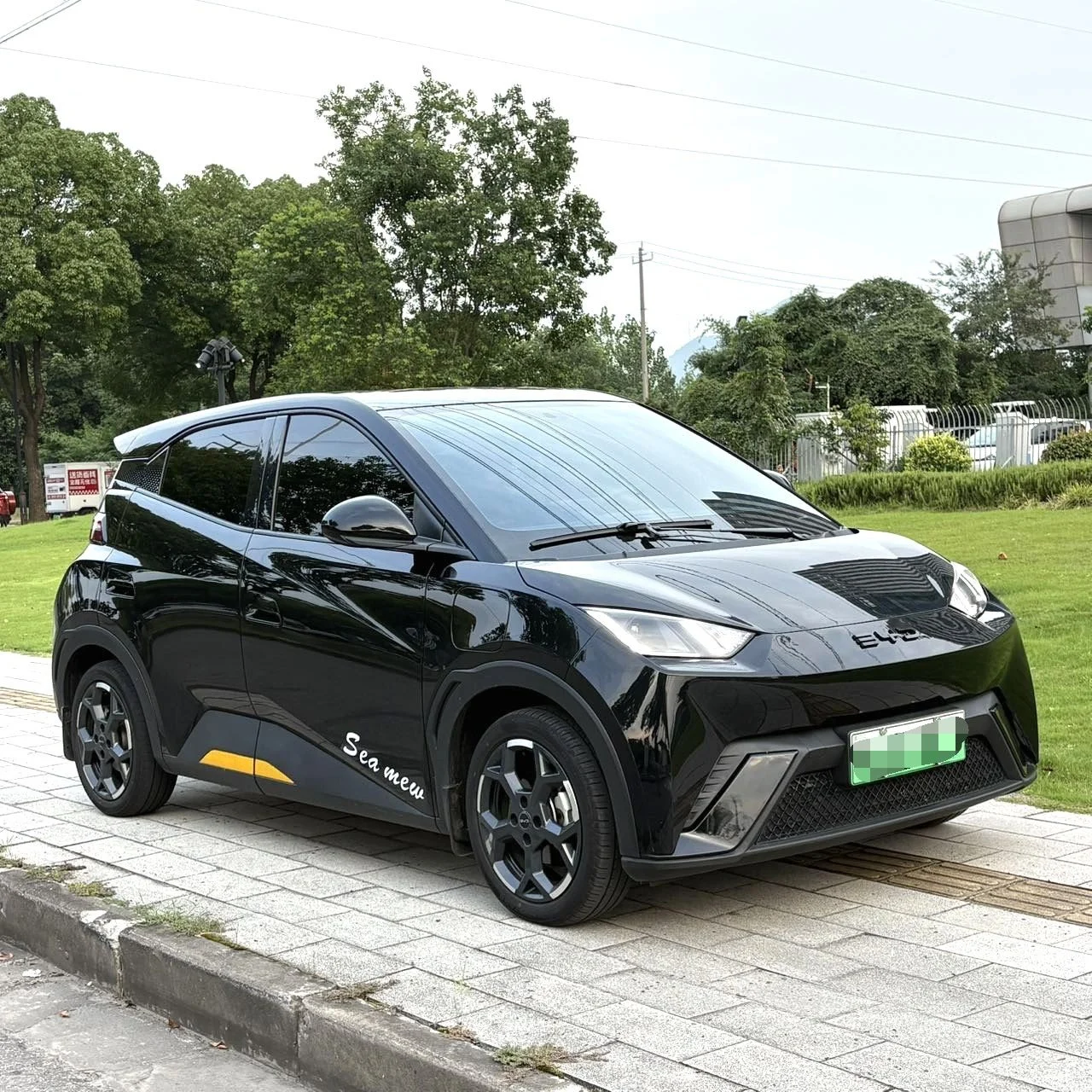
2025 BYD Seagull (Dolphin Mini) 305km Freedom Edition – Compact City EV | Ready to Ship
- 2024
- 35,000 km
- Automatic
- Electric
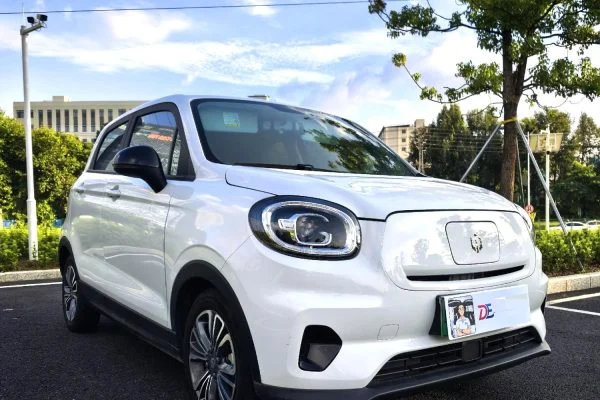
2024 Leapmotor T03 403 Comfort Edition for Sale – 109 hp EV, 403 km Range, Export Ready
- 2024
- 11,000 km
- Automatic
- Electric
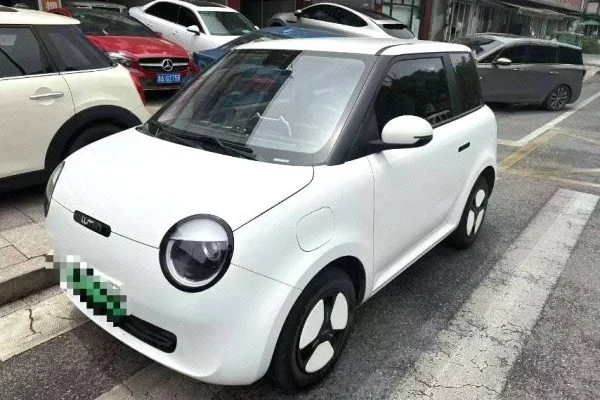
2022 Changan Lumin 301km Mitian Edition (35kW / 48HP) Mini Electric City Car
- 2022
- 18,000 km
- Automatic
- Electric

2021 BYD Dolphin 405km Fashion Edition (95HP FWD / 44.9kWh Blade Battery) Electric Hatchback
- 2023
- 70,000 km
- Automatic
- Electric