









Used EV Battery Health in China: LFP vs NMC Explained

In a used Chinese EV, an LFP battery usually keeps above 90% capacity after five years, while early NMC packs often land between 82% and 88%. That single difference should shape which car you buy and what you pay.
China pushed LFP (lithium iron phosphate) hard because it is cheaper and safer. BYD’s Blade battery, used in the Song PLUS EV and Tang DM, is LFP. NMC (nickel manganese cobalt) still dominates long-range and performance trims. Each chemistry ages differently, and sellers rarely explain that.
Which chemistry holds up better in used cars?
LFP wins on longevity. It tolerates daily charging to 100% and resists thermal stress. After 200,000 km, a well-treated LFP pack frequently reports 88-93% state of health (SOH). Take the 2021 BYD Song PLUS EV with its Blade pack as a typical case.
NMC delivers more energy per kilogram, so it powers longer-range cars like the 2021 BYD Tang DM. The downside: more cycles degrade it faster, and heat exposure in hot climates accelerates that.
How do you read a BMS state-of-health report?
- SOH above 90%: excellent, near-new behaviour
- 88-90%: good, normal for a 3-4 year old car
- 82-88%: usable but expect shorter range; negotiate 10-15% off
- Below 80%: walk away for most EV uses; end-of-life is near
Ask for per-cell voltage spread too. A large spread — more than 50 mV at rest — signals one weak module that will drag the whole pack down.
Does a battery warranty transfer to export buyers?
Usually not. Most Chinese EV warranties are tied to the first owner and the domestic market, and they void once the car is exported. BYD’s well-known “lifetime” battery warranty for original owners does not follow the car abroad. Treat any warranty claim as near-zero on an exported used EV.
That is why the BMS report matters more than the badge. You are buying the battery, not the brand promise.
What shortens a battery’s life most?
Fast charging in high heat is the biggest killer. A car used for ride-hailing in Guangzhou, charged repeatedly at 120 kW in 35°C weather, will degrade faster than a privately owned car plugged in overnight at home in a cooler city. Mileage alone tells you little — charging habits tell you everything.
Key Takeaways
- LFP packs often hold 90%+ capacity after five years; NMC degrades faster.
- SOH below 82% should trigger a 10-15% price reduction, or a pass.
- Check cell voltage spread, not just the headline SOH number.
- Chinese battery warranties rarely transfer to export buyers.
- Hot-climate fast charging is the main cause of degradation.
Related Vehicles

2021 BYD Song PLUS EV Luxury Edition (505km Range / Blade Battery) – Electric SUV
- 2023
- 50,000 km
- Automatic
- Electric
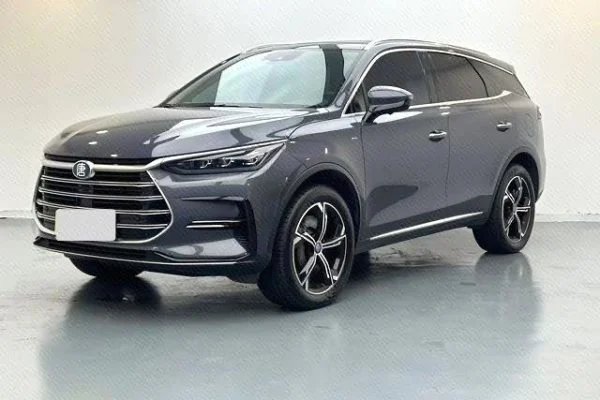
2021 BYD Tang DM 2.0T High Performance AWD (586HP / 7-Seater) PHEV SUV
- 2021
- 67,000 km
- Automatic
- Plug-in Hybrid

2024 BYD Denza D9 DM-i 1050 Exclusive (231HP / 1050km Range) 7-Seater Luxury MPV
- 2024
- 43,000 km
- Automatic
- Plug-in Hybrid
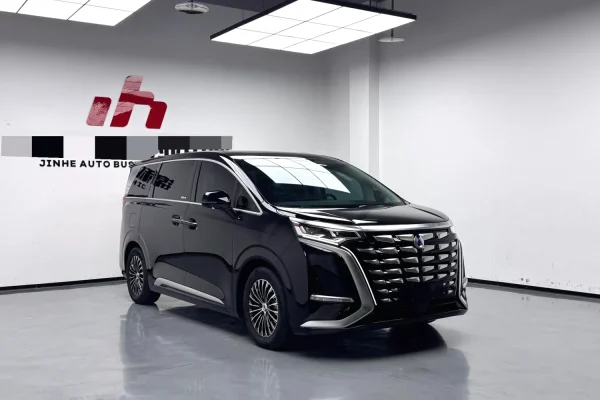
2024 BYD Denza D9 DM-i 980 4WD Executive (24,000 km / 407 HP) – Luxury Hybrid MPV
- 2025
- 24,000 km
- Automatic
- Hybrid