









Used Electric Cars for Sale: 10 Real Buyer Traps
Most of the problems with used electric cars for sale in 2026 are not mechanical — they are documentation. A car with 97% battery health and a car with 89% look identical in photographs and drive similarly for the first month. Ten specific traps account for most bad purchases, and every one of them is catchable before you pay.
1. The missing BMS report
State of health is a data readout from the battery management system, not an opinion. Any serious seller produces it in minutes. A 12,000 km BYD Dolphin should read 97% or better; a 660 km Changan Q05 should read 99-100%. No report means no deal. This is the single highest-value check on the list.
2. Ride-hailing history
A car that spent 30,000 km as a ride-hailing vehicle wears the same paint as a family car. Check the registration type — company or private — and the first-owner name. Fleet cars were fast-charged daily, which shows up as an SOH in the low 90s at mileage where a private car reads 96%+.
3. CLTC optimism
Chinese range figures use CLTC, the most optimistic common test cycle. Multiply by 0.75-0.85 for mild-weather real range and 0.6-0.7 for hot-climate air-conditioning use. A 305 km BYD Seagull gives 180-200 km in a Gulf summer. If your route planning assumes the brochure number, you will be disappointed in week one.
4. GB/T charging inlets
Every Chinese EV ships with a GB/T connector. In Europe you need a Type 2 AC adapter ($150-$400) and, for public DC charging, a GB/T-to-CCS unit. In the Gulf, Africa and Southeast Asia, GB/T chargers are increasingly common. Buy a certified adapter, not the cheapest one on a marketplace.
5. LFP cold-weather charging
LFP packs are the right choice for hot climates and wrong-feeling in cold ones. Below 0°C the pack accepts DC charge slowly until it warms. A Q05 in a Gulf summer is excellent; the same car in a Nordic winter will frustrate its owner for four months a year. Match chemistry to climate.
6. The 12-volt battery
A dead auxiliary battery leaves the whole car immobilised, and used EVs often sit for months. Check the date stamp and the voltage under load. On a four-year-old car on its original 12V, budget a replacement immediately.
7. Stale software and OTA drift
Chinese EVs update over the air, and cars that missed dealer updates show slow screens, camera dropouts and occasional driver-assist faults. Confirm the software version is current before you buy; retrofitting is possible but not always free.
8. Tyres and brake discs from sitting
A 200 km car is delivery mileage, not new. A car registered a year ago and driven twice has flat-spotted tyres, surface rust on brake discs and a 12V battery that has been discharging. These are cheap fixes, but they are $300-$600 of cheap fixes.
9. Assuming the badge equals service
A BYD or MG has service reach in most export markets. A niche start-up brand may not. Before you buy, find the workshop that can read the car’s diagnostic port. That single phone call has saved more bad purchases than any inspection report.
10. Belated duty maths
An $11,250 Dolphin is not an $11,250 car where it lands. Freight, duty, VAT and clearing add materially, and in the EU a Chinese-built EV can gain 25-30% on the landed figure. Get a broker’s number for your port before you commit, not after.
What does a clean purchase look like?
An SOH report above benchmark, a private registration, a current software version, a 12V battery under two years old, a verified charging test on both AC and DC, and a landed cost you have written down. Six items. If any are missing, the price has to move or you walk.
Key Takeaways
- The BMS state-of-health report is the single most important document in a used EV purchase.
- Expect real range at 60-85% of the CLTC figure depending on climate.
- Every Chinese EV needs a Type 2 adapter outside China; LFP packs charge slowly below 0°C.
- Check the 12V battery, software version, tyres and brake discs on any low-mileage car.
- Calculate landed cost before agreeing a price — duty can add 25-30% in the EU.
Related Vehicles
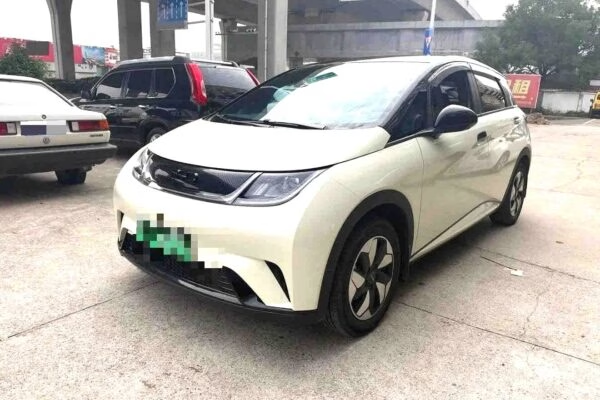
2025 BYD Dolphin 420km Free Edition (95 HP) – 12,000 km, Beige over Brown, Anqing
- 2025
- 12,000 km
- Automatic
- Electric
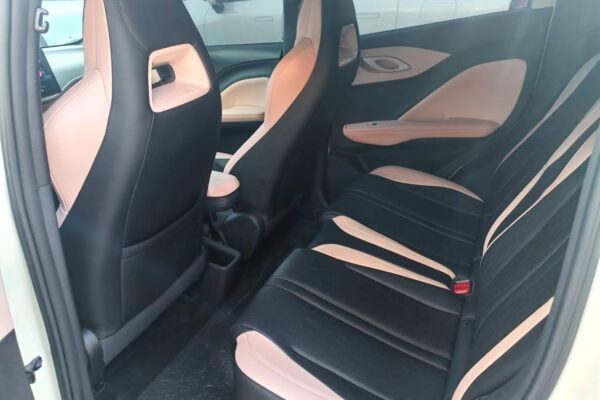
2025 BYD Seagull Vitality Edition 305km EV (75 HP) – 12,000 km, Beige over Blue
- 2025
- 12,000 km
- Automatic
- Electric
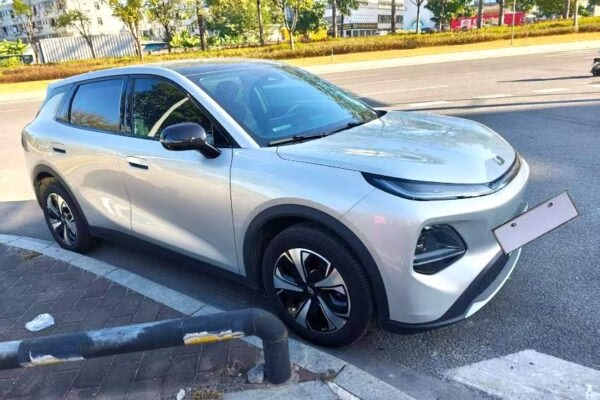
2026 Changan Qiyuan Q05 506 Max+ for Sale — 660 km, 51.9 kWh LFP, FOB Guangzhou
- 2026
- 660 km
- Automatic
- Electric
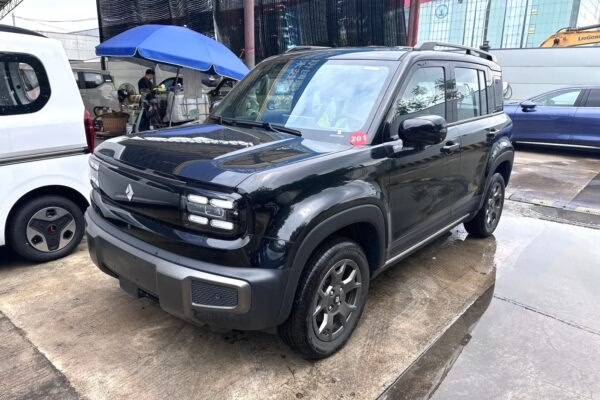
2026 Baojun Yep Plus 301 km Flagship Edition Electric SUV for Sale – 102 HP, 31.9 kWh, 5-Door
- 2026
- 10 km
- Automatic
- Electric