









Used Electric Cars for Sale: What a Used EV Really Costs

Used electric cars for sale from China in 2026 span $5,900 to $23,000 FOB, and the purchase price is roughly 65-80% of what you will actually spend in year one. The rest is freight, duty, registration and the first repairs.
This is a cost breakdown rather than a shopping guide, because most buyers who get burned do so on the number they did not calculate rather than the car they chose.
What does a used EV from China actually cost, all in?
Three worked examples at different price points. Freight and duty vary by destination; the ranges below reflect 2026 container rates and typical passenger-car tariffs.
- Micro EV, $6,800 FOB. Freight in a shared container $500-$900, duty and clearance $700-$1,400, registration $150-$400. Landed: roughly $8,200-$9,500.
- Compact SUV, $13,500 FOB. Freight $700-$1,200, duty $1,600-$3,000, registration $250-$600. Landed: roughly $16,000-$18,300.
- Mid-size SUV, $19,000 FOB. Freight $800-$1,400, duty $2,500-$4,500, registration $300-$700. Landed: roughly $22,600-$25,600.
Duty is the swing factor, and it is the number buyers under-research. Some markets charge 10-25% on passenger cars and considerably more on anything with a large engine or an EV battery above a threshold. Check before you choose the car, because a $19,000 Leapmotor C11 580 Premium can land cheaper than a $13,500 SUV in a high-tariff market.
What are the running costs after year one?
Electric drivetrains are cheap to run and mildly expensive to insure. On a 60 kWh compact SUV doing 15,000 km a year:
- Electricity: 17 kWh/100 km, or 2,550 kWh a year. At $0.12/kWh that is $306; at $0.28/kWh, $714.
- Tyres: one set every 35,000-45,000 km, $500-$800.
- Brakes: pads last 100,000 km+ thanks to regen; discs can pit from disuse.
- Service: cabin filter, brake fluid, coolant check — $120-$250 a year.
- Insurance: often 10-20% above an equivalent petrol car, because repair costs on battery vehicles are poorly understood by local insurers.
Total running cost lands around $700-$1,300 a year excluding insurance. A comparable petrol SUV runs $1,800-$2,800 in fuel alone at 8 L/100 km.
When does the battery become a financial problem?
Around year six to eight, or 100,000-150,000 km. A 60 kWh blade pack replacement on a BYD runs roughly $5,000-$7,500 including labour. On a $13,000 car at that point, the arithmetic is uncomfortable but survivable. On a $6,000 micro EV with a $3,500 pack, it is not.
This is where buying a 2022 BYD Atto 3 510km Flagship beats a cheaper 2024 micro car: the pack is bigger, degrades more slowly per kilometre, and can be sourced. Parts availability is a financial variable, not a convenience one.
Which used EV gives the best five-year cost?
Model a 5-year horizon on three cars and the answer changes. A $9,000 micro EV with two pack replacements costs more than a $14,000 Atto 3 with none. A $21,000 XPENG G6 755 Pro has the lowest energy cost per kilometre and the highest insurance cost.
My rule: spend the extra $5,000 to move from a 30-40 kWh car to a 60 kWh one. It is the best value decision in the whole Chinese used EV market, and it protects you on resale.
Key Takeaways
- Landed cost is roughly 1.2-1.35x the FOB price, driven mostly by duty.
- Running costs on a 60 kWh SUV: about $700-$1,300 a year excluding insurance.
- A 60 kWh pack replacement costs $5,000-$7,500, due around year 6-8.
- Micro EVs face the worst pack-to-value ratio and the highest write-off risk.
- Moving up $5,000 to a 60 kWh car is the best value decision in this market.
Related Vehicles

2022 BYD Yuan PLUS (Atto 3) 510km Flagship (204HP FWD) Electric Compact SUV
- 2022
- 56,000 km
- Automatic
- Electric
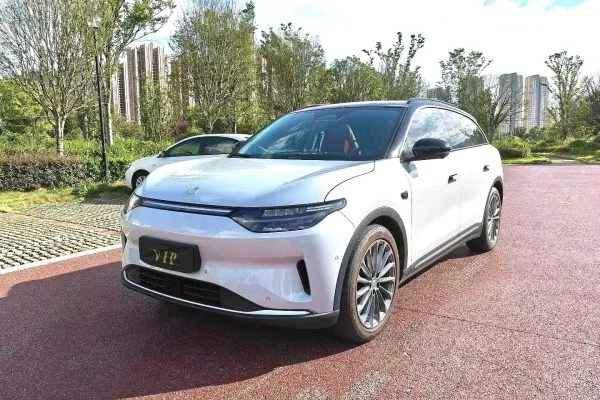
2024 Leapmotor C11 580 Premium Edition for Sale – 272 hp EV, 580 km Range, Export Ready
- 2024
- 21,000 km
- Automatic
- Electric

2023 XPENG G6 755 Long Range Pro (218kW / 296HP / 800V SiC) Electric Coupe SUV
- 2024
- 59,000 km
- Automatic
- Electric
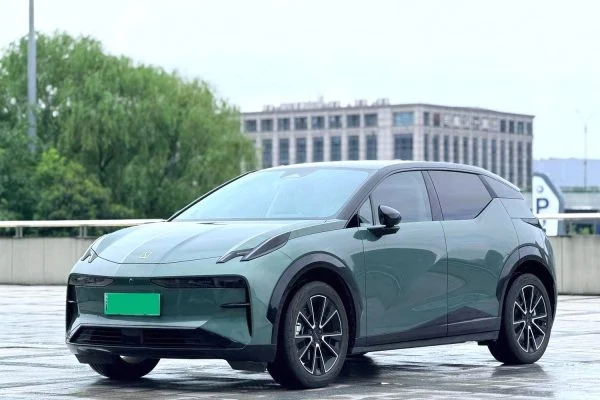
2023 Zeekr X RWD YOU Edition 4-Seater for Sale – 272 hp EV, 560 km Range, Export Ready
- 2023
- 12,200 km
- Automatic
- Electric