









Cheap Second Hand Electric Cars for Sale: 2026 Guide

Cheap second hand electric cars for sale in China start around $3,400 for a 2021 Wuling Hongguang MINI EV and top out near $9,800 for a 400 km compact SUV. The drop in prices is not a fluke: China sold over 9 million new EVs in 2025, and every one of them eventually hits the used market with another three or four years of life left.
Buyers from Kenya to Kazakhstan to Peru now search “cheap second hand electric cars for sale” and mean it literally. Good instinct. The market rewards people who know which cheap cars are solid and which are money pits.
Where are the cheapest second hand EVs in China?
Inner-city dealerships in Zhengzhou, Hefei and Liuzhou carry the deepest stock of small EVs. Those cities host Wuling, Changan and Baojun production, so trade-ins pile up locally at lower prices than in Beijing or Shanghai.
What that means for a foreign buyer: the cheapest cars usually come through wholesale channels, not retail listings. Expect a 5-10% discount over retail when you buy three or more units, which is how most export buyers work.
| Budget | What you get | Typical model | Real range |
|---|---|---|---|
| $3,400-$5,000 | 120-300 km city car | Wuling Hongguang MINI EV | 90-200 km |
| $5,000-$7,000 | 300 km two-seater or hatch | Baojun E200, Changan Lumin | 210-240 km |
| $6,800-$8,400 | 330 km five-door hatch | Wuling Binguo | 250-280 km |
| $8,200-$9,800 | 400 km compact SUV | BYD Yuan PRO | 300-320 km |
Is a $6,000 Chinese EV actually reliable?
Mostly. These cars have fewer moving parts than anything with an engine, and LFP batteries tolerate 1,500-3,000 full cycles. A 2022 Changan Lumin 301km Mitian Edition with 40,000 km usually shows 92-95% pack health.
The failure points are boring, which is a good sign: door handles, window regulators, the 12V battery, and the on-board charger. None of those cost more than $150 in parts. What kills a cheap EV is a pack that was abused — fast-charged daily in summer heat and left at 100% for weeks.
Which cheap models should you avoid?
Skip any micro-EV with a “remanufactured” pack and no BMS report. Also skip early 2019-2020 models that used the first-generation 12V-only thermal management; the packs ran hot and lost capacity faster.
- No DC charging port: fine in a city, useless on a highway route.
- 40,000 km+ on a 13 kWh pack: cycle count is getting high; ask for health first.
- No service history: a car with zero records after three years usually means a fleet car that was abused.
- Imported “salvage” EVs: repaired structural damage on a cheap EV is never economically sane.
What does spending $8,000 more buy?
A lot. At $13,000 you get a 430 km car with a 49.9 kWh Blade pack, real crash structures and a five-year-old design instead of an eight-year-old one. The 2023 BYD Yuan PLUS (Atto 3) Champion Edition is the clearest example, and it carries parts support in 70+ countries.
Still, the cheap tier is not a mistake for the right buyer. If your market has short trips, cheap electricity and low speed limits, a 2023 Wuling Binguo 333km Express Edition at $7,600 delivers the same daily job as a $30,000 car. It just does not do it with any dignity.
What does a cheap second hand EV cost to keep running?
About $0.04-$0.06 per km in electricity at home rates, and $180-$250 a year in service. There is no oil, no filter, no timing belt. Brake pads last 80,000-120,000 km because regenerative braking does most of the work.
The one line item people forget is tyres. Small EVs are light, so tyres last well, but the original Chinese-brand rubber fitted at the factory is often poor in the wet. Budget $300 for a set of decent tyres in year one, and the car feels completely different.
Are cheap second hand electric cars for sale safe enough for a family?
Honestly: not all of them. The five-door Binguo and the Changan Lumin have proper crash structures and airbags. Some micro-EVs sold at $3,500 have minimal deformation zones and no side airbags.
If the car will carry children, spend the extra $2,000 and get a five-door with side airbags. A 2023 Wuling Binguo 333km Express Edition is the cheapest car on this list that meets that bar. Anything smaller is a city runabout for adults, and should be treated that way.
How do the cheapest EVs charge, and does it matter?
Most of the sub-$10,000 tier is AC-only or capped at 30-50 kW DC. A 2023 Wuling Binguo 333km Express Edition accepts 40 kW DC, so 30-80% takes about 40 minutes. A 30 kW micro-EV takes over an hour.
For city use that is irrelevant. For anyone planning a 300 km trip once a month, it is the difference between a coffee stop and a full afternoon. Check the DC rating before you buy, not after.
One more thing buyers ask: how long before the pack needs replacing? On the sub-$10,000 tier, a healthy pack at 40,000 km usually serves another 8-10 years of city use before health drops below 80%. That is longer than most owners keep the car.
Key Takeaways
- Cheap second hand EVs in China start at $3,400 and reach $9,800 for a 400 km compact SUV in 2026.
- $6,000-$8,400 buys a five-door 333 km hatchback such as the Wuling Binguo, the best-value tier.
- LFP packs in these cars usually hold 92-95% health at 40,000 km when not abused.
- Avoid remanufactured packs, AC-only variants and cars with no service history.
- Spending $13,000 gets you into proper 430-510 km cars with global parts support.
Related Vehicles
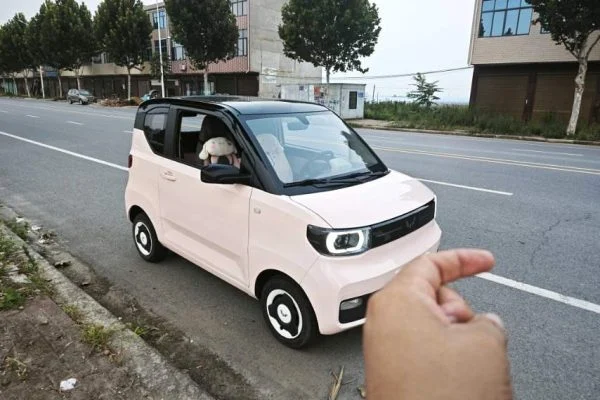
2021 Wuling Hongguang MINI EV Macaron Sandwich 120km (27 HP / RWD) – Compact City EV
- 2022
- 23,000 km
- Automatic
- Electric
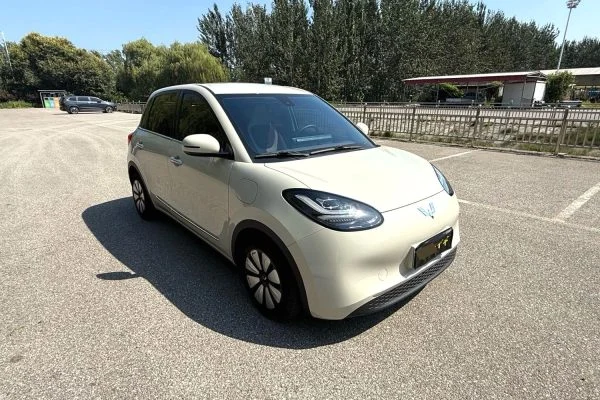
2023 Wuling Binguo 333km Express Edition for Sale – 68 hp EV, 333 km Range, Export Ready
- 2024
- 6,000 km
- Automatic
- Electric

2024 Wuling Bingo (Binguo) 333km Enjoy Edition (50kW / 68HP) Electric Hatchback
- 2024
- 60,000 km
- Automatic
- Electric
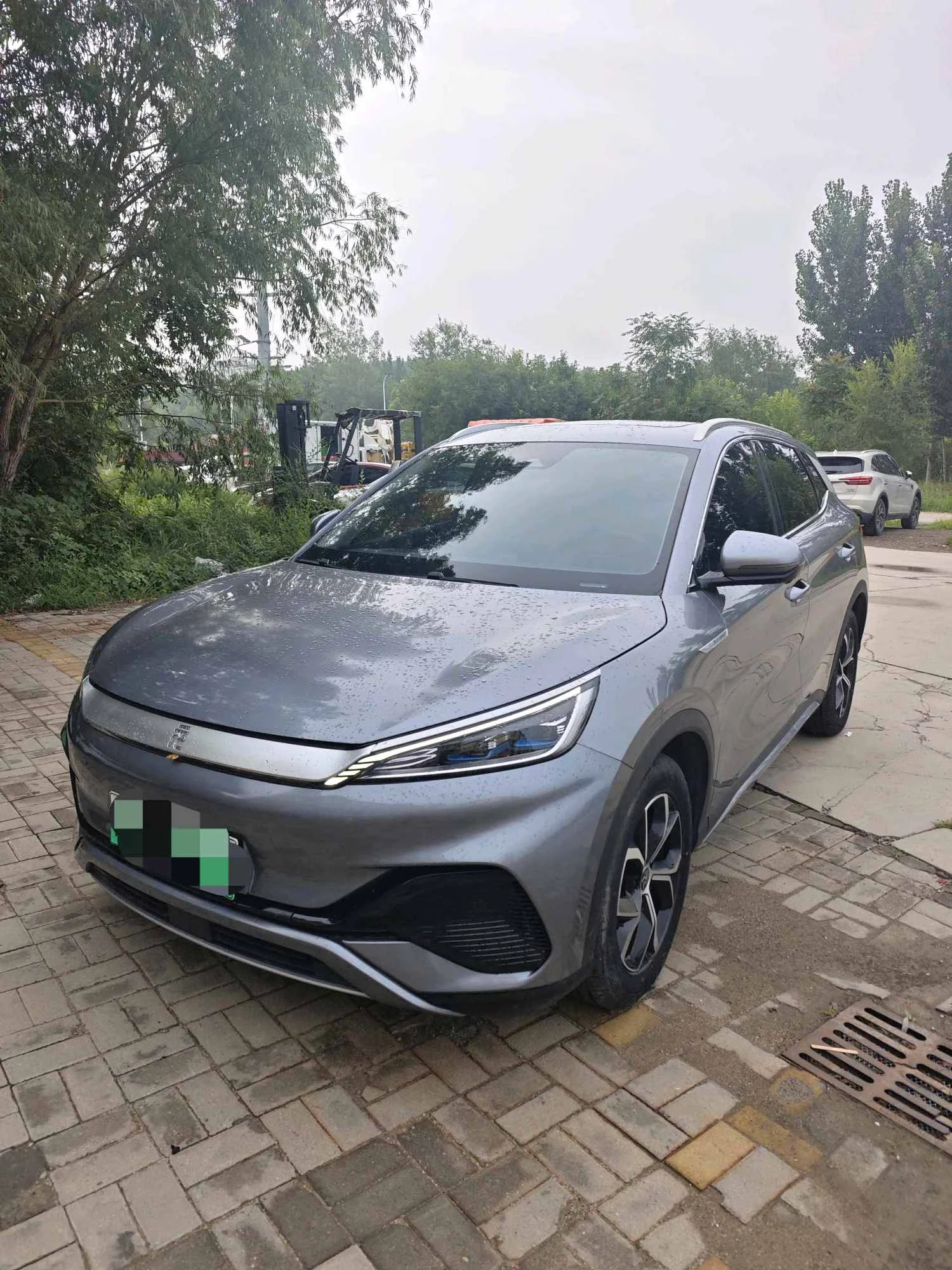
2023 BYD Yuan PLUS (Atto 3) Champion Edition 430KM Beyond (204HP / Blade Battery) EV SUV
- 2023
- 21,000 km
- Automatic
- Electric