









Do Electric Cars Have Good Resale? China EV Values in 2026

Electric cars have mediocre resale in 2026: a Chinese EV typically keeps 42-52% of its price after three years. A petrol crossover keeps 55-65%. But the gap closes fast after year four, and that is where the buying opportunity sits.
Resale is the least understood number in used-car buying, and the one that decides whether a five-year ownership actually costs what you think it does. Here are the real curves, the models that beat them, and the ones that destroy value.
How much value does a Chinese EV lose in three years?
Forty-eight to fifty-eight percent, on average. A car bought new at $22,000 is worth $10,000-$11,500 at year three. Petrol competitors in the same segment land at $13,000-$14,000.
Three forces drive the gap, and only one is about the battery.
New-price subsidies distort the anchor. When a market discounts new EVs, used values follow the discounted price, not the sticker. This is the single biggest driver, and it has nothing to do with build quality.
Technology moves faster. A 2022 car with 400V charging and a 60 kWh pack looks dated beside a 2026 car with 800V and a 75 kWh pack. Nobody says that about a 2022 Corolla.
Buyers fear the battery. Even when the pack is fine. A documented state-of-health report recovers 8-12% of value at resale, which is reason enough to keep one.
Which used EVs hold value best?
The ones with LFP chemistry, high production volume, and a real export network. In practice that means BYD, and to a lesser degree Geely’s brands.
The 2022 BYD Atto 3 510km Flagship with 56,000 km retains roughly 55-60% of its original price. That is the floor for a mainstream Chinese EV, and it is close to petrol-equivalent performance.
Range-extender SUVs do even better, because buyers have no range anxiety to price in. The 2024 Li Auto L7 Pro with 225 km of electric range and a 449 hp AWD drivetrain holds value in a way that pure EVs in the premium segment do not.
Plug-in hybrids occupy the same favourable spot. The 2024 BYD Seal DM-i 121km Luxury Edition with 49,000 km depreciates more slowly than a pure EV sedan of the same age, simply because a buyer without a charger can still use it.
Which cars destroy value fastest?
Low-volume brands with thin parts networks. A car whose nearest dealer is 600 km away is worth less to every future buyer, and the market prices that in from day one.
Also: any car under 30 kWh sold into a market with cheap petrol. A $9,000 city car that loses 45% is only a $4,000 loss in absolute terms, so the damage stays small, but the percentage looks brutal and dealers quote against it.
And the newest premium EVs. A 2026 flagship with 800V and LiDAR will lose more in year one than a 2023 mid-range car loses in three, because the technology it charges a premium for gets cheaper every quarter.
When does an EV stop losing value so fast?
Year three to four, and the reason is arithmetic. By then the car has already lost the majority of the depreciation, and what remains is mostly wear-based rather than technology-based.
From year four to year seven, a Chinese EV loses about 5-7% a year. A petrol car loses 6-8%. The curves cross. That crossing point is the whole investment case for buying used at four years old rather than three.
The 2025 BYD Qin L EV 545KM Beyond Edition illustrates it well: a 545 km CLTC sedan with a 56.6 kWh Blade pack, priced at roughly 70% of new at one year old. Every year after this one costs you single-digit percentages.
Does a battery report actually protect resale value?
Yes, measurably. Cars sold with a written state-of-health figure and a cell-voltage spread reading clear the market 8-12% higher than identical cars sold without one.
Two numbers matter. Health above 90% is good on any car under 80,000 km. Cell spread under 50 mV means the pack is balanced and no module is failing.
If you are buying, ask for both. If you are selling, get them and put them in the advert. It is the cheapest value protection available in this market.
Key Takeaways
- A Chinese EV keeps 42-52% of its price at three years, against 55-65% for petrol.
- LFP BYD cars and range-extender SUVs hold closest to petrol values.
- Depreciation flattens to 5-7% a year after year four, and that is when to buy.
- A written battery health report adds 8-12% at resale.
Related Vehicles

2022 BYD Yuan PLUS (Atto 3) 510km Flagship (204HP FWD) Electric Compact SUV
- 2022
- 56,000 km
- Automatic
- Electric
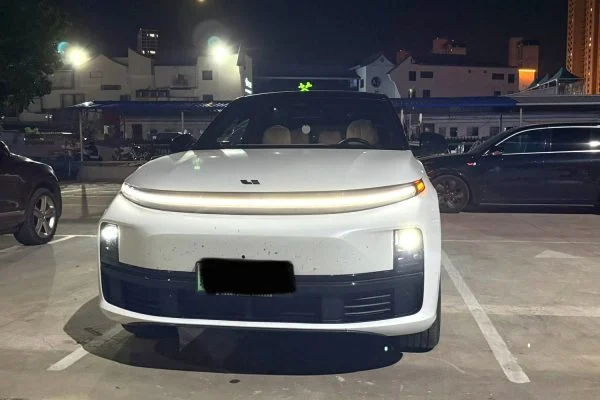
2024 Li Auto L7 Pro for Sale – 449 hp AWD EREV SUV, 225 km EV Range, Export Ready
- 2024
- 29,000 km
- Automatic
- Plug-in Hybrid
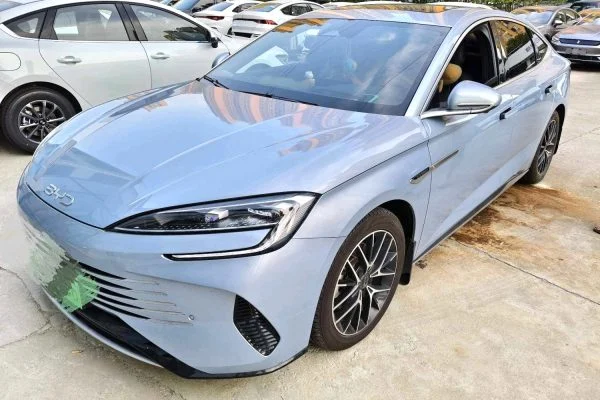
2024 BYD Seal DM-i 1.5L 121km Luxury Edition (49,000 km / 197 HP) – Mid-Size PHEV Sedan
- 2024
- 49,000 km
- Automatic
- Hybrid
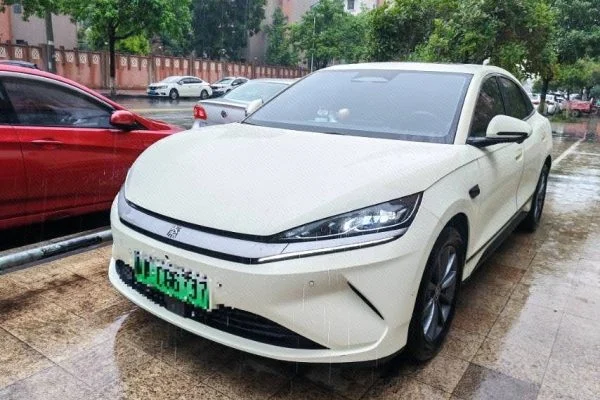
2025 BYD Qin L EV 545KM Beyond Edition for Sale – 218 hp EV, 545 km Range, Export Ready
- 2025
- 28,000 km
- Automatic
- Electric