









Used Tesla for Sale: What US Buyers Get in 2026

A used Tesla in 2026 is still the safest choice for resale and software support, but it is not the cheapest way to get a fast-charging electric car. Comparable Chinese EVs from 2023-2024 sell for US$10,000-15,000 less and, on an 800V platform, charge faster than a Model 3.
Shoppers typing “used Tesla for sale” are usually asking a narrower question than they realise: is the badge still worth the premium? The answer has shifted in the last two years.
What does a used Tesla actually cost in 2026?
Prices vary enormously by market, but the shape is consistent: a three-year-old Model 3 sits well above a three-year-old Chinese compact EV, and a Model Y sits above every Chinese crossover in the same size class. The gap is usually US$8,000-15,000.
Some of that gap is real. Tesla’s Supercharger access is a genuine asset. Over-the-air updates keep the car feeling current. Resale is deeper, because the buyer pool is bigger.
Is the Tesla battery really better than a Chinese LFP pack?
Different, not better. Tesla has used both NMC and LFP depending on trim and year, and the LFP cars have shown excellent durability. Chinese brands have converged on LFP almost universally, with Blade-style cell-to-pack designs that are cheap to build and slow to degrade.
What Tesla does better is battery management software and thermal control. A Tesla in a hot climate tends to hold its state of health over time. That advantage is real but modest, and it does not justify a US$12,000 premium on its own.
What about charging speed?
This is where the comparison gets uncomfortable for the older cars. A 2024 XPeng P7+ Long Range Max on an 800V platform goes from 10-80% in roughly 20 minutes. A 2021-2022 Model 3 on a 400V architecture takes closer to 25-30 minutes at a good charger.
Five minutes does not sound like much until it is the difference between one stop and two on a 600 km trip. If you rarely drive that far, it does not matter. If you do, it does.
What should a US buyer check on a used Tesla?
- Battery and drive unit warranty transfer. The 8-year pack warranty usually follows the car, but confirm the remaining term in writing.
- Accident history. Structural repairs on a Tesla are expensive and affect insurance and resale.
- Software and hardware version. Older cars miss features that newer ones get free. Check what the car actually has, not what the brochure promised.
- Tyre wear. These cars are heavy and quick; four tyres are US$900-1,200.
What are the Chinese alternatives worth comparing?
The obvious one is the 2023 XPeng P7i 702 Pro: 276 hp, 702 km CLTC, dual LiDAR, and a price that undercuts a comparable Model 3 by a wide margin. The catch is dealer support and software that may not work the same way where you live.
At the practical end, the 2022 BYD Yuan PLUS (Atto 3) 510 km Flagship is the crossover most US shoppers should look at if they want to spend 40% less. It gives up charging speed and badge value, and gives back US$12,000 and a simpler parts story.
So which one should you buy?
If you plan to sell in three years, Tesla. The resale market is deeper and the software story is easier to explain to the next buyer.
If you plan to keep the car and want the most electric car per dollar, buy Chinese. The gap between a 2024 model and a 2021 model is a bigger deal than the badge, and that gap is where the money actually goes.
Key Takeaways
- Used Teslas keep a US$8,000-15,000 premium over comparable Chinese EVs.
- Tesla’s advantage is software, thermal management and resale depth.
- 800V Chinese sedans can charge faster than 400V Teslas.
- Confirm remaining pack warranty transfer before buying any used Tesla.
- Keep the car five years and the Chinese option usually wins on cost per kilometre.
Related Vehicles

2024 XPENG P7+ Long Range Max (800V Platform / 615km Range) – AI Fastback Sedan
- 2026
- 16,000 km
- Automatic
- Electric
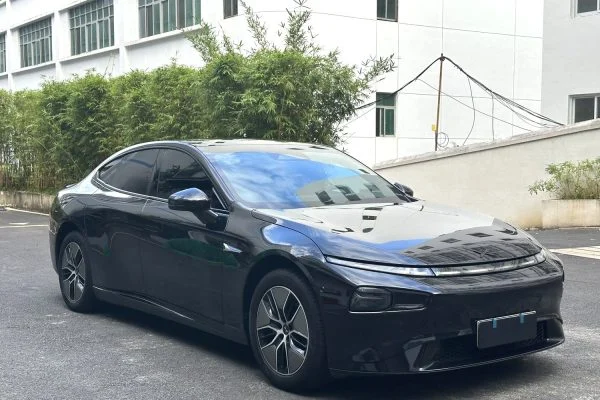
2023 Xpeng P7i 702 Pro for Sale – 276 hp EV, 702 km Range, Dual LiDAR, Export Ready
- 2023
- 45,000 km
- Automatic
- Electric

2022 BYD Yuan PLUS (Atto 3) 510km Flagship (204HP FWD) Electric Compact SUV
- 2022
- 56,000 km
- Automatic
- Electric