









Cheapest Used Electric Cars for Sale in 2026: $5k to $9k

The cheapest used electric cars for sale in 2026 start around $5,000. A 2024 Changan Lumin 205 km lists near $5,500, a 2020 Baojun E200 305 km near $5,500, and a 2022 Baojun KiWi EV 305 km near $6,000. All three are two- or four-seat micro-EVs with LFP batteries.
These are not compromised cars. They are deliberately small cars, and small is not a defect if you drive 30 km a day in a city where parking is scarce. The mistake buyers make is expecting them to behave like a normal hatchback on the motorway.
How low do used EV prices actually go in 2026?
Below $5,000 you are buying 2016-2018 NMC micro-EVs with degraded packs and no parts support. Not worth it. Between $5,000 and $7,000 the market opens up to 2020-2022 LFP cars with 250-305 km of rated range and packs that still hold 90%+ capacity.
That $5,000-$7,000 band is the real floor of usable electric motoring. It exists because China’s domestic micro-EV market is enormous — hundreds of thousands of new units a year — and three-year-old supply follows.
Which is the best of the cheapest?
The Baojun KiWi EV, narrowly. It has 305 km of range, a genuine DC fast-charge port, and 54 hp — enough for a 90 km/h ring road. The 2022 Designer Lite Edition sells near $6,000. It is a three-door, so access to the back is awkward, and the styling divides people.
Baojun KiWi EV Designer Lite details.
Is a Changan Lumin good enough?
For city use, yes. The Lumin is 48 hp and 205-301 km depending on trim, with four seats and a boxy body that fits in spaces other cars cannot. It is the cheapest car on this page and the most honest: no pretence of being a motorway car, no expensive options, simple LFP pack.
Two limits: DC charging is slow (most trims peak around 25-30 kW), and rear passengers have very little knee room. 2024 Lumin 205 km versus the 2022 Lumin 301 km.
What does the Baojun E200 give you for the same money?
305 km of range in a two-seat body for about $5,500. The E200 is a city pod: 39 hp, 2 seats, a boot big enough for two weekly shops. As a second car for a couple it is excellent value. As an only car it is not, unless you genuinely never carry a third person.
Baojun E200 305 km Zhixing Edition.
What are the hidden drawbacks of a $6,000 EV?
Insurance and parts. Chinese micro-EV parts are cheap in China and often expensive abroad, because nobody stocks them. A windscreen for a KiWi EV may take six weeks. Before buying, check whether a local importer supports the brand you are considering.
Winter range. These packs have no heat pump on most trims. At 0°C expect 55-60% of rated range, so a 305 km car delivers 170-180 km.
Resale. Thin markets mean slow sales. Buy to keep for at least four years; anything shorter risks a loss that dwarfs the purchase price advantage.
Should you stretch to a BYD Seagull instead?
If your budget can reach $7,500, probably yes. The difference is not specification — it is support. BYD’s global dealer network means a Seagull can be serviced almost anywhere, and the blade battery’s track record is the best-documented in the segment. The extra $1,500 buys you a five-year ownership experience rather than a three-year one.
Key takeaways
- The usable used-EV floor in 2026 is about $5,000-$7,000 for a 2020-2024 Chinese LFP micro-EV.
- KiWi EV offers the best range and fast-charging at $6,000; Lumin is the cheapest four-seater.
- Winter range drops to roughly 55-60% of the CLTC figure on cars without heat pumps.
- Parts availability, not price, is the deciding factor below $7,000.
Related Vehicles
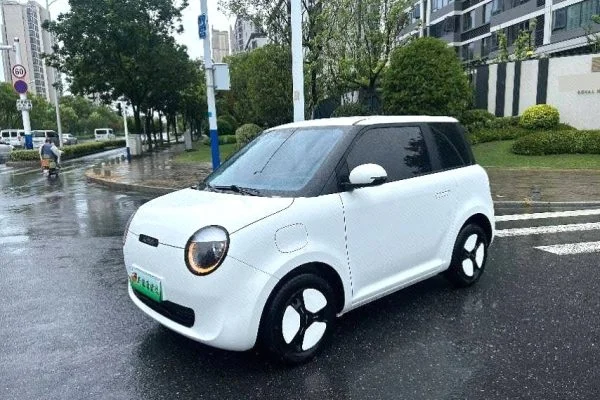
2024 ChangAn Lumin 205km Orange Edition for Sale – 48 hp EV, 205 km Range, Export Ready
- 2025
- 6,000 km
- Automatic
- Electric
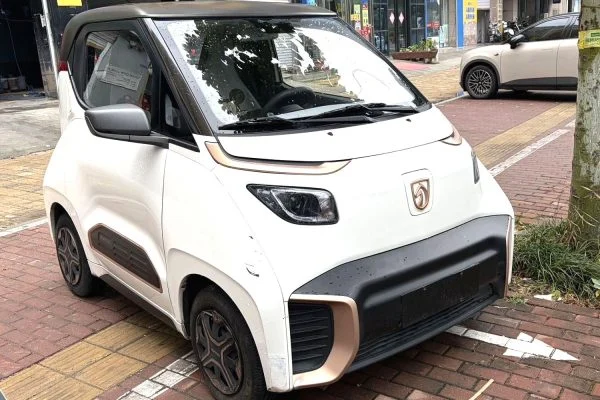
2020 Baojun E200 305km Zhixing Edition for Sale – 39 hp EV, 305 km Range, Export Ready
- 2021
- 25,000 km
- Automatic
- Electric
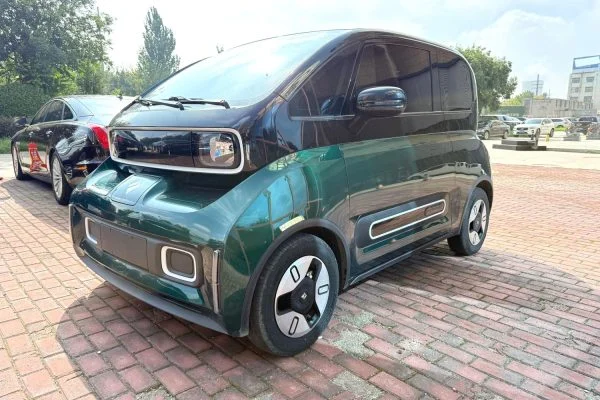
2022 Baojun KiWi EV Designer Lite Edition for Sale – 54 hp EV, 305 km Range, Export Ready
- 2024
- 50,000 km
- Automatic
- Electric
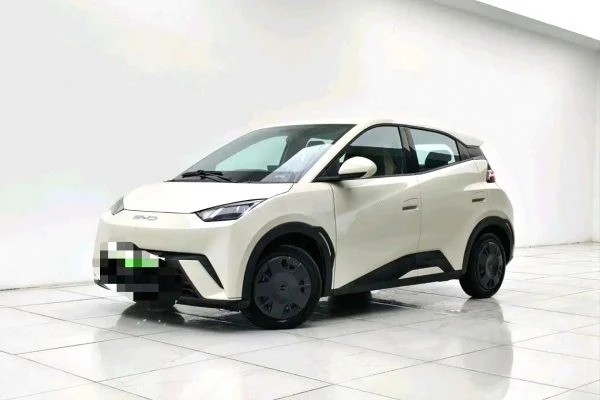
2023 BYD Seagull Vitality Edition 305km EV (75 HP / FWD) – 13,000 km Like-New
- 2024
- 13,000 km
- Automatic
- Electric