









Used Electric Cars for Sale 2026: How to Tell a Good One in 60 Minutes
Vetting a used electric car takes about 60 minutes if you know what to test, and most of it happens before you look at the bodywork. Battery health, charge port condition and software accessibility catch 80% of expensive problems.
Used electric cars for sale in China are mostly honest. The market is too liquid for blatant fraud. What happens instead is omission: sellers not mentioning the pack they fast-charged twice a day, or the head unit that needs a Chinese phone number.
What should you request before you even travel to see the car?
Three documents. Ask for them via message and note how the seller responds — a cooperative seller is worth a premium, and a hesitant one saves you a wasted day.
- BMS state-of-health screenshot. Must show overall SoH and per-module voltage. A 2024 BYD Dolphin at 30,000 km should read above 94%.
- Service record or dealer app export. Shows charging patterns and any warranty repairs already claimed.
- VIN photo plus registration photo. Cross-check the model year and trim yourself.
If a seller will not send a BMS screenshot, stop. There is no legitimate reason to refuse, and the request costs them two minutes.
What do you test in the first 20 minutes on site?
Start the car cold — insist it has not been running. Watch the dash for warnings that have been cleared by a recent battery disconnect.
- Turn on AC at maximum, both seat heaters, rear defroster, and all lights at once. Note the projected range. Any car that drops more than 12% in five minutes is drawing power it should not.
- Plug in AC and start charging. Listen to the fan and the pump. Check the port for scorch marks and a loose flap.
- Open and close the charge port flap three times. The solenoid should click cleanly on every cycle.
- Drop the tyre pressure reading. On a 2024 car with original tyres, check the date code — 2023 rubber on a low-mileage car is normal, 2021 rubber is not.
A 2023 Song PLUS EV 520 km Flagship with a 71.8 kWh Blade pack should take roughly 50 minutes for 30-80% on AC. If it takes two hours, the onboard charger is on its way out.
Which software problems are unfixable?
Some, and they matter more for export buyers than domestic ones. Chinese-market cars often tie navigation, OTA and remote features to a domestic account and phone number.
Test this: turn on airplane mode on your phone, disable the car’s data connection if possible, and check whether climate control, the radio and the basic screen functions still work. If the centre screen goes dark without a network, that is a serious problem for a car headed overseas.
Ask specifically whether the head unit has a language switch for English, Spanish, French or Arabic. Most Chinese-market cars do. A few do not, and retrofitting one is a project, not a task.
How do you judge battery health from a test drive?
You cannot measure capacity in ten minutes, but you can see the shape of the discharge curve. Drive 15-20 km with the AC on and note the energy consumption figure in kWh/100 km.
A 2021 BYD Dolphin 405 km should read around 11-13 kWh/100 km in mild weather. A car reading 18+ has either a heating problem, a dragging brake, or a pack that is compensating for weak cells. Cross-check against the range estimator: if the displayed range drops faster than the distance travelled, ask why.
A well-kept 2021 Dolphin 405 km Fashion Edition typically shows 92-95% SoH at 50,000 km. Anything at 88% or below means real capacity loss, which is normal for the age but should be priced in.
What are the three answers that should end the conversation?
First: no BMS report available. Second: the screen needs a Chinese account to work. Third: the seller claims the battery is covered but cannot name the warranty terms or whether they transfer.
Any one of those turns a $15,000 car into a $15,000 question. There are enough 2,000 km Dolphin Free Editions and similar low-mileage cars in the market that you never need to accept an unclear one.
Key Takeaways
- Request a BMS state-of-health screenshot before travelling; refusal ends the deal.
- Test AC charging live — onboard charger faults are common and costly.
- Check whether the head unit works with no data connection and has an English menu.
- Expect 11-13 kWh/100 km from a healthy compact EV in mild weather.
- 92-95% SoH at 50,000 km is normal for LFP packs; below 88% needs a price adjustment.
Related Vehicles

2023 BYD Dolphin 420km Free Edition (95HP FWD / 2,000km) Compact EV Hatchback
- 2024
- 2,000 km
- Automatic
- Electric

2021 BYD Dolphin 405km Fashion Edition (95HP FWD / 44.9kWh Blade Battery) Electric Hatchback
- 2023
- 70,000 km
- Automatic
- Electric
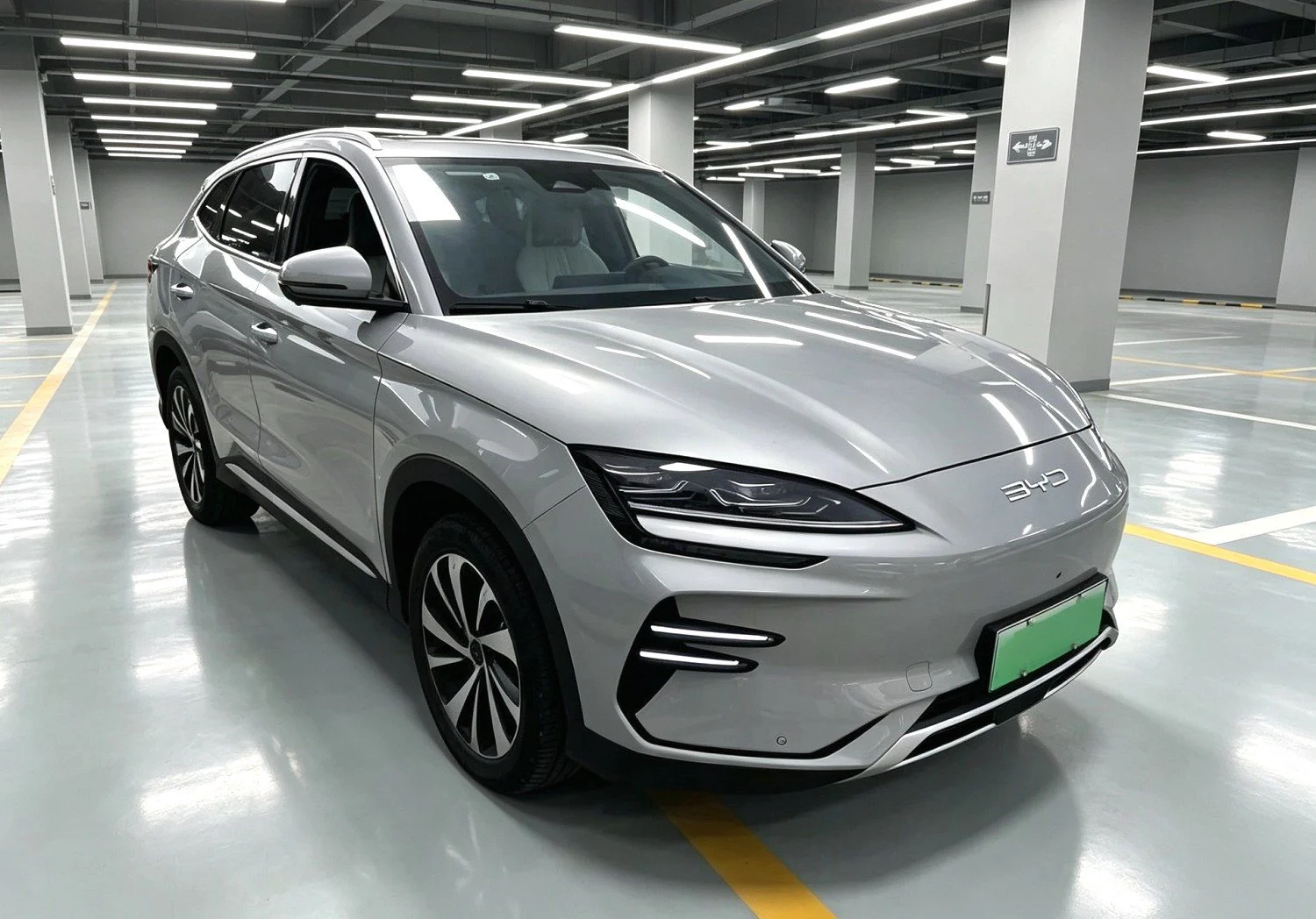
2023 BYD Song PLUS EV Champion Edition 520km Flagship (204HP FWD / Seal U) Electric SUV
- 2024
- 4,000 km
- Automatic
- Electric

2024 ONVO L60 60kWh AWD (462HP / 4.6s / 900V Platform) NIO Electric SUV
- 2024
- 17,000 km
- Automatic
- Electric