









Used Electric Car for Sale by Owner: What a Private Sale Costs
Buying a used electric car for sale by owner in China typically saves 8-15% against a dealer listing, but you take on the inspection and the paperwork yourself. On a $12,000 car, that is roughly $1,000 to $1,800 — real money, with real risk attached.
The gap exists because Chinese dealers price in a warranty buffer and a reconditioning margin. Private sellers have neither. They also have less patience, which is where a patient buyer gets the advantage.
How much cheaper is a private-sale used EV?
Roughly 8-15% below dealer ask, depending on how motivated the seller is. A 2024 BYD Seagull Honor Edition 305 km that a dealer lists at $9,800 often moves privately at $8,400-$9,000.
Motivated sellers — people relocating, upgrading, or holding a car they no longer drive — accept more. Sellers with three weeks of patience and no deadline accept less. Timing your approach around end-of-quarter is not a myth in this market; personal cash flows matter.
What do you give up in a private sale?
- Pre-delivery inspection. A dealer reconditions; an owner sells as-is. Nobody has checked the brake fluid.
- Warranty transfer clarity. Manufacturers vary. Some Chinese brands transfer the battery warranty to a second owner, some only to a household member. Get it in writing.
- Export documentation. Dealers handle invoices, customs paperwork and title transfer as standard. A private seller may never have done it.
- Recourse. If the car arrives with a dead 12V battery and a cracked charge port cover, a private sale leaves you with a phone number.
That last point is not theoretical. EVs fail in different ways than petrol cars — a failed onboard charger, a stuck charge port solenoid, a head unit that will not pair. These are common, cheap-ish, and annoying when the seller has stopped answering.
How do you inspect a private-sale EV yourself?
You cannot fully. But you can catch most of the expensive problems in half an hour with these steps:
- Ask for a BMS screenshot showing state of health and cell voltage spread. Refusal is an answer.
- Check the charge port for scorching or a loose flap — a sign of repeated failed charging.
- Run a full AC charge from 30% to 80% while you are there. Watch the kW figure and listen for the pump.
- Turn on every seat heater, AC max and rear defroster at once. Check the range drop over ten minutes.
- Verify the VIN against the registration and the door-jamb sticker, especially on a Seagull Honor Edition, where trim names vary widely by year.
When is a private seller the right choice?
When the car is simple, the seller is verifiable, and you have a local contact who can inspect it. A 2023 Seagull Flying Edition 405 km is a good private-sale target: one motor, a 38.9 kWh LFP pack, no complex electronics, and plenty of identical cars to compare prices against.
A 2021 Wuling Hongguang MINI or a 2020 Baojun E200 is even simpler. Low-tech, cheap to fix, and the downside if it is worse than described is a $4,000 lesson rather than a $20,000 one.
Go to a dealer instead when the car is high-value or complex — anything with a 900V architecture, air suspension or a large battery. Paying a 10% premium to have someone else carry the inspection burden is worth it at $25,000 and clearly not worth it at $8,000.
Key Takeaways
- Private sales in China run 8-15% below dealer prices.
- You lose the inspection, the warranty buffer and the export paperwork help.
- Always request a BMS state-of-health screenshot before travelling to view a car.
- Verify whether the battery warranty transfers — it varies by brand and by owner relationship.
- Private sales make sense under roughly $12,000 and for mechanically simple cars.
Related Vehicles
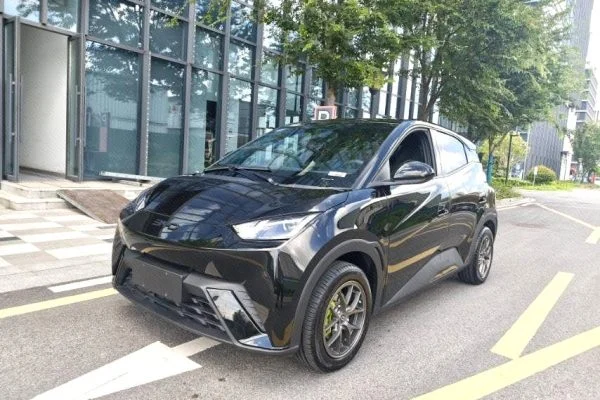
2024 BYD Seagull Honor Edition 305km Freedom for Sale – 75 hp EV, 305 km Range, Export Ready
- 2024
- 18,000 km
- Automatic
- Electric
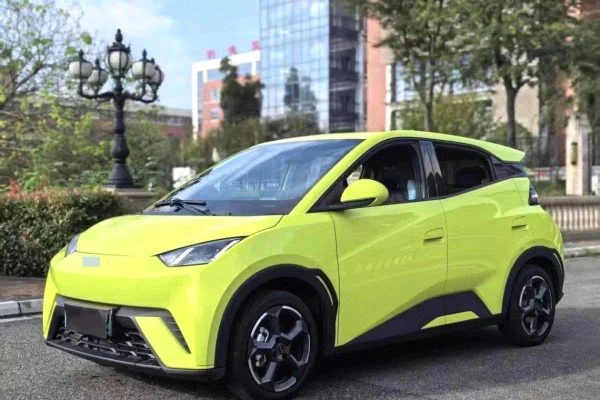
2023 BYD Seagull Flying Edition for Sale – 75 hp EV, 405 km Range, Export Ready
- 2024
- 42,000 km
- Automatic
- Electric
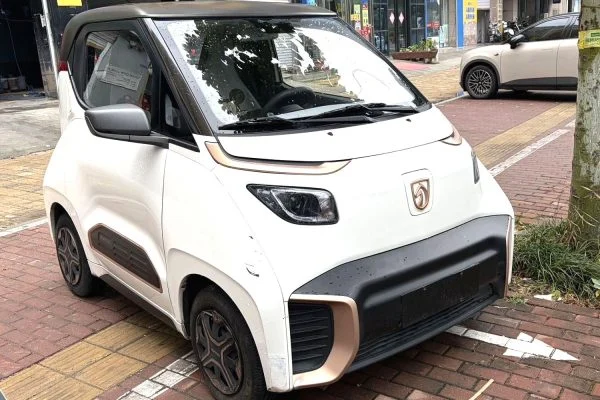
2020 Baojun E200 305km Zhixing Edition for Sale – 39 hp EV, 305 km Range, Export Ready
- 2021
- 25,000 km
- Automatic
- Electric