









Used Hybrid Cars for Sale: Low Mileage Under 40,000 km in 2026

A used low-mileage Chinese plug-in hybrid under 40,000 km sells for $11,000 to $19,000 FOB in 2026, with BYD’s DM-i models dominating supply. They give 80-120 km of electric range plus a petrol engine, which is why they outsell pure EVs in markets with patchy charging.
The plug-in hybrid used market is different from the pure EV one. Battery health still matters, but a degraded pack does not strand you. That changes how you should price and inspect these cars.
What do low-mileage Chinese hybrids cost in 2026?
| Model | EV range / engine | FOB price | Body |
|---|---|---|---|
| BYD Han DM-i 121 km Premium | 121 km / 1.5 T PHEV, 197 hp | $15,500-$18,500 | Executive sedan |
| BYD Tang DM-i 112 km Premium | 112 km / 1.5 T, 218 hp | $16,000-$19,000 | 7-seat SUV |
| BYD Song Pro DM-i 75 km | 75 km / 163 hp | $11,000-$13,000 | Compact SUV |
| BYD Qin L DM-i 80 km | 80 km / 163 hp | $9,800-$11,500 | Sedan |
The Qin L is the value pick. A 2024 car with 6,900 km at under $11,000 is close to new, and the DM-i 5.0 system returns around 4.2 L/100 km on petrol alone. That is genuinely economical even when you never plug it in.
Does a low-mileage hybrid have a small battery problem?
Small PHEV packs cycle more per kilometre than EV packs because they are charged and drained constantly. A 15 kWh DM-i battery doing 80 km of EV range per cycle will see 500 cycles by 40,000 km. That sounds alarming and mostly is not: LFP chemistry in the DM-i packs handles it, and capacity loss on well-kept cars typically sits at 5-8% by 60,000 km.
The real risk is a car that spent its life with an empty pack, running petrol only. That means a battery that sat at low state of charge for years, which causes the balancing problems you do not want. Ask how many of the total kilometres were electric.
Why do hybrids suit weak-charging markets better?
Because the downside of a depleted pack is a slightly less efficient petrol car rather than a tow truck. In markets where public charging is unreliable, a 75 km PHEV with a 45 L tank covers 800-900 km between stops. For regional buyers outside dense cities, that is the difference between viable and not.
It also means you can buy a car with a degraded pack and still have a usable vehicle, which makes a 7-8% SOH loss far less frightening on a hybrid than on a pure EV.
What should you check on a used PHEV specifically?
- Electric kilometres vs total kilometres. A car with 3% electric use has a neglected pack.
- Engine oil and service history. Hybrids run engines in short bursts, which is hard on oil. Check for regular changes.
- Coolant for the battery loop. Separate from engine coolant on most DM-i models, and often ignored.
- EV range test. Charge fully, drive in EV mode, and see whether you get within 20% of the rated figure.
- Charge port condition. Frequent AC charging wears the port latch. A loose connector is a cheap fix but a nuisance.
Is a low-mileage hybrid better than a pure EV at the same price?
At $11,000, a Song Pro DM-i with 30,000 km competes with a near-new ONVO or a bigger used EV. The hybrid wins if you drive more than 150 km a day or cannot charge at home. The EV wins on running cost, maintenance simplicity and, usually, interior space for the money.
One warning: PHEV servicing costs more over ten years than pure EV, because you maintain both a combustion engine and a battery system. Budget $400-$600 a year rather than the $150-$250 a pure EV needs.
Key Takeaways
- Low-mileage Chinese PHEVs run $9,800-$19,000 FOB in 2026.
- BYD DM-i models dominate, led by Qin L at under $11,000.
- Ask what share of kilometres were electric; a never-charged PHEV has a neglected pack.
- Hybrids suit weak-charging markets because a degraded pack does not strand you.
Related Vehicles
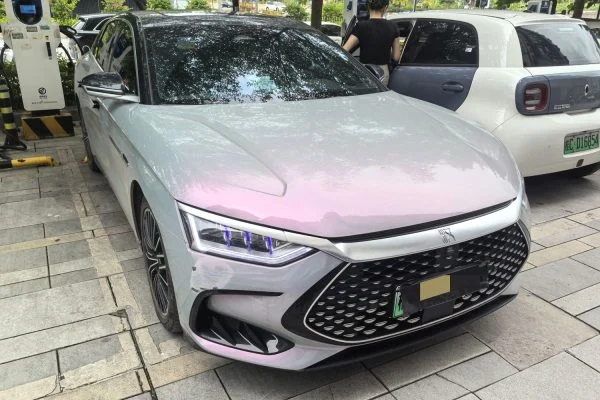
2022 BYD Han DM-i 121KM Premium Edition for Sale – 197 hp PHEV, 121 km EV Range, Export Ready
- 2022
- 50,800 km
- Automatic
- Plug-in Hybrid
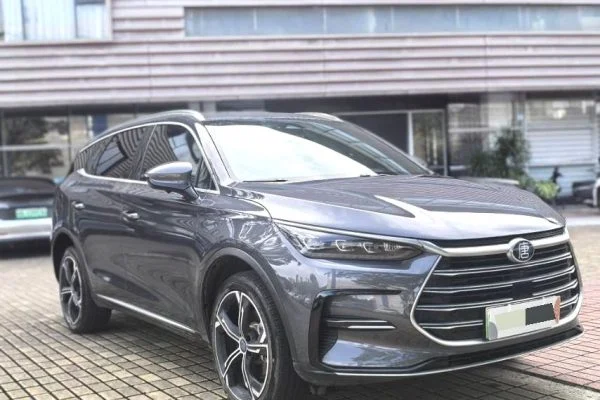
2021 BYD Tang DM-i 112KM Premium Edition for Sale – 218 hp PHEV SUV, 7-Seater, Export Ready
- 2022
- 38,000 km
- Automatic
- Plug-in Hybrid

2025 BYD Song Pro DM-i 75KM Leading Edition (120kW / 163HP / DM 5.0) PHEV SUV
- 2025
- 6,000 km
- Automatic
- Plug-in Hybrid
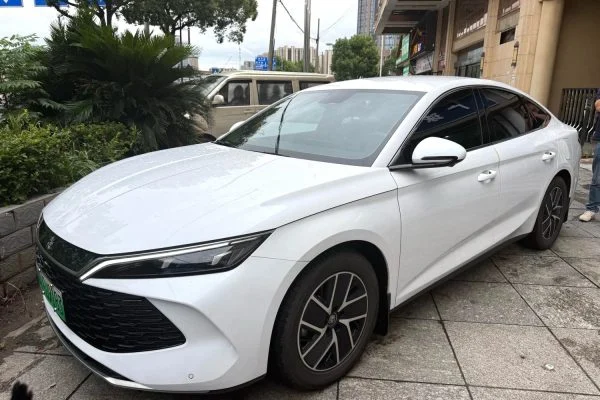
2024 BYD Qin L DM-i 80km Leading Edition (6,900 km / 163 HP) – Hybrid Sedan
- 2024
- 6,900 km
- Automatic
- Plug-in Hybrid