









Best Used Electric Cars to Buy in 2026: Six That Hold Up

The best used electric cars to buy in 2026 are the ones with a documented battery health report, a deep parts network and a model still in production. On those three tests, BYD models and the ONVO L60 come out ahead of flashier used EVs whose software support has already stalled.
This list is not a spec sheet ranking. Two of the six cars here are slower and less dramatic than rivals I left out, and one of them has a boot that will annoy you. All six will still be serviceable, sellable cars in 2030. That is the point.
Which used EVs made the 2026 list?
| Car | FOB price | Real range | Why it made the list |
|---|---|---|---|
| BYD Seagull 305 km | $7,900-$10,500 | ~235 km | Cheapest entry, Blade LFP, huge parts base |
| BYD Han EV 506 km | $15,500-$18,000 | ~390 km | Executive sedan that depreciated 55% |
| Xiaomi SU7 Standard RWD | $24,000-$27,500 | ~530 km | 800V-class charging, strong residual |
| ONVO L60 60 kWh | $19,000-$22,000 | ~430 km | Battery-swap capable, near-new cars |
Two more cars deserve mention because they suit specific buyers the table cannot capture: the Xiaomi SU7 Max for anyone who wants 673 hp and 800 km of CLTC range, and the BYD Seagull Flying Edition for people who need occasional intercity trips. Both are good. Both cost more than most first-time buyers should spend.
Why does documented battery health beat every other feature?
A used EV with 92% SOH and 60,000 km is a better purchase than one with 84% SOH and 25,000 km, even though the second car looks newer and cleaner. Battery replacement on a 60 kWh pack runs $6,000-$9,000 outside China. That is more than the price gap between most trims.
BYD Blade LFP packs hold up unusually well. Independent teardown data on 2021-2023 packs regularly shows 93-96% SOH at 100,000 km, which is why Han EV and Seagull cars from that era still sell. NMC packs in some rival brands lose 3-4% a year in hot climates. In the Gulf or West Africa, that difference decides whether you get eight years of service or five.
What does the Han EV offer at $16,000?
A 4,995 mm executive sedan with a 2,920 mm wheelbase, a 506 km CLTC LFP pack, 204 hp and 15.6-inch rotating screen. The Han cost roughly $35,000 new in China; 2024 examples with 60,000 km now trade at $15,500-$18,000 FOB.
Practical real range is 370-400 km. DC charging from 30% to 80% takes about 30 minutes. The car is quiet at 120 km/h in a way the Seagull simply cannot be, and the rear seat is genuinely limousine-sized.
Its weakness: the Han’s early infotainment felt sluggish and some 2022 units have had door-handle and suspension complaints. Check both. Along with the Han DM-i plug-in hybrid if your market struggles with charging, it is the best large-car value in the Chinese used market.
Are Xiaomi SU7 residuals a problem?
Yes, in a positive direction. SU7 standard RWD cars with 9,800 km sell at $24,000-$27,500 FOB, against a new price near $29,000. That is a 8-15% depreciation on a two-year-old car, which is unusually low and makes the SU7 a poor “value” buy and an excellent “quality for money” buy.
You get 299 hp, roughly 530 km of real range and build quality that embarrasses the price. What you do not get is a service network outside major cities. If you are exporting to a market with no Xiaomi presence, parts lead times of four to eight weeks are a genuine risk.
Is the ONVO L60 the sleeper pick?
Probably. The L60 is a 2024-launched mid-size SUV on NIO’s battery-swap platform, and 2026 examples with 3,000 km sell at $19,000-$22,000 FOB. You are buying an essentially new car at two-thirds of list.
The catch is the swap network. Outside China, battery swapping is a curiosity, so the L60 falls back to standard charging, where its 60 kWh pack gives about 430 km. Still respectable. Just do not buy it expecting the swap convenience that made it famous domestically.
What should stay off your shortlist?
- Discontinued microbrands. Software and parts vanish with the company.
- Any car without an SOH report. Non-negotiable at every price point.
- Ride-hailing ex-fleet cars posing as private sales. Check seat and pedal wear against odometer.
- First-year models with known recall histories that were never remedied in China.
Key Takeaways
- In 2026, used Chinese EVs from $7,900 to $27,500 cover the whole value range.
- Battery SOH matters more than mileage or model year.
- BYD Han EV is the best large-car bargain at $15,500-$18,000 FOB.
- Xiaomi SU7 holds value too well to be a bargain, but is excellent quality per dollar.
Related Vehicles
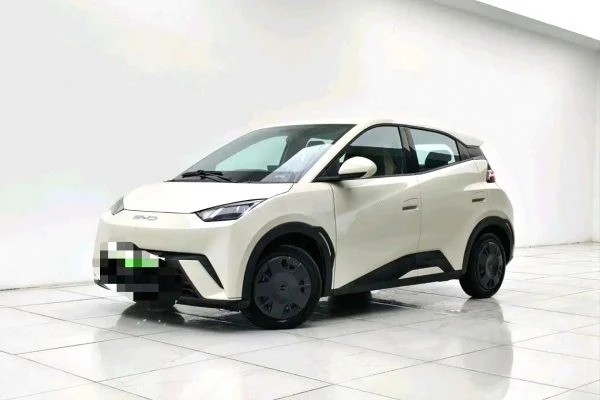
2023 BYD Seagull Vitality Edition 305km EV (75 HP / FWD) – 13,000 km Like-New
- 2024
- 13,000 km
- Automatic
- Electric
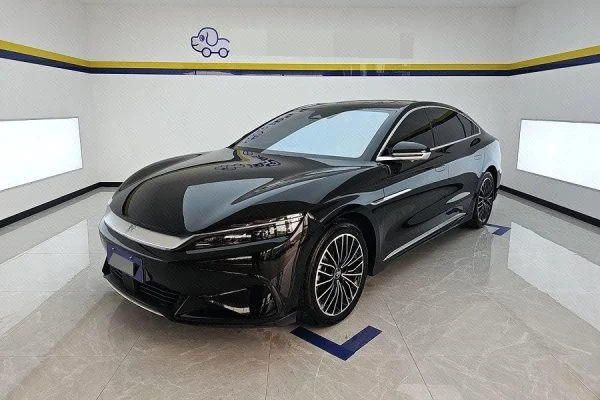
2024 BYD Han EV 506KM Honor Edition Noble (204 HP / FWD) – Executive Electric Sedan
- 2024
- 6 km
- Automatic
- Electric
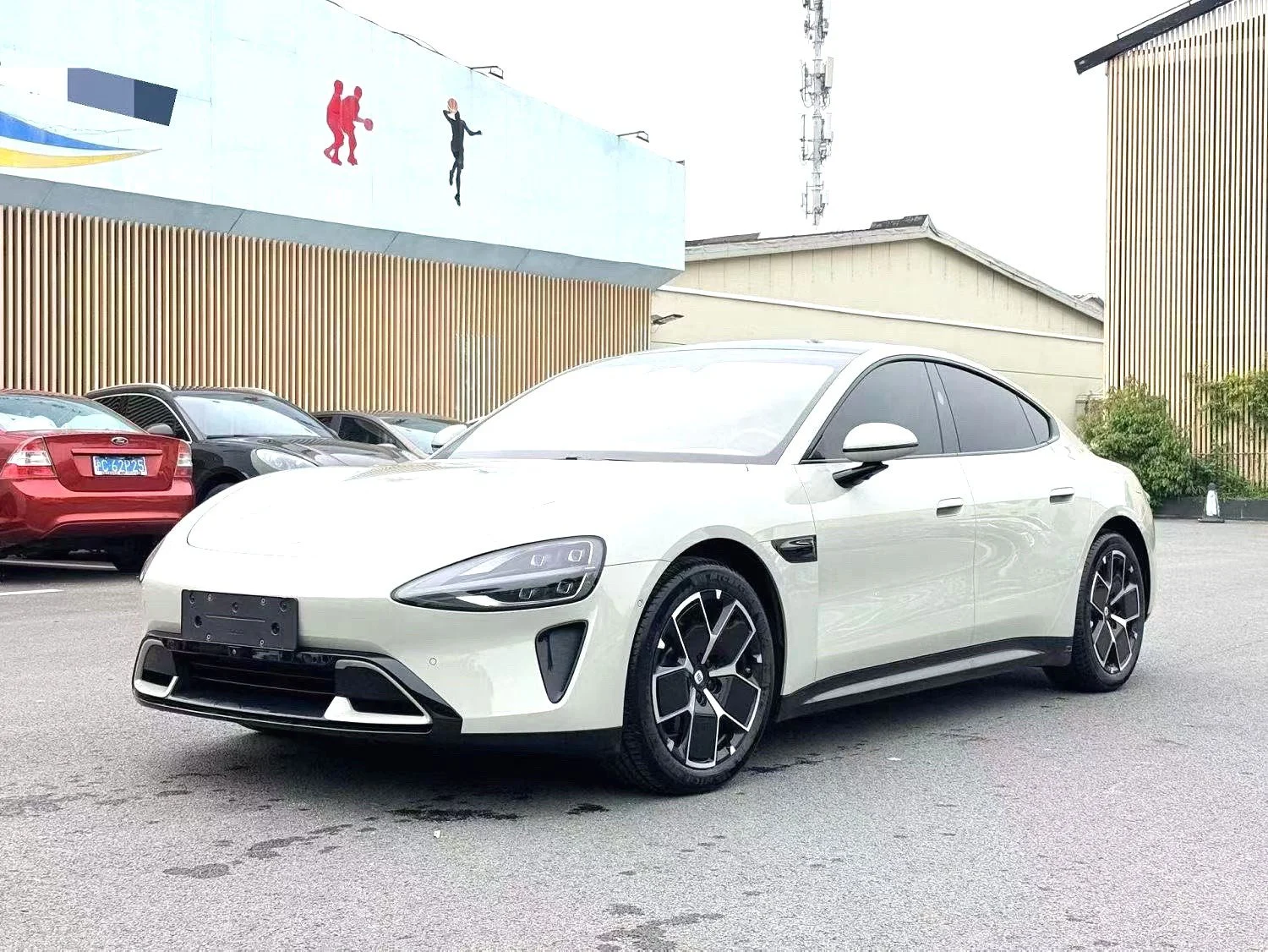
2024 Xiaomi SU7 700km Standard RWD (299HP / 9,800km) Electric Sport Sedan
- 2025
- 9,800 km
- Automatic
- Electric
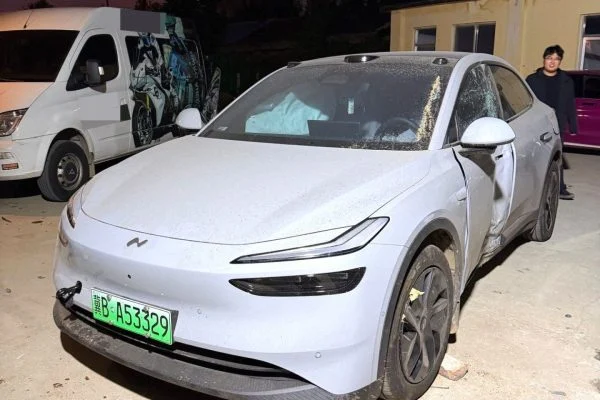
2026 ONVO L60 60kWh Max+ for Sale — 3,000 km, White/Red, Dezhou Stock, FOB Qingdao
- 2026
- 3,000 km
- Automatic
- Electric