









Cheap Second Hand Electric Cars for Sale: 2026 Value Ranking

The cheapest second hand electric cars for sale in China in 2026 start around $5,500 FOB and top out near $9,500, and the best value is the BYD Seagull at roughly $28 per kilometre of usable range. That metric, dollars per real-world km, separates a genuinely cheap car from a small car with a small price and an even smaller battery.
Most “cheap EV” lists rank by sticker price. That is the wrong sort. A $6,400 hatch with a 17 kWh pack costs you more per usable kilometre than a $9,000 hatch with 30 kWh. Here is the honest ranking.
How do the cheapest Chinese second hand EVs compare?
| Car | Price (FOB) | Usable range* | $ per km |
|---|---|---|---|
| BYD Seagull 305 km | ~$8,900 | ~235 km | $37.9 |
| Chery eQ1 Little Ant 301 km | ~$6,500 | ~225 km | $28.9 |
| Wuling Bingo 203 km | ~$7,000 | ~150 km | $46.7 |
| Changan Lumin 301 km | ~$6,900 | ~225 km | $30.7 |
*Usable range assumes 78% of CLTC in mixed use. That is generous on highways and pessimistic in city traffic, which is exactly where these cars live.
The Little Ant wins on raw math. The Seagull loses on that table and wins everywhere else, which is worth explaining.
Why is the Seagull the better buy anyway?
Three reasons, and none of them are about the price. First, the Blade LFP pack. BYD’s cell chemistry is unusually tolerant of full charges and partial cycling, and second-hand packs from 2023 cars commonly still test above 93% state of health. Chery’s LFP packs are decent but the sample size of independent tests is much smaller.
Second, parts. A Seagull headlight or mirror in Nairobi, Lagos or Almaty is a week away. A Lumin part might be six. Third, resale. Seagulls hold their value far better outside China because buyers recognise the badge; Changan Lumin is an unknown name in most export markets and resells at a discount.
That is a genuine trade-off, not a sales pitch: if you plan to keep the car seven years and never sell, the Little Ant’s lower price is real money saved. If you might sell in three years, the Seagull’s residual is worth more than the $2,400 you saved up front.
Which is the best second hand electric car for a tight budget?
Under $7,000, the Bingo is the only realistic four-door option with a warranty-friendly service history, but its 17.3 kWh pack is a hard limit. It is a 60-80 km a day car, full stop. Buyers who ignore that end up charging twice a day and resenting the purchase.
Between $7,000 and $9,500, the field widens to the Seagull, the Lumin and the eQ1. All three have DC fast charging, which matters more than range in markets where home charging is unreliable. A car that adds 100 km in 25 minutes beats one with 40 km more range and a 6-hour AC-only charge.
What should you check before paying for a cheap EV?
- State of health: demand a BMS report with per-cell voltage. Anything below 88% SOH on a 2022 car is a red flag.
- Fast-charge count: high DC sessions on a small pack accelerate wear. Ask for the cycle log.
- Battery warranty transfer: BYD’s 8-year/150,000 km pack warranty generally survives a private sale but not always an export. Read the clause.
- Body damage: at this price, a repaired front end often hides airbag replacement. Get the VIN and check the domestic history.
Key Takeaways
- Cheapest second hand EVs in China: $5,900-$9,500 FOB in 2026.
- Per usable kilometre, the Chery eQ1 is cheapest; per dollar of total ownership, the Seagull is.
- Avoid the 200 km class unless your daily drive is under 80 km.
- DC fast charging matters more than an extra 40 km of rated range.
Related Vehicles
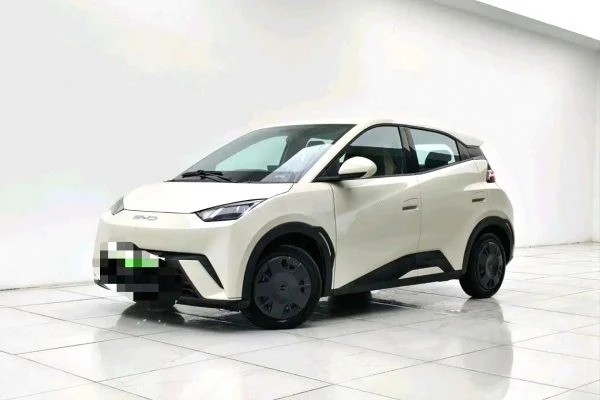
2023 BYD Seagull Vitality Edition 305km EV (75 HP / FWD) – 13,000 km Like-New
- 2024
- 13,000 km
- Automatic
- Electric

2024 Wuling Bingo EV 203km Light Edition (30kW FWD / DC Fast Charging) City Hatchback
- 2025
- 4,000 km
- Automatic
- Electric
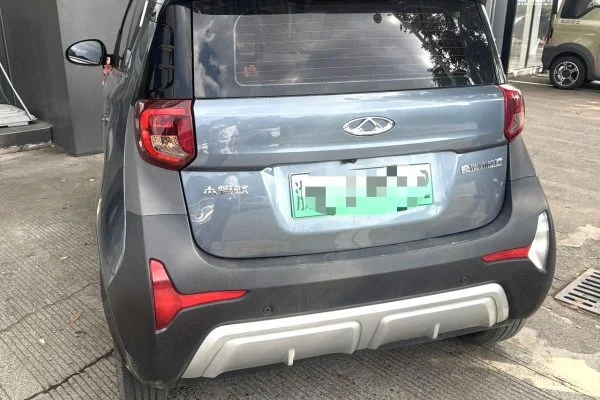
2022 Chery eQ1 Little Ant Tianfen Full Sugar Edition for Sale — 25,000 km, 30.6 kWh, 301 km, Hangzhou Stock
- 2022
- 25,000 km
- Automatic
- Electric
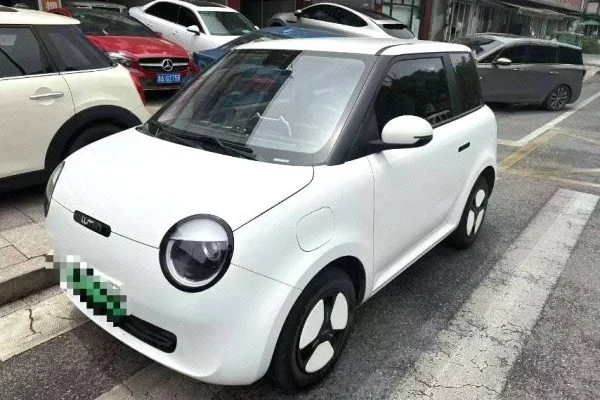
2022 Changan Lumin 301km Mitian Edition (35kW / 48HP) Mini Electric City Car
- 2022
- 18,000 km
- Automatic
- Electric