









Used Mini Electric Cars: 6 City EVs Under $10,000 in 2026
Used mini electric cars from China sell for $4,500-$9,000 in 2026. They have 120-305 km of CLTC range, a top speed of 100-120 km/h and two to four seats. They are city tools, not cars for the motorway.
The category exists because Chinese manufacturers built millions of A00-class EVs for domestic commuting. Europe and North America barely have an equivalent, which is why these cars get shipped to Africa, Southeast Asia and Latin America in volume.
What counts as a mini EV?
Roughly: under 3.8 m long, under 1,100 kg, motor under 60 kW, battery under 35 kWh. A few are two-seaters; most are four.
1. Baojun E100 — the cheapest way in
The 2018 E100 Zhixiang is a two-seat, 39 hp, 200 km city pod with 34,000 km on it. No fast charging, no space, no pretence. At the bottom of the price range it competes with a good scooter.
2. Baojun E200 — same idea, 305 km
The 2020 E200 305 km Zhixing fixes the range problem with a bigger pack. Still two seats. Suspension is crude and the ride gets tiring above 60 km/h.
3. Baojun KiWi EV — the design one
The 2022 KiWi EV Designer Lite is the most distinctive of the group, 305 km CLTC, 54 hp, four seats and a genuinely unusual cabin. It is also the one most likely to have been a fashion purchase that never got used — which is good news for buyers.
4. Geely Panda Mini — the practical mini
The 2023 Panda Mini 200 km has four seats, rear-wheel drive and a 17.03 kWh LFP pack that charges 30-80% in 30 minutes. At 20,000 km it is still tight. Range is the limitation.
5. Changan Lumin — the comfortable one
The 2024 Lumin 205 km Orange Edition is the best-riding car in the class; the seats and damping are a step above the Baojun pair. 6,000 km on the clock, 205 km CLTC.
6. Baojun Yep — the mini SUV
The 2024 Yep Zhizun is taller, 303 km, 68 hp, with a boot you can actually use. It is closer to a small hatchback than a city pod, and priced accordingly.
Which mini EV has the best battery?
Anything with an LFP pack: the Panda Mini, Lumin, Yep and KiWi all use them. LFP tolerates being charged to 100% nightly, which is exactly how these cars get used.
The older Baojun E100 and E200 use ternary cells. They are fine, but you should expect more capacity loss per year, and you should never buy one without a health scan.
What do these cars not do?
- Motorway cruising — 100 km/h is the ceiling and the noise is serious.
- Crash protection expected in Europe or North America — most were not tested by Euro NCAP.
- Long-distance anything — no fast-charging network coverage outside cities.
- Winter — most have no heat pump, so range drops 25-35% in the cold.
Key Takeaways
- Used mini EVs from China cost $4,500-$9,000 and offer 120-305 km CLTC range.
- Prefer LFP-battery models (Panda Mini, Lumin, Yep, KiWi) for daily charging to 100%.
- Top speed of 100-120 km/h means city and suburban use only.
- Confirm crash-test status and warranty coverage in your own market before importing.
Related Vehicles
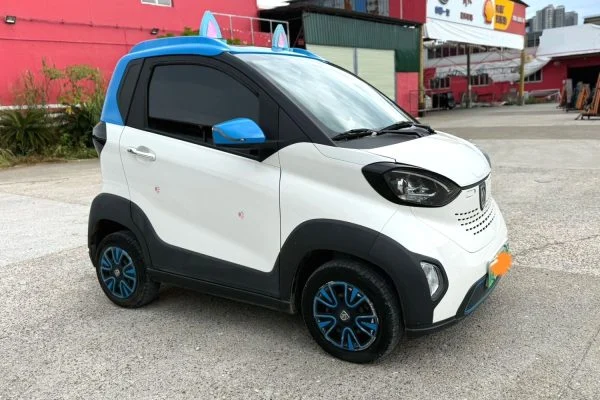
2018 Baojun E100 Zhixiang Edition (29kW / 39HP) 2-Seater Mini Electric Car
- 2018
- 34,000 km
- Automatic
- Electric
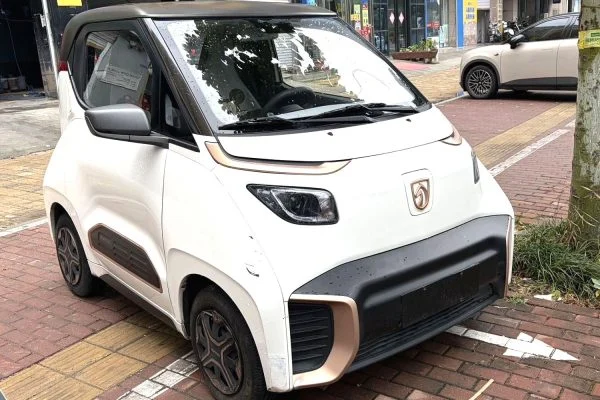
2020 Baojun E200 305km Zhixing Edition for Sale – 39 hp EV, 305 km Range, Export Ready
- 2021
- 25,000 km
- Automatic
- Electric
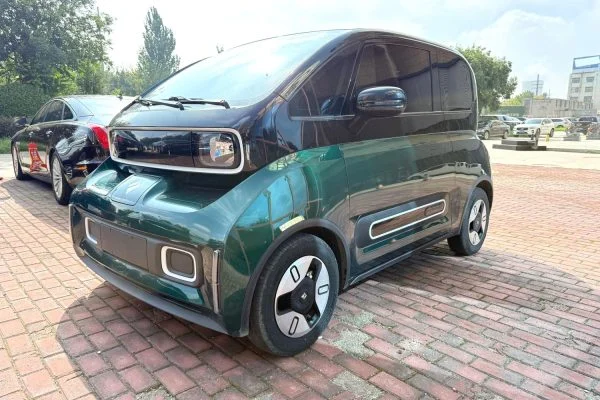
2022 Baojun KiWi EV Designer Lite Edition for Sale – 54 hp EV, 305 km Range, Export Ready
- 2024
- 50,000 km
- Automatic
- Electric
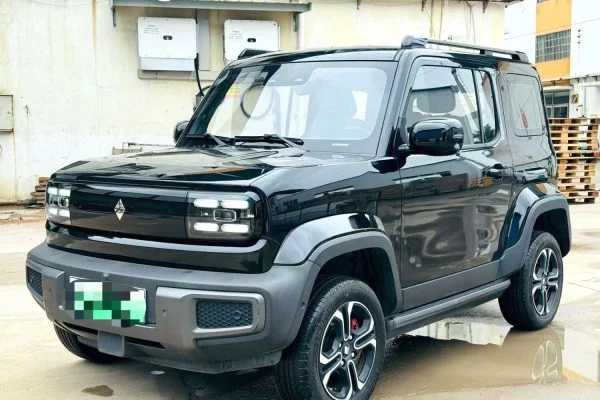
2024 Baojun Yep Zhizun Edition for Sale – 303 km Range, 68 hp EV, Export Ready
- 2024
- 15,000 km
- Automatic
- Electric