









Why Is the Cheapest Electric Car to Buy Second-Hand Chinese?
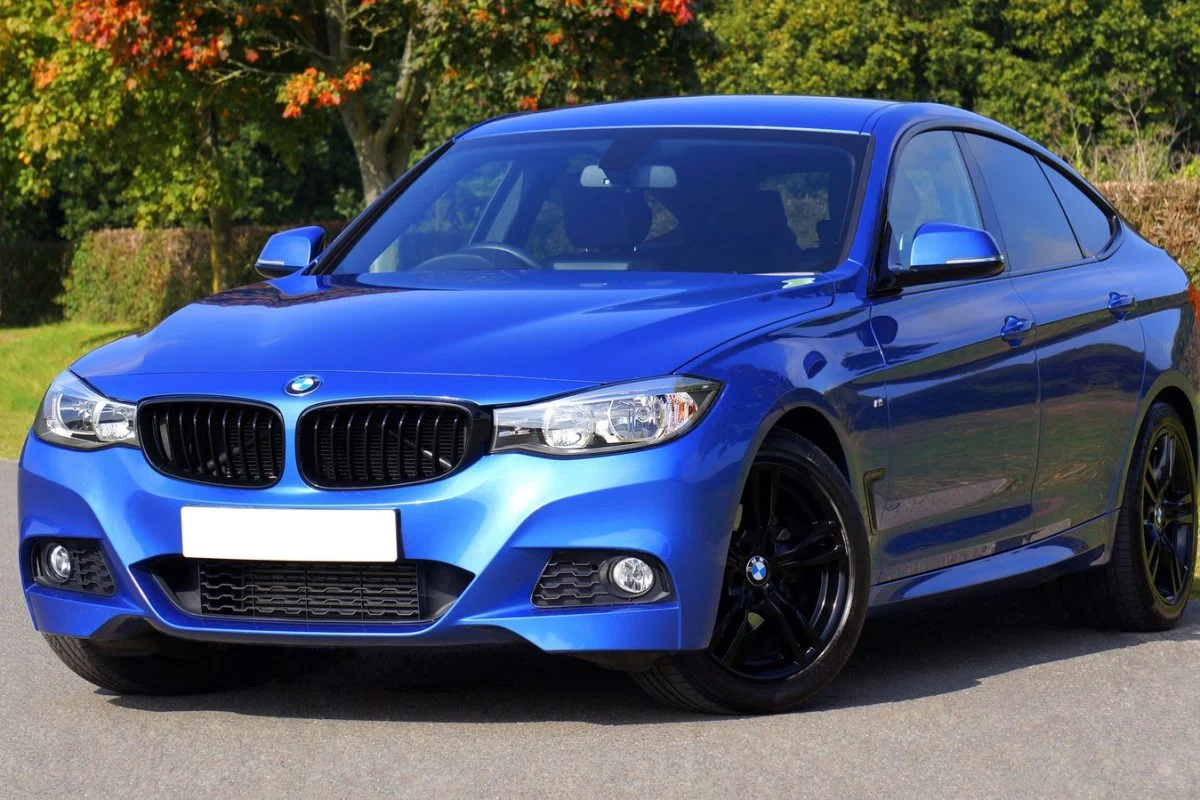
The cheapest electric car to buy second hand in 2026 is a Chinese microcar: a 2018 Baojun E100 at $2,400-$3,200 or a 2022 Wuling Hongguang MINI EV at $3,900-$4,800. Nowhere else in the world produces usable EVs at that price, because nowhere else built four million of them.
The reason is scale, not subsidy. China’s A00 segment — sub-3-metre city EVs — sold over 1.2 million units in 2024 alone. Three years of that volume creates a used supply curve no other market can match.
Why are Chinese used EVs so cheap?
Four factors stack up. First, enormous new-car volume pushed prices down at the source: a new Wuling Hongguang MINI EV started around $5,500. Second, LFP battery costs fell below $60 per kWh in China, which is roughly half the Western figure. Third, the Chinese used market has no export premium — domestic resale values are set by local demand alone. Fourth, depreciation on microcars is severe because they are bought as second cars and flipped often.
Put together, a three-year-old microcar can trade at 30-35% of new. No European or North American market reproduces that.
How cheap is too cheap to be useful?
Below about $6,000 you are buying a car without DC fast charging, without meaningful highway capability, and often without a parts path outside China. The 2022 Wuling Hongguang MINI EV Zizai at $3,900 is the classic example: 120 km CLTC, 27 hp, no fast charging, and roughly 90 km of real range.
As a Chengdu runabout it is excellent. As an import it is a $3,900 car plus $1,500 of logistics that cannot be registered in most markets. The maths collapses at the bottom.
Where does value actually start?
| Price band | What you get | Verdict |
|---|---|---|
| $2,400-$4,800 | Two-seat microcar, 120-155 km, no DC | Domestic use only |
| $5,600-$7,800 | Four-seat city car, 301 km, sometimes DC | Thin but possible |
| $7,400-$9,600 | Four-door hatch, 310-333 km, DC included | Value starts here |
| $9,200-$11,500 | Compact SUV or 400 km hatch | Best all-round |
Is a $7,400 Chinese EV actually dependable?
Mechanically, yes. The 2024 Wuling Bingo 333km Enjoy Edition has a 31.9 kWh LFP pack, a 50 kW motor and almost nothing else to break. Owner reports at 60,000 km are unremarkable. The 2022 Changan Lumin 301km at $6,800-$7,800 is similarly simple, though its three-door body limits appeal.
What you give up is refinement and parts. Interior trim degrades faster than on a $20,000 car, and local parts availability for Wuling and Changan outside China is patchy. Geely and BYD are the safest bets on that count.
What about the 2018 Baojun E100 at $2,400?
Tempting on price alone, and wrong on almost every other measure. The Baojun E100 Zhixiang Edition is eight years old, has 155 km of claimed range, two seats, and an NMC pack with 75-85% health at best. Replacement cells are out of production.
Buy it for a parts bin. Do not buy it expecting a car you can rely on for five years.
Does cheap mean poor safety?
It means fewer airbags, thinner steel and no ADAS on the cheapest trims. Chinese microcars are not crash-test standouts, and many were never tested by Euro NCAP or Latin NCAP at all. The $7,400-$10,000 band improves on this — the Bingo and the Geely Geome Xingyuan both carry dual airbags, ABS and stability control as standard.
If crash safety matters — and it should — the practical floor is around $8,000, not $4,000.
Key Takeaways
- The cheapest second-hand EVs anywhere are Chinese microcars at $2,400-$4,800, driven by scale and low LFP costs.
- Under $6,000 you lose DC charging, highway ability and usually any local parts path.
- Value starts at $7,400-$9,600 with four-door cars like the Wuling Bingo 333 that include DC charging.
- 2018-era NMC microcars have 75-85% battery health and no replacement cells.
- For crash safety and standard equipment, budget at least $8,000.
Related Vehicles
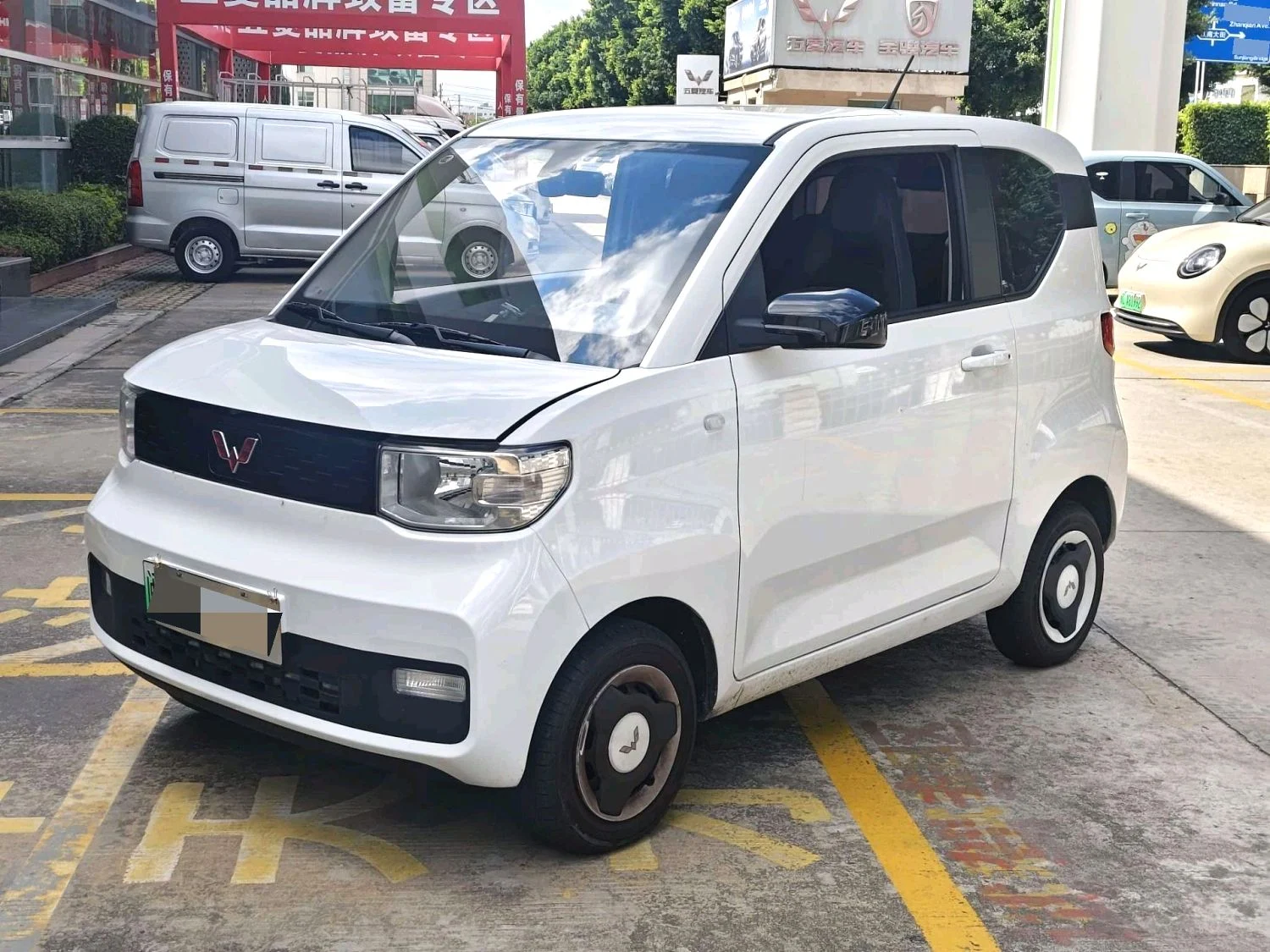
2022 Wuling Hongguang MINI EV Zizai (120km Range / LFP Battery) Smart Micro EV
- 2023
- 16,700 km
- Automatic
- Electric
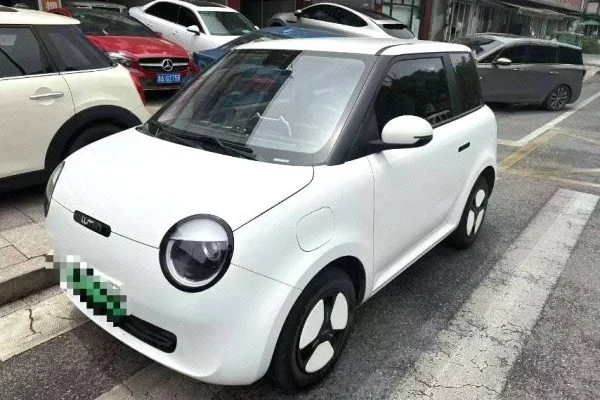
2022 Changan Lumin 301km Mitian Edition (35kW / 48HP) Mini Electric City Car
- 2022
- 18,000 km
- Automatic
- Electric

2024 Wuling Bingo (Binguo) 333km Enjoy Edition (50kW / 68HP) Electric Hatchback
- 2024
- 60,000 km
- Automatic
- Electric
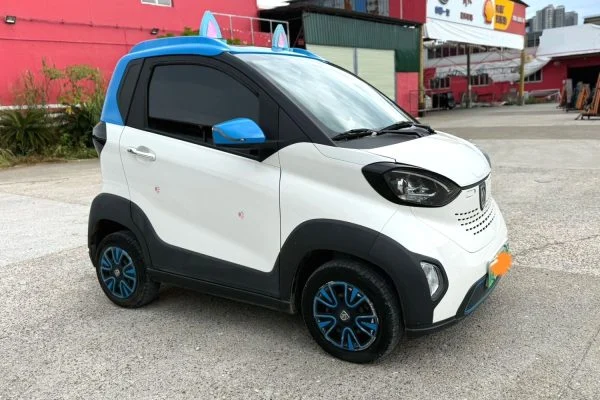
2018 Baojun E100 Zhixiang Edition (29kW / 39HP) 2-Seater Mini Electric Car
- 2018
- 34,000 km
- Automatic
- Electric