









Is It Worth Buying a Second-Hand Electric Car? Honest 2026 Answer
Yes, buying a second-hand electric car is worth it in 2026 if you keep the car at least four years and pay under market for a pack above 90% state of health. Below that, the depreciation you avoid on new is smaller than the battery risk you take on.
That is the short answer. The long one depends on three numbers: purchase price versus new, expected battery life, and running cost per 100 km. Get those right and a used EV is the best value in motoring right now.
How much do you actually save versus new?
In the Chinese market, a three-year-old EV trades at 40-50% of its original price. A 2023 BYD Atto 3 Champion Edition that sold new for about $24,000 in China now asks $11,800-$13,400 — around 52% of new.
That is a $10,600 saving in three years for a car with 40,000-60,000 km on it. New-car depreciation has already been paid by someone else. This is the core argument for buying used, and it is a strong one.
What is the real risk with a used EV battery?
Smaller than the internet suggests, for LFP cars. Larger than dealers admit, for early NMC packs. A Blade LFP pack at 60,000 km typically reads 91-94% SOH and will still be usable at 200,000 km. An early NMC pack from 2019-2020 can be at 78% and facing a replacement costing more than the car.
So the risk is not “used EVs” — it is specific chemistry and specific age. Buy LFP, buy 2022 or later, and the risk drops sharply.
What is the break-even point?
| Scenario | New EV | 3-year-old used EV |
|---|---|---|
| Purchase price | $24,000 | $12,600 |
| Value after 4 more years | $9,500 | $5,800 |
| Depreciation over the period | $14,500 | $6,800 |
| Running cost (15,000 km/yr) | $1,800 | $2,100 |
| Likely repairs | $0 (warranty) | $900 |
| Total cost of ownership | $16,300 | $9,800 |
Used wins by about $6,500 over four years, even after setting aside $900 for out-of-warranty repairs. The gap closes if you sell within two years, because the used car’s depreciation curve is flatter but not flat.
When is a used EV not worth it?
- You keep cars under three years. Depreciation dominates and the new-car warranty is worth more than the saving.
- The battery has no documented health report. You are buying a lottery ticket on a $5,000-$8,000 component.
- Pre-2021 NMC cars. Cell support has ended for several models and replacement packs are unavailable.
- You cannot charge at home. Public charging costs 2-3× home rates and erases much of the running-cost advantage.
How do running costs compare with petrol?
At Chinese home electricity rates, an EV costs $1.50-$3.00 per 100 km. A comparable petrol SUV costs $8-$12. Over 15,000 km a year that is $750-$450 versus $1,200-$1,800. In markets with expensive electricity or no home charging, the gap narrows or inverts.
Maintenance is the quieter saving. No oil, no filter, no timing belt, no exhaust. Brake pads last 2-3× longer thanks to regen. A used BYD Yuan UP at $9,500 will cost less to service over five years than a $9,500 petrol crossover.
Which used EVs make the strongest case?
LFP models with 40-60 kWh and DC charging. That means the BYD Atto 3 510 at $13,800-$15,200, the Wuling Bingo 333 at $7,400-$8,600 and the Leapmotor T03 403 at $9,800-$11,500. All three combine a durable pack with a usable daily range.
The weakest cases are two-seat microcars and any car where the seller cannot produce a pack health report. The price looks attractive until you need a battery.
Key Takeaways
- Three-year-old EVs in China trade at 40-50% of original price — the core argument for buying used.
- A 2023 Atto 3 at $11,800-$13,400 saves roughly $10,600 against new.
- Break-even versus new arrives at about four years of ownership; under three, new often wins.
- LFP packs from 2022 or later carry low battery risk; pre-2021 NMC packs carry high risk.
- No documented battery health report means no deal, regardless of price.
Related Vehicles

2022 BYD Yuan PLUS (Atto 3) 510km Flagship (204HP FWD) Electric Compact SUV
- 2022
- 56,000 km
- Automatic
- Electric

2024 BYD Yuan UP (Atto 2) 401km Huoli Edition (95HP FWD / 22k km) Compact EV SUV
- 2024
- 22,000 km
- Automatic
- Electric

2024 Wuling Bingo (Binguo) 333km Enjoy Edition (50kW / 68HP) Electric Hatchback
- 2024
- 60,000 km
- Automatic
- Electric
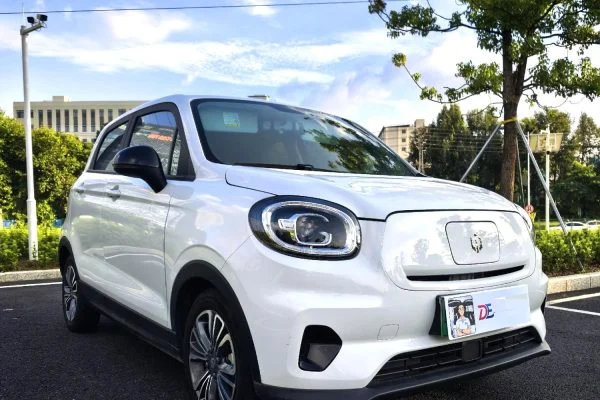
2024 Leapmotor T03 403 Comfort Edition for Sale – 109 hp EV, 403 km Range, Export Ready
- 2024
- 11,000 km
- Automatic
- Electric