









Used Tesla vs Used Chinese EV: The Real Price Gap in 2026
A used Tesla for sale in 2026 costs 40-60% more than a comparable Chinese EV of the same age and range. A 2022 Model 3 Long Range runs $23,500-$27,000 used; a 2023 XPeng G6 755 with more range runs $19,000-$23,000 in China. The gap is smaller than it was in 2024, and it is closing.
Whether to pay that premium depends almost entirely on where you live and how much you value the Supercharger network.
Where does the Tesla premium come from?
Three things, in order of weight: charging network, resale certainty, and software. The Supercharger network is a genuine product advantage in North America and Europe. Resale certainty comes from a decade of price discovery — buyers know what a five-year-old Model 3 is worth. Software matters least to most owners but dominates online discussion.
What it is not: build quality. Tesla’s interior fit on a 2022 Model 3 is not better than a Xiaomi SU7’s, and by most accounts it is worse.
How do the numbers compare model by model?
| Comparison | Used Tesla | Used Chinese EV | Gap |
|---|---|---|---|
| Compact sedan, 2022, 70k km | Model 3 LR — $23,500-$27,000 | BYD Seal — $16,000-$19,000 | ~40% |
| Mid SUV, 2023, 40k km | Model Y LR — $28,000-$32,000 | XPeng G6 755 — $19,000-$23,000 | ~42% |
| Performance sedan, 2024 | Model 3 Performance — $34,000+ | Xiaomi SU7 — $21,000-$25,000 | ~45% |
| Entry crossover, 2022 | Model Y RWD — $24,000-$28,000 | BYD Atto 3 510 — $13,800-$15,200 | ~60% |
Is the Chinese EV actually cheaper once imported?
Add export costs and the gap narrows. Freight, inspection and paperwork run $1,200-$2,000 per car, and destination duties vary from 5% to 35%. On a Gulf import with 5% duty, a $20,000 XPeng G6 lands around $22,500 against $31,000 for a locally sourced used Model Y. Still a 27% saving.
In markets with 35% duties, the saving vanishes. Check your tariff line before you assume the Chinese EV is cheaper — in a few markets it is not.
Which car is better to own for five years?
Tesla, if service access matters to you. The company has service centres in most markets where its cars are sold, and third-party specialists exist everywhere. Chinese brands have patchy coverage, and the cars are harder for independent workshops to diagnose without OEM tooling.
Chinese EV, if you are cost-sensitive and mechanically self-sufficient. Battery hardware is generally solid, and the failure modes — charge ports, DC-DC converters, cabin heaters — are the same parts a competent EV shop already knows. The XPeng G6 is a reasonable bet in a market with one good EV workshop. It is a poor bet where the nearest specialist is a flight away.
When is the Tesla premium worth paying?
- You drive long distances on routes the Supercharger network covers.
- You plan to resell within three years and want predictable value.
- You are in a market with high import duties on Chinese vehicles.
- You want over-the-air software updates with a long track record.
When it is not: short urban commutes, markets with no Tesla presence, and any buyer who plans to keep the car past the warranty period and has a good independent workshop nearby.
What about range-extender alternatives?
Worth mentioning because it changes the maths. A 2026 Chery iCAR V27 at 15,000 km gives 200 km of electric range plus a petrol generator, at $29,000-$32,000. That competes directly with a used Model Y on price while removing charging dependence — at the cost of a second powertrain to maintain.
Key Takeaways
- The used Tesla premium over comparable Chinese EVs sits at 40-60% in 2026, down from wider gaps in 2024.
- Import costs close part of that gap; in markets with 35% duties it disappears entirely.
- The Supercharger network is the real reason to pay more, not build quality.
- Chinese EV ownership works well with one good independent EV workshop nearby.
- EREVs like the Chery iCAR V27 compete with used Model Y pricing while removing charging dependence.
Related Vehicles

2023 XPENG G6 755 Long Range Pro (218kW / 296HP / 800V SiC) Electric Coupe SUV
- 2024
- 59,000 km
- Automatic
- Electric
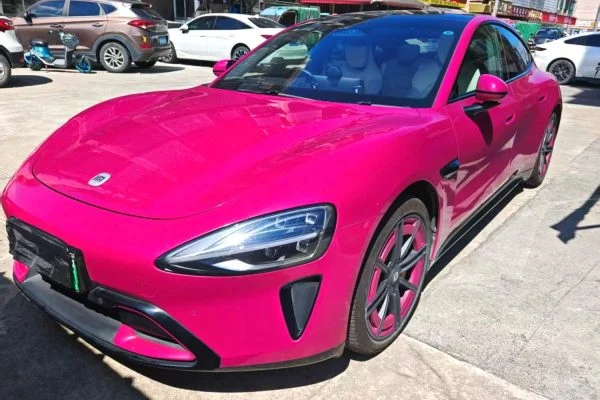
2024 Xiaomi SU7 Founder Edition RWD (299HP / 700km Range) Electric Sedan
- 2025
- 50,000 km
- Automatic
- Electric

2022 BYD Yuan PLUS (Atto 3) 510km Flagship (204HP FWD) Electric Compact SUV
- 2022
- 56,000 km
- Automatic
- Electric
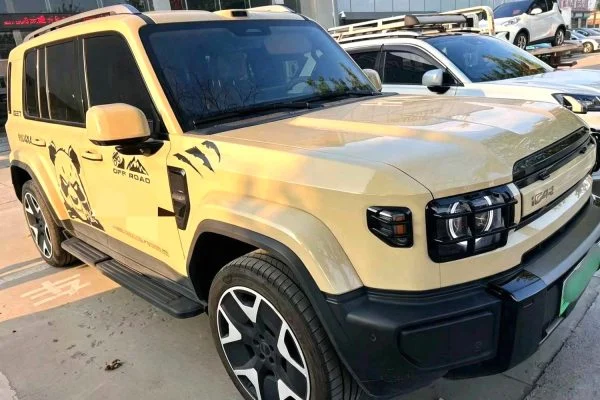
2026 Chery iCAR V27 200KM AWD Falcon 700 (15,000 km / 455 HP / LiDAR) – Off-Road EREV SUV
- 2026
- 15,000 km
- Automatic
- Plug-in Hybrid