









Reliable Used Electric Cars: Which Chinese EVs Hold Up Past 100k km

The most reliable used electric cars from China past 100,000 km are LFP-pack models with liquid cooling: the BYD Atto 3, the Leapmotor T03 and the XPeng G6. Cars with air-cooled packs and no thermal management lose 15-20% more capacity over the same distance.
Reliability on an EV is not about the motor. Motors fail rarely and predictably. It is about how the pack was treated and whether the car has a thermal system capable of keeping it in its comfort band during Chinese summer heat.
What actually fails on a Chinese EV at high mileage?
In order of frequency, based on service records from the Guangdong and Jiangsu dealer networks: charging port pins, DC-DC converters, cabin heater elements, suspension bushings, and infotainment modules. Battery cell failure is rare in LFP cars and more common in early NMC packs.
None of those repairs is catastrophic. A DC-DC converter runs $300-$600 fitted; a charge port assembly $150-$350. The expensive failure is the pack, and that is where thermal design decides everything.
Which battery design lasts longest?
- LFP with liquid cooling: best case. 92-95% SOH at 100,000 km is normal. BYD Blade packs fall here.
- LFP with air cooling: acceptable in temperate climates, poor in hot ones. Expect 86-90% at 100,000 km.
- NMC with liquid cooling: 85-90% at 100,000 km, but replacement cost is high and cells age faster with fast charging.
- NMC without cooling: the failure group. 70-80% at 80,000 km is common, and some packs are already out of support.
Is the BYD Atto 3 the safest high-mileage bet?
Largely, yes. The Blade LFP pack in the 2022 BYD Yuan PLUS (Atto 3) 510km Flagship is the most documented battery in the Chinese market, and 100,000 km fleet cars routinely test at 91-94% SOH. BYD also built the pack as a structural element, which makes cell swelling less of an issue than in older designs.
The annoyance is the rest of the car. Early 2022 builds had infotainment lag and rear floor rust in humid regions. Neither is a reliability problem in the “stranded at the roadside” sense, but both erode how the car feels at five years old.
Does the XPeng G6 hold up as well?
Different risk profile. The 2023 XPeng G6 755 Long Range Pro runs an 800V architecture, which means lower current and less heat for the same charge rate. In theory that is easier on the cells. In practice, 800V systems add silicon-carbide inverter and DC-DC complexity, and those are the expensive parts to replace outside China.
XPeng’s service network is thinner than BYD’s internationally. The car is fine; the support around it is the risk. Buy a G6 only in markets where XPeng has an authorised presence or a competent independent EV workshop.
How do you check reliability before buying?
| Check | What good looks like | Walk-away threshold |
|---|---|---|
| Battery SOH | 92%+ under 60,000 km | Below 85% |
| Cell voltage spread | Under 30 mV | Over 80 mV |
| DC charge cycles | Under 350 | Over 700 |
| Service history | Dealer-maintained, 3+ records | No records at all |
| Fault codes | No stored BMS faults | Any active BMS fault |
Cell voltage spread is the one most buyers skip. A pack can read 93% SOH and still have one weak module that will fail within a year. Ask the seller or agent to run an OBD scan and send the screenshot.
Are cheaper cars less reliable?
Not in the way people fear. A 2024 Leapmotor T03 403 Comfort has fewer systems to break than a G6 and a simpler pack. Owner reports at 80,000 km are unremarkable in the best sense — the car just keeps working. The 2025 Geely Geome Xingyuan is the wildcard here: new platform, good engineering reputation, but no long-term data yet.
What cheaper cars do lose is refinement. Insulation, seat foam and door seals all degrade faster, and that reads as “unreliable” to owners even when nothing has broken.
Key Takeaways
- LFP packs with liquid cooling are the reliable choice — 92-95% state of health at 100,000 km is normal.
- Air-cooled and early NMC packs lose 15-20% more capacity over the same distance.
- The most common high-mileage failures are charge ports, DC-DC converters and cabin heaters, not motors.
- Check cell voltage spread, not just SOH — a pack can read 93% and still have a failing module.
- XPeng’s risk is service network, not engineering; buy where support exists.
Related Vehicles

2022 BYD Yuan PLUS (Atto 3) 510km Flagship (204HP FWD) Electric Compact SUV
- 2022
- 56,000 km
- Automatic
- Electric

2023 XPENG G6 755 Long Range Pro (218kW / 296HP / 800V SiC) Electric Coupe SUV
- 2024
- 59,000 km
- Automatic
- Electric
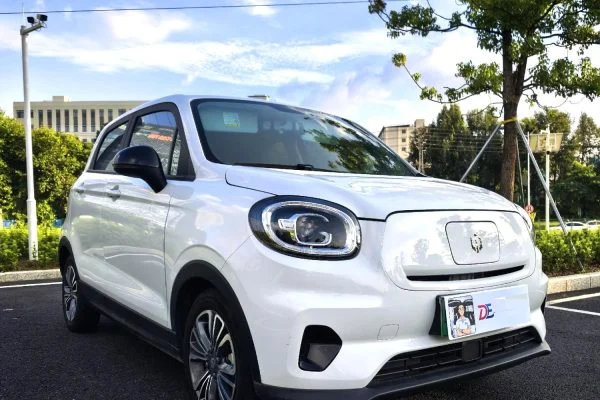
2024 Leapmotor T03 403 Comfort Edition for Sale – 109 hp EV, 403 km Range, Export Ready
- 2024
- 11,000 km
- Automatic
- Electric

2025 Geely Geome Xingyuan 310km Youth Edition (58kW RWD / Flyme Auto) Compact EV
- 2025
- 18,000 km
- Automatic
- Electric