









Cheap Second Hand Electric Cars for Sale: 2026 Value Picks

Cheap second hand electric cars from China start around $3,900 for a 2020 model with a short range, and $5,800 to $7,400 for a 2023-2024 car with 300 km or more of CLTC range. The useful question is not which is cheapest. It is which gives you the most usable kilometres per dollar without a battery surprise in year two.
Most sub-$8,000 Chinese EVs are city cars built for 40-60 km daily runs. Buy one expecting highway trips and you will be disappointed within a week. Buy one for a real commute and the maths gets interesting fast.
What do the cheapest second hand EVs actually cost?
These are 2026 FOB China prices for cars with clean titles and under 60,000 km.
| Model | Year | CLTC range | Battery | Typical price |
|---|---|---|---|---|
| Baojun E100 | 2018 | 155 km | ~19 kWh | $3,900 – $4,600 |
| Baojun E200 | 2020 | 305 km | ~31 kWh | $4,800 – $5,600 |
| Wuling Bingo 333 km | 2023 | 333 km | 31.9 kWh | $5,800 – $6,900 |
| Geely Panda Mini 200 km | 2023 | 200 km | 17.3 kWh | $5,200 – $6,000 |
| Leapmotor T03 403 | 2024 | 403 km | 41.3 kWh | $7,200 – $8,400 |
The Bingo is the sweet spot in that table. 333 km of CLTC range translates to roughly 230-250 km of real mixed driving, which covers a normal week of commuting for most people. It has four doors, a real boot and 68 hp, enough to keep up with traffic without drama.
Which cheap EV gives the most range per dollar?
The Leapmotor T03 403 wins on paper at roughly $19.5 per kilometre of CLTC range. The Bingo 333 comes in near $19. The Baojun E200 is the outlier at about $17, but it is a two-door city pod with 39 hp and a much cruder cabin.
Range per dollar is a rough metric, and it hides the cost of charging speed. The T03 takes DC fast charging at up to 40 kW; the E200 has no meaningful DC capability. If you cannot charge at home overnight, a car without fast charging is not a cheap car. It is a fixed route on foot.
Which cheap EVs should you avoid?
Anything under 25 kWh with more than 60,000 km on it. Small packs live harder lives: more cycles per kilometre, more heat, more degradation. A 2018 car with a 19 kWh pack and 70,000 km may have seen well over 1,500 full-cycle equivalents.
- Skip 120 km Wuling Hongguang Mini EVs unless you only drive in a city and pay under $4,000.
- Skip any car whose seller cannot produce a BMS screenshot. On a $5,000 car the pack is 60 percent of the value.
- Skip ex-ride-hailing city cars with 150,000 km dressed up with new seat covers.
- Check whether the car uses a Chinese-standard GB/T charge port. Adapters exist and cost $150-$400, but not every DC charger accepts them.
That last point catches people. Most Chinese domestic EVs ship with GB/T sockets. Some models have a European CCS2 version, most do not. Confirm the port type on the specific car before you commit, not after it lands.
Is a cheap used EV actually cheaper than a cheap petrol car?
Over five years, usually yes, but not by the margin people expect. A $6,000 Bingo doing 15,000 km a year costs roughly $300 a year in electricity at Chinese-style home tariffs, or $700 if you rely on public charging. A comparable petrol hatchback burns $1,400-$1,800 a year in fuel.
Insurance and tyres eat some of that back, and resale on a 2023 city EV in 2031 is an open question. The honest answer: a cheap used EV is a running-cost play, not an investment.
Where can you compare these cars side by side?
This site lists a 2023 Wuling Bingo 333 km Express Edition, a 2022 Baojun KiWi EV with the same 305 km range in a smaller two-box body, a 2020 Baojun E200 at the budget end, and a 2023 Geely Panda Mini for short urban runs.
How do these cheap EVs handle a real winter?
Worse than the brochure suggests. None of the cars in this price band has a heat pump, and LFP packs lose efficiency in the cold faster than NMC ones.
A 2023 Bingo rated at 333 km CLTC will show roughly 190-210 km of usable range at 0°C with the heater on. The T03’s larger 41.3 kWh pack handles it better, holding around 260-280 km. Neither is a problem if you charge at home every night and your commute is under 50 km. Both become a problem if you park on the street.
Preconditioning helps more than people expect. On the T03 and Bingo, starting the cabin heater 15 minutes before departure while still plugged in recovers an estimated 8-12 percent of winter range on a short trip. It costs almost nothing and almost nobody does it.
Cheap Second Hand Electric Cars for Sale: Where the Value Is
Key Takeaways
- Cheap second hand EVs from China run $3,900 to $8,400 in 2026.
- The 2023 Wuling Bingo at $5,800-$6,900 offers the best balance of range, space and price.
- Expect real-world range at about 70-75 percent of the CLTC figure.
- Avoid cars under 25 kWh with over 60,000 km; cycle wear on small packs is severe.
- Check the charge port standard before buying; most Chinese cars use GB/T.
Related Vehicles
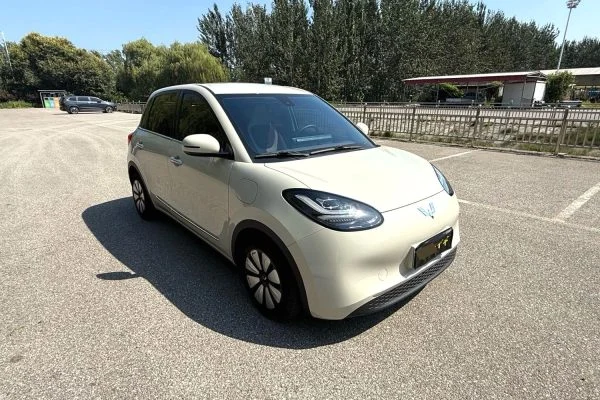
2023 Wuling Binguo 333km Express Edition for Sale – 68 hp EV, 333 km Range, Export Ready
- 2024
- 6,000 km
- Automatic
- Electric
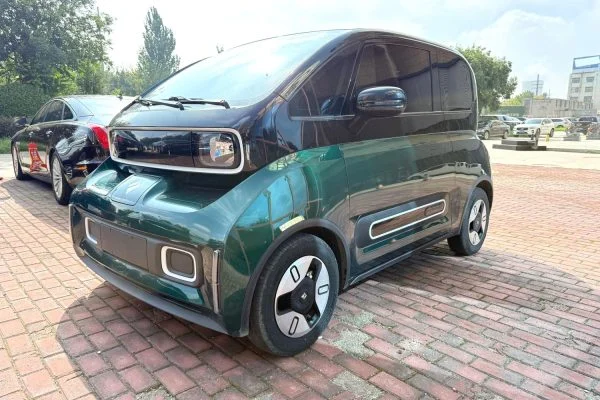
2022 Baojun KiWi EV Designer Lite Edition for Sale – 54 hp EV, 305 km Range, Export Ready
- 2024
- 50,000 km
- Automatic
- Electric
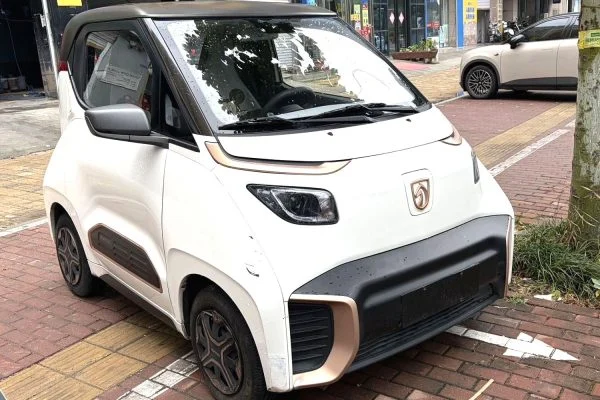
2020 Baojun E200 305km Zhixing Edition for Sale – 39 hp EV, 305 km Range, Export Ready
- 2021
- 25,000 km
- Automatic
- Electric
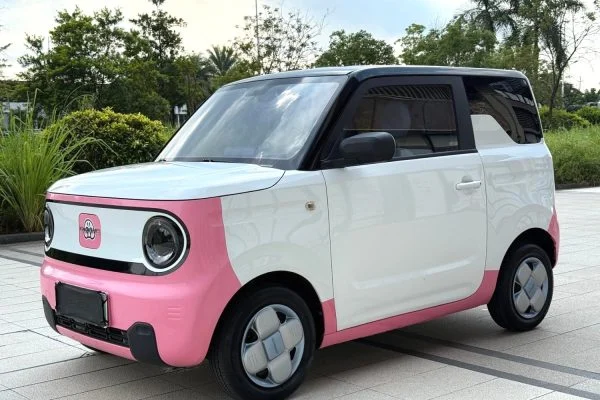
2023 Geely Panda Mini 200km Endurance Bear for Sale – 41 hp EV, 200 km Range, Export Ready
- 2023
- 20,000 km
- Automatic
- Electric