


Used Electric Cars Under $10,000: Five China EVs Worth Buying
Five used electric cars under $10,000 from China are worth considering in 2026, and the dividing line between them is not price — it is battery chemistry and whether parts exist in your country. The BYD Dolphin 405 km wins on both counts.
Everything here is FOB China before freight of roughly $900-$1,800. Expect a 12-18% total landed increase depending on your port and duty rate.
Which five make the cut?
- BYD Dolphin 405 km Fashion (2021): $9,500-$11,200 — 44.9 kWh Blade LFP, 60 kW DC
- BYD Seagull 305 km (2025): $9,800-$11,500 — 30 kWh Blade LFP, 40 kW DC
- Wuling Bingo 333 km Enjoy (2024): $8,500-$10,000 — 37.9 kWh LFP, 50 kW DC
- Wuling Bingo EV 203 km Light (2024): $5,800-$7,200 — 17.3 kWh LFP, city car
- Geely Panda Mini 210 km (2025): $6,000-$7,800 — 17 kWh LFP, 22 kW DC
All five use LFP batteries. That matters: LFP tolerates full charging, degrades slowly, and costs less to replace than NMC. In a sub-$10,000 car, you cannot afford a battery surprise, so chemistry is the first filter.
Why does the Dolphin beat the Seagull despite being older?
Size and charging. The Dolphin is 4.29 m with a 2.70 m wheelbase and a 44.9 kWh pack that charges at 60 kW. The Seagull is 3.78 m with a 30 kWh pack and 40 kW charging. On a 250 km trip, the Dolphin stops once for 25 minutes; the Seagull stops twice.
The Seagull’s advantage is condition. A 2025 car with 10,000 km has effectively no wear, and BYD’s build quality on the second generation is noticeably tighter. If your driving is 90% urban, the Seagull is the more pleasant car to own. If you ever leave the city, the Dolphin.
Is the Wuling Bingo a real alternative?
Yes, and it is the one most people overlook. The Bingo 333 km Enjoy Edition is a four-door hatchback with 68 hp, a 37.9 kWh LFP pack and 50 kW DC charging. Real range lands at 260-290 km. At $8,500-$10,000 with 20,000-40,000 km, it undercuts the Dolphin by about $1,000.
What you lose: refinement. The Bingo is noisier at 100 km/h, the seats are flatter, and the infotainment is basic. What you gain: Wuling’s parts network in Southeast Asia, Africa and Latin America is the widest of any Chinese brand.
When is a city car the right answer?
When your daily driving is under 60 km and you have somewhere to plug in overnight. The Bingo 203 km and Panda Mini cost $5,800-$7,800 and run on about $0.90 per 100 km of home electricity. For a delivery business, a campus fleet or a household’s second car, that maths is hard to beat.
For a household’s only car, it is the wrong answer. A 203 km car is a 150 km car in winter, and a 150 km car cannot do an emergency airport run at 6 a.m. in January.
What does ownership actually cost?
- Electricity: $0.90-$1.40 per 100 km at typical home rates.
- Servicing: $60-$120 a year — brake fluid, cabin filter, tyre rotation.
- Insurance: varies hugely by country; budget 3-5% of car value a year.
- Tyres: $300-$450 a set, every 40,000-50,000 km on a light EV.
- Battery risk: a Dolphin pack replacement is $3,500-$5,000 — the entire reason SOH checks matter.
Key Takeaways
- Five China-built used EVs sell under $10,000 FOB in 2026, all with LFP packs.
- The BYD Dolphin 405 km is the best all-round pick at $9,500-$11,200.
- The BYD Seagull is better for pure city use and has less wear.
- Wuling wins on parts availability in emerging markets.
- City cars only make sense as second vehicles or fleet units.
Related Vehicles

2021 BYD Dolphin 405km Fashion Edition (95HP FWD / 44.9kWh Blade Battery) Electric Hatchback
- 2023
- 70,000 km
- Automatic
- Electric
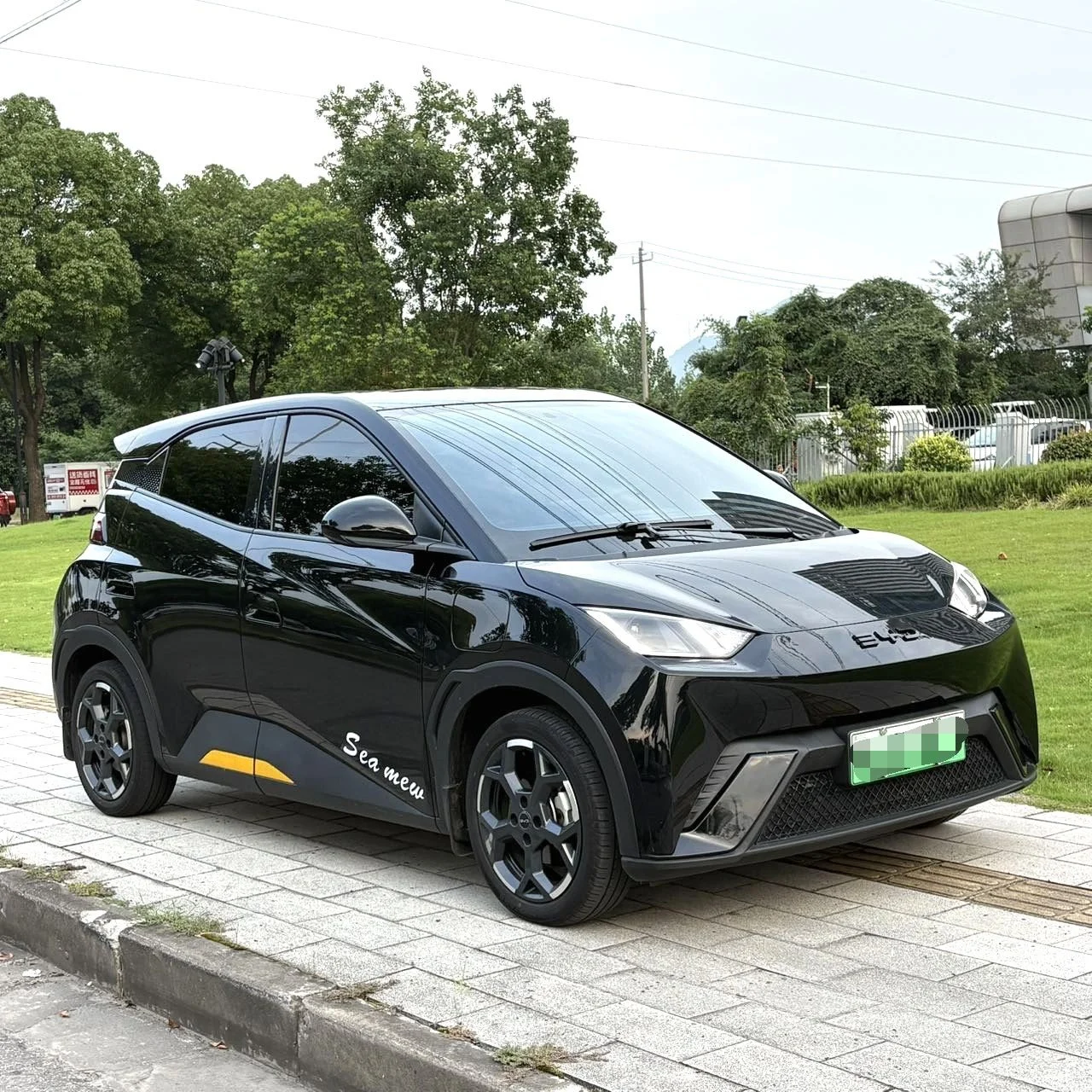
2025 BYD Seagull (Dolphin Mini) 305km Freedom Edition – Compact City EV | Ready to Ship
- 2024
- 35,000 km
- Automatic
- Electric

2024 Wuling Bingo (Binguo) 333km Enjoy Edition (50kW / 68HP) Electric Hatchback
- 2024
- 60,000 km
- Automatic
- Electric

2024 Wuling Bingo EV 203km Light Edition (30kW FWD / DC Fast Charging) City Hatchback
- 2025
- 4,000 km
- Automatic
- Electric